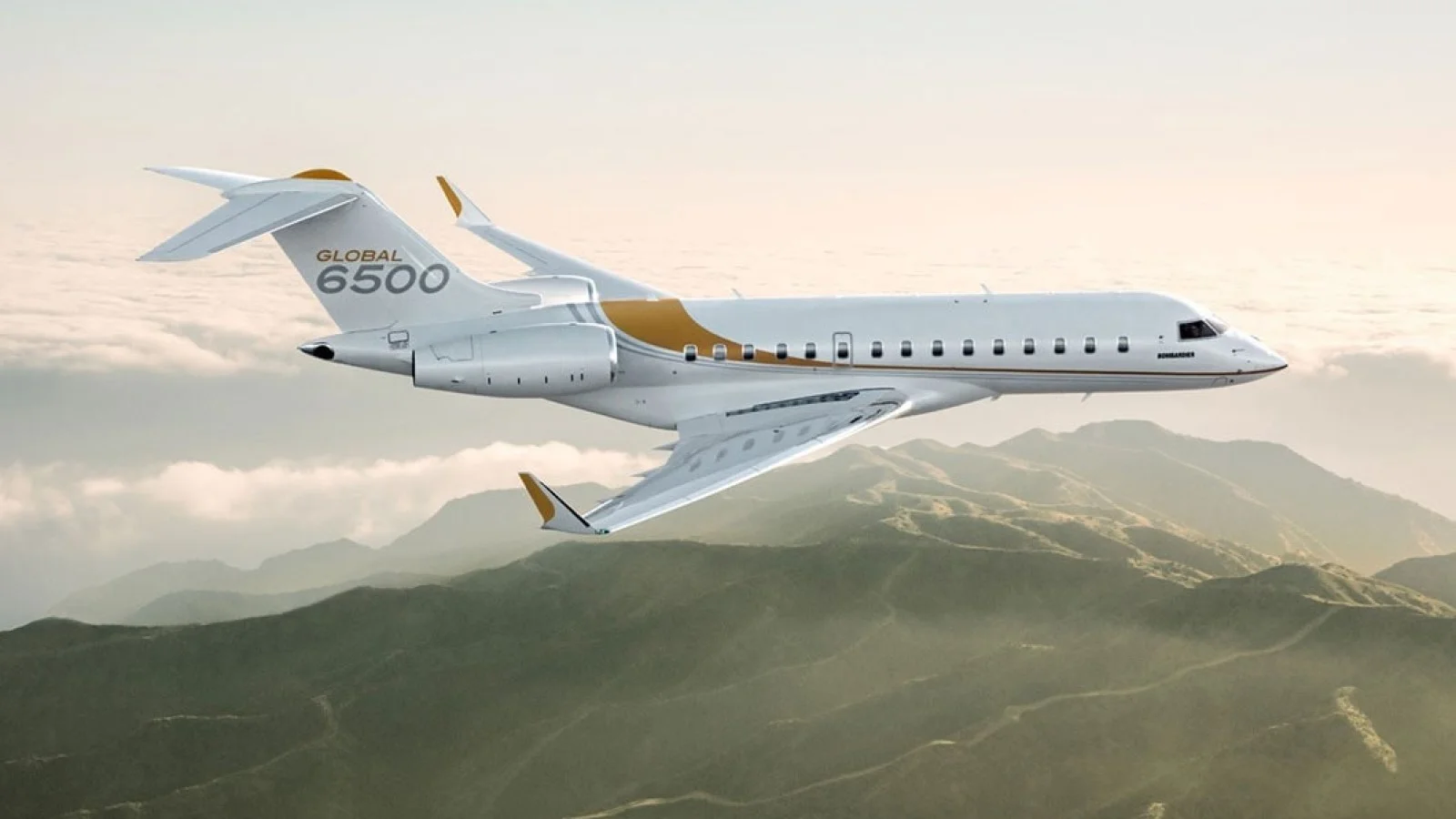

Bombardier has secured a major defence aviation contract after the Government of Canada selected six Global 6500 aircraft to support the Royal Canadian Air Force’s (RCAF) Multi-Role Aircraft (MRA) programme, strengthening the country’s multi-mission air transport and national security capabilities.
The aircraft will be used for a wide range of missions, including aeromedical evacuations, disaster relief, humanitarian assistance, and national security operations, significantly expanding the RCAF’s long-range utility and operational flexibility. Delivery of the first aircraft is expected by summer 2027.
The order is valued at approximately USD 400 million, based on the current list price of the Global 6500 and the cost of military-specific modifications. The decision underscores Canada’s focus on sovereign aerospace capability, with the aircraft assembled at Bombardier’s Global Aircraft Assembly Centre in the Greater Toronto Area, while interior completion will be carried out in Greater Montreal.
The RCAF has operated Bombardier platforms since 1983, primarily Challenger aircraft, and will now benefit from the extended range, endurance, and payload capacity of the Global 6500. The aircraft is capable of flying up to 6,600 nautical miles, enabling intercontinental operations without refuelling—an essential requirement for modern military transport and special missions.
Éric Martel, President and Chief Executive Officer of Bombardier, said the selection reflects confidence in Canadian aerospace expertise. He noted that the Global 6500’s multi-mission versatility makes it a preferred solution for government and defence operators worldwide.
The announcement was marked at Bombardier’s Toronto assembly facility and attended by Stephen Fuhr, Secretary of State for Defence Procurement, alongside representatives from the Department of National Defence and the Royal Canadian Air Force. Canadian officials highlighted the role of the Defence Investment Agency in accelerating procurement timelines and modernising the RCAF’s fleet.
Strengthening Canada’s Aerospace Industrial Base
The Global 6500 programme draws on more than 60 Canadian suppliers, reinforcing the country’s aerospace supply chain. According to a PwC study commissioned by Bombardier, Global 6500 manufacturing activities in 2022 supported CAD 518.3 million in GDP, 3,747 full-time equivalent jobs, and CAD 309.1 million in labour income across Canada.
Bombardier’s Global Aircraft Assembly Centre, inaugurated in 2024, represents an investment exceeding CAD 670 million and employs over 2,000 highly skilled workers, positioning Canada as a hub for advanced business and special-mission aircraft production.
Business Jet Market and Defence Conversions
The deal comes amid sustained growth in the global business jet market, which is increasingly intersecting with defence and government demand. According to industry estimates, the global business jet market was valued at over USD 27 billion in 2024 and is projected to grow at a compound annual growth rate (CAGR) of 4–5% through the early 2030s, driven by fleet renewal, special-mission conversions, and rising government procurement.
Large-cabin business jets such as the Global 6500 are seeing increased demand for ISR, airborne command and control, medevac, and head-of-state transport roles, offering a cost-effective alternative to traditional military platforms while retaining long-range performance and adaptability.
Bombardier business jets are already in service globally for ISR, AEW&C, maritime patrol, border surveillance, medevac, and multi-role missions, with the Global 6500 positioned as a preferred platform for governments seeking to modernise airborne capabilities.
The aircraft also benefits from Bombardier’s Environment Product Declaration, providing transparency on lifecycle environmental performance—an increasingly important factor for government procurement.
The selection of the Global 6500 reinforces Bombardier’s growing role in the defence and special-mission aviation segment, while highlighting Canada’s strategic intent to leverage domestically produced aerospace platforms for national and international operations.