
Poland’s Ministry of National Defense has announced Full Operational Capability (FOC) for its Integrated Battle Command System (IBCS), enabled WISŁA medium-range air and missile defence network, marking a major technological and strategic milestone for NATO’s eastern flank.
The system, developed by Northrop Grumman Corporation, brings Poland into a new era of network-centric air and missile defence. With the declaration of FOC, the country now becomes the first NATO ally outside the United States to fully operationalise IBCS, a capability that allows multiple sensors and weapon systems to function as a unified defensive architecture capable of detecting, tracking, and intercepting airborne threats in real time.
The milestone follows a successful international live-fire exercise that demonstrated the system’s ability to engage and destroy airborne targets through integrated sensor data from multiple platforms.
Strengthening Poland’s Air and Missile Defence Posture
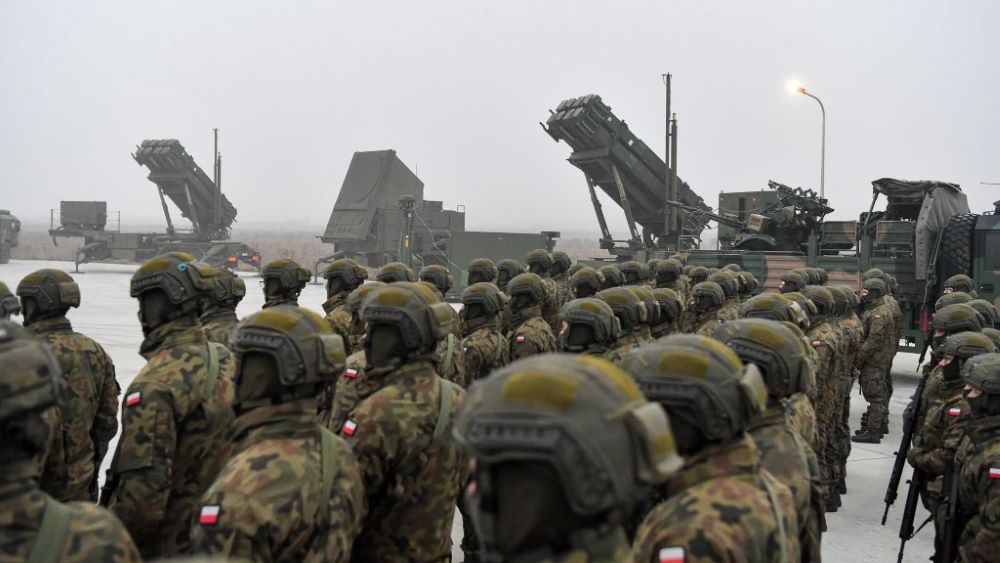
Poland’s WISŁA programme is now combat-ready with two IBCS-enabled fire units that include adapted Patriot sensors and launchers. These assets are capable of engaging a wide range of threats including aircraft, cruise missiles, and ballistic missiles, using multi-sensor data fusion to improve accuracy, resilience, and situational awareness.
Operational certification confirms that Polish personnel are fully trained to operate the system, signalling a high level of preparation and interoperability with U.S. and NATO air and missile defence networks.
The deployment also sends a strategic signal regarding NATO’s capacity to respond to evolving aerial threats across Europe, particularly at a time when air and missile defence capability is seen as a critical component of deterrence along the Alliance’s eastern front.
Interoperability and NATO Integration
One of IBCS’ key attributes is its ability to create a unified defensive network by connecting sensors and launchers across multiple domains and multiple nations. This will allow Poland to exchange real-time information and threat data with U.S. military systems as well as future IBCS-equipped allied forces, supporting a layered and collaborative air defence environment.
The system’s deployment lays the groundwork for multinational engagement coordination, joint targeting operations, and faster decision-making cycles, significantly strengthening NATO’s collective defence posture.
What Comes Next for the WISŁA Programme
Poland is now preparing for the next phase of the WISŁA programme, which includes expanding the IBCS architecture to incorporate:
-
Eight additional batteries of adapted Patriot equipment
-
More launchers and interceptor missiles
-
Next-generation radars and sensor systems
The expansion is designed to create a national-scale air and missile defence shield, integrating defensive coverage across Polish territory and enabling rapid response to emerging threats.
The programme also includes provisions for deeper industrial cooperation. Polish companies are expected to take on a larger share of maintenance, assembly, and potential production, contributing to technology transfer, workforce growth, and increased defence manufacturing independence.
A Turning Point in European Air Defence
Poland’s achievement marks a turning point for European air and missile defence, demonstrating the operational maturity and international scalability of IBCS. With growing emphasis on integrated command-and-control infrastructure, Poland’s adoption and full operationalisation of the system positions the country at the forefront of regional defence modernisation.
As NATO continues to evolve its air and missile defence strategy, the Polish example may accelerate adoption among other European allies, further enhancing cooperation, readiness, and deterrence.