
More than five decades after the events of 1971, Pakistan and Bangladesh continue to occupy a complex space in the political and emotional landscape of South Asia. Each December, debates re-emerge, often politically charged and historically selective, about the separation of East Pakistan and the performance of Pakistan’s armed forces. These narratives typically overshadow the sacrifices made by soldiers who fought under extremely difficult circumstances, facing overwhelming numbers, isolation, and limited resources.
For years, a dominant storyline captured public discourse: that Bangladesh’s political and economic progress stemmed solely from its separation from Pakistan, and that the armed forces of Pakistan bore singular responsibility for national loss. However, this perspective ignored both the international context and the ground realities of the conflict. The 1971 war was not isolated, it was shaped by geopolitical calculations, Indian military intervention, and Cold War alignments. Yet these complexities rarely entered public debate.
The Historical Context Reconsidered
The events of 1971 cannot be detached from the strategic environment of the time. The presence and involvement of Mukti Bahini forces, supported and trained by India, evolved into a full-scale guerrilla conflict. The Pakistan Army, deployed across vast and difficult terrain with limited reinforcement routes, fought under circumstances that would challenge any military force. Documented accounts, including Indian records, recognize instances of tactical resilience, battlefield courage, and professional conduct by Pakistani units.
The debate, however, often became less about history and more about political rhetoric. Over time, the 1971 narrative was used not only to critique military decisions, but also to define national identity in Bangladesh under successive governments.
A Turning Point in Bangladesh’s Politics
In July 2024, Bangladesh witnessed a significant shift in political and public sentiment. The longstanding influence of Sheikh Hasina’s government, characterized by strong Indian alignment and a firm anti-Pakistan position — faced unprecedented opposition. For years, her administration maintained narrative control by framing 1971 as a defining moral boundary, often criminalizing or suppressing alternative interpretations.
Public upheaval in mid-2024 reflected deeper social, economic, and ideological grievances. Hasina’s departure from Bangladesh in August 2024 opened a new phase in the country’s political trajectory. For the first time in decades, public conversations began to revisit the role of Pakistan and re-examine the historical lens through which national identity had been shaped.
This moment signalled more than mere political change — it indicated that Bangladeshi sentiment may be transitioning away from polarisation toward pragmatism.
Reopening Strategic Possibilities
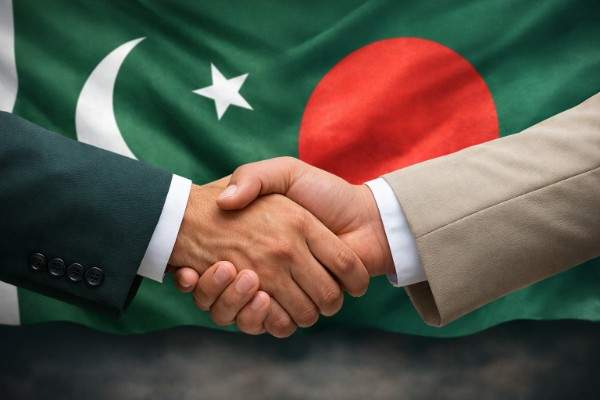
Today, interactions between Pakistan and Bangladesh are steadily increasing. Diplomatic communication has expanded, economic dialogue is emerging, and people-to-people exchanges are improving. Shared history, cultural foundations, and regional interests are once again entering strategic discussion.
While the idea of a federation or confederation remains highly speculative, what is clear is that both nations are reassessing mutual value. Public sentiment within Bangladesh, particularly among younger generations, shows interest in economic cooperation rather than historical division. Pakistan, too, is approaching the relationship with recalibrated maturity, acknowledging the past while prioritising future potential.
Looking Ahead
Political shifts do not guarantee strategic convergence, nor do they erase decades of geopolitical complexity. Yet regional stability and economic integration are increasingly seen as common ground. If momentum continues, Pakistan and Bangladesh may step into a new era — one defined not by separation and suspicion, but by cooperation and opportunity.
For now, the question remains open, shaped by evolving realities:
Are Pakistan and Bangladesh approaching a new alignment that could reshape South Asian geopolitics?
Time will answer.