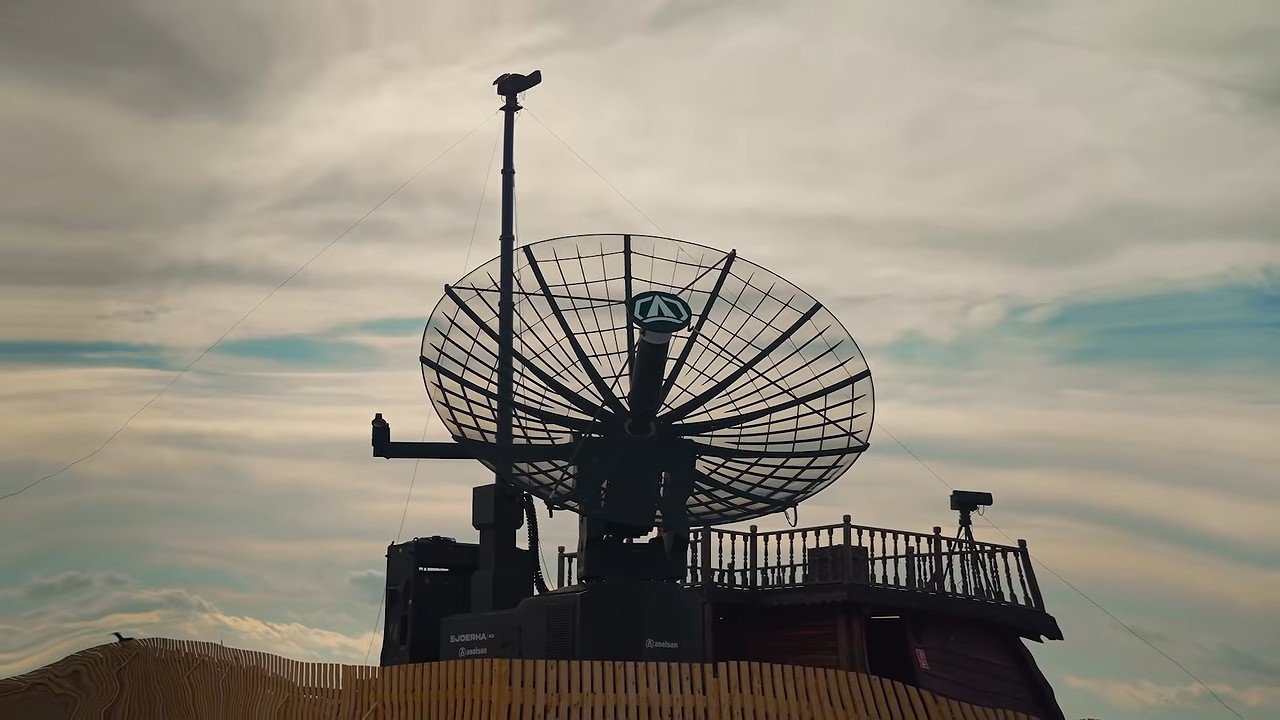
Today, modern military strategy values controlling the enemy’s posture more than direct confronting. An example of this change is the anti-access/area denial (A2/AD) strategic doctrine, or the ability to either deny potential enemies the right to enter a battlefield (anti-access) or to move freely in a battlefield (area denial). The contemporary A2/AD is characterized by naval armory, electronic warfare, long range missile and surveillance systems unlike the earlier types of defenses. The division of defense areas into multi-layered systems would render the intervention of the aggressor forces much more dangerous and expensive.
The concept of anti-access/area denial has a historical background, even though the term became popular only in the 21st century. From the naval blockade of the ancient era to the minefields and coastal guns of the World Wars I and II, armies have been striving to possess the strategic entry points. The Cold War increased this development, as the Soviet Union used combined air defense systems and long-range missile systems to ensure that NATO troops were kept at a distance. These primitive systems are the precursors of the contemporary A2/AD ideas in which precise-guided, long-range weapons and sensors established a network defensive bubble around key areas.
These strategies are based on a blend of long-range strike systems and area denial systems to prevent maneuvering and entry, respectively. Weapons such as anti-access parameters such as the ballistic and cruise missiles, radar systems, and air surveillance have the capacity to intimidate the operations of oncoming troops before they settle in. The area denial aims at reducing the enemy operations in the area, and it is conducted through integrated air defense systems (IADS), anti-ship missiles, naval mines, and electronic warfare platforms. The unity of these systems compels opponents to cautiously consider the risks of operations which retard or prevent interventions.
The Anti-access/area denial strategy in the Western Pacific of China is one of the most noticeable examples of the contemporary approach. Compared to the U.S. Navy equipment, China has concentrated on spending a lot of money on missiles and sensor networks to limit the freedom of movement of the Americans. The main objects of this strategy are the DF-21D “carrier killer” and DF-26 intermediate-range ballistic missiles, whose ranges are about 1,500 km and 4,000 km, respectively. Such missiles can hit big surface combatants and American bases in the area and make potential enemies work at a distance and a higher risk (US DoD, 2022). The missiles are surrounded by Type 055 destroyers, over-the-horizon radars and airborne early-warning platforms, creating an integrated network of A2/AD that makes U.S. carrier operations in both the First and Second Island Chains more difficult.
Asymmetric situations are also found to be A2/AD. This Strategy can be effective for regional powers, as demonstrated by the Strait of Hormuz, which is a popular chokepoint where about 20 percent of the world oil trade passes. Iran has also responded to U.S. and allied pressure by putting anti-ship missiles, coastal batteries, naval mines and fast-attack craft into play, effectively restricting foreign access to the sea. According to Al Jazeera reports, the strategy employed by Iran has over and over again influenced the traffic of tankers and compelled the coalition navies to make changes, hence indicating that A2/AD has influence that is not limited to military aspects but also extends into geopolitical and economic aspects. Such measures provide the strategic advantage that small states can use to compensate for technological or numerical disparities and influence the decision-making of the adversary.
This strategy has the beauty of being cost-effective and discouraging. Predominantly, by establishing overlapping zones of threats, states may lower dependencies on corresponding adversary abilities, though, on a one-to-one basis, and make an intrusion into disputed areas unacceptably hazardous. The network of China in the Pacific makes U.S. planners revise their doctrines to meet distributed operations, precision attacks that are long-range, and electronic warfare countermeasures. In the Persian Gulf, the use of such large forces by Iran made larger naval powers rethink the posture of force and maritime security strategy, as it shows how denying access can be used to pursue strategic goals without necessarily confronting the opponent.
The further development of missile technology, unmanned systems, and networked sensors means that this strategy is going to be the focus of strategic rivalry. The option to deny or limit access is becoming more and more of a defining factor in global security, planning operations, and escalation of crisis as states invest in these capabilities. A2/AD nowadays does not only safeguard the territory; it has re-created the field of operation by posing a challenge to the freedom of movement of the adversaries, affecting both military and economic performance.
To sum up, anti-access/area denial is now a component of military strategy in the 21st century. The A2/AD enables states to manage access, maneuverability and cost of operation in the strategic locations by using both historical reasoning and advanced technology. China can control the Indo-Pacific using its missile systems, and Iran can block the Strait of Hormuz using its layered defense, thus this strategy provides proof that denial can be decisive as victory on the battlefield. The authority to control access points, mode of operation, and the degree of risk in the modern conflicts may be a determinant of balance of power as opposed to the conflict that is involved in the contemporary conflicts.
Table of Contents
ToggleMohammad Umar
Mohammad Umar is currently a student at the National Defense University, Islamabad, where he is pursuing a Bachelor of Science (BS) degree in Strategic Studies. He is deeply engaged in understanding the complexities of global security, military strategies, and geopolitical dynamics. His academic journey is shaping his expertise in these areas, preparing him for a future in defense and strategic analysis. For inquiries or further communication, he can be reached via email at mumar8736@gmail.com.