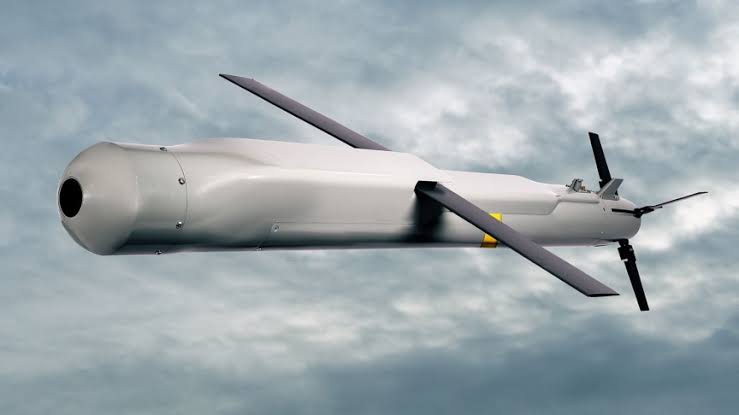

Raytheon UK unveiled its new Red Kite precision weapon at the Farnborough International Airshow on July 21, presenting the system as the company’s first sovereign precision weapon fully designed and digitally engineered in the United Kingdom.
Developed in cooperation with a consortium of British defense companies, Red Kite is intended to give the Royal Air Force a cost-effective weapon that can be manufactured at scale. The program also aims to improve the resilience of the United Kingdom’s precision-weapons stockpiles by relying on domestic engineering, manufacturing and supply-chain capabilities.
According to Raytheon UK, advanced digital modeling and engineering tools enabled the company and its partners to move the weapon from the conceptual stage to a prototype more quickly than would be possible through a conventional development process.
“Red Kite was designed with affordability and adaptability in mind, and marks a significant step forward for UK defense,” said James Gray, managing director and chief executive of Raytheon UK.
Gray said the company had worked with its British industrial partners for five years to combine digital engineering, an innovative design approach and proven technologies.
The objective was to create a sovereign weapon for the RAF while reducing development time, production costs and technical risks.
Table of Contents
ToggleRed Kite Uses the StormBreaker Airframe
Red Kite is based on the existing StormBreaker precision-guided weapon airframe developed by Raytheon. The use of an established airframe could allow Raytheon UK to reduce development risk while concentrating British engineering resources on the weapon’s sovereign systems, software and integration requirements.
Raytheon UK said Red Kite could be integrated with a wide range of aircraft, although the company did not identify specific platforms during the unveiling.
The company also did not disclose the weapon’s operational range, guidance configuration, warhead specifications, unit cost or planned production volume. A timetable for flight testing, production and entry into RAF service was also not announced.
Raytheon described Red Kite as a highly deployable, high-volume precision effector that would increase operational flexibility for the RAF.
The weapon builds on the company’s experience with other precision-strike systems used by the United Kingdom, including Paveway IV. Raytheon UK has supported the design, production and integration of precision weapons for the British Armed Forces for several years.
“Red Kite is about getting capability to the frontline faster — reducing cost, increasing availability and meeting our customers’ needs when it matters most,” Gray said.
He added that the program represented a step toward establishing a more resilient and sovereign British defense industrial base.
Digital Engineering Supports Faster Development
Digital engineering is central to the Red Kite development strategy. The approach uses digital models, simulations and virtual testing environments to evaluate components and system performance before physical prototypes are produced.
For Red Kite, this process allowed the development team to examine design options, identify potential technical problems and refine the weapon architecture during the early stages of the program.
Digital engineering can also support future modifications by allowing engineers to assess changes to software, electronics, control systems or platform-integration requirements within a virtual environment.
Raytheon UK is positioning this approach as a way to deliver operational capabilities more rapidly while controlling development and manufacturing costs.
The combination of an existing StormBreaker airframe and UK-developed systems could also provide a foundation for adapting Red Kite to evolving RAF requirements or integrating it with additional aircraft in the future.
Nationwide UK Supply Chain to Support Production
Red Kite will be supported by a supply chain spanning England, Scotland and Wales, according to Raytheon UK.
Systems electronics and software work will be conducted in Harlow, England, while control actuation systems will be produced in Glenrothes, Scotland. Additional design, engineering and manufacturing activities will be distributed among specialist defense companies across the country.
Raytheon UK estimates that approximately 140 highly skilled jobs will directly support the Red Kite program. The company said the project would help sustain expertise in software development, systems integration, advanced manufacturing and precision-weapons engineering.
The use of a nationwide supply chain is intended to reduce dependence on overseas suppliers for critical technologies while preserving domestic industrial capacity.
Red Kite also reflects an effort to create a weapon that can be manufactured in larger quantities without the costs generally associated with more complex precision-guided systems.
However, further details regarding the British companies participating in the consortium, the RAF’s procurement plans and the scale of any future production order have not been released.
Raytheon UK Expands Sovereign Weapons Portfolio
Raytheon UK employs more than 2,000 people and supplies defense, aerospace, space and training systems to the UK Ministry of Defence.
The company operates as part of RTX’s Raytheon business and is involved in the design, development, production and integration of military technologies in the United Kingdom.
The introduction of Red Kite expands Raytheon UK’s domestically engineered precision-weapons portfolio and demonstrates how existing weapon architectures can be combined with sovereign technologies and digital development methods.
The program’s longer-term significance will depend on the completion of testing, integration with RAF aircraft, production approval and the size of any procurement commitment from the UK Ministry of Defence.