
On Nov. 9, Syed Haider Shah, Pakistan’s permanent representative to the United Nations, told the Security Council that the pursuit of a military solution in Ukraine risks further escalation and prolongs the suffering of those affected. He asked Russia and Ukraine for an immediate and robust ceasefire, compliance with international humanitarian law, and a return to negotiations. The next day, Russian, Ukrainian, and US delegations opened the fourth formal round of US-brokered talks in Abu Dhabi since January, and the first since the process stalled when the Iran war began on Feb. 28.
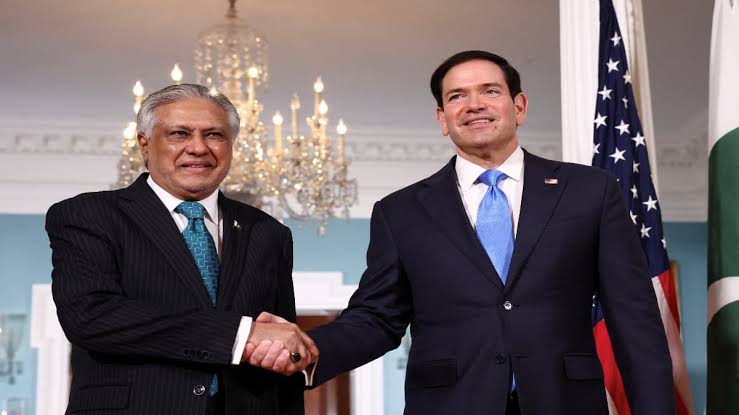
Pakistan is not a party to the Ukraine war and has little leverage over Moscow or Kyiv. Its statement still deserves attention because few states have spent 2026 closer to the practical work of ending a war. From late March, Islamabad relayed messages between Washington and Tehran. It then hosted the talks that followed, and in June its prime minister signed the resulting US–Iran memorandum as mediator. That record gives Pakistan standing when it calls for a ceasefire in Ukraine. The standing is worth using in specific ways: back the Abu Dhabi track and press for limited truces that protect civilians this winter.
What Pakistan Said in New York
Shah’s remarks centered on the humanitarian cost. He voiced concern over civilian casualties and over attacks on energy installations, transport networks, and commercial vessels. He said the war’s effects on food and energy security reach well beyond Europe and fall hardest on developing countries. For a major energy importer, that is a statement of interest as well as principle.
He also welcomed the limited ceasefire around Oleshky and credited both parties and the United States for the evacuation of stranded civilians. Mohamed Yahya, the UN assistant secretary-general for humanitarian affairs, told the same meeting that the pause let crews clear roads, move supplies, and evacuate civilians, and that it should not remain an isolated opening. Yahya added that Russian attacks on Ukraine’s energy infrastructure were causing prolonged power and water outages affecting millions, and that a winter response plan targeting more than two million people cannot replace a damaged grid.
Pakistan’s mission to the UN said it values the mediation efforts of the United States and hopes the parties will engage earnestly in Abu Dhabi. Any settlement, Shah said, should follow the UN Charter and address the legitimate security concerns of all sides. The position is consistent with May, when Pakistan’s previous permanent representative, Asim Iftikhar Ahmad, told an emergency session after a strike on a college dormitory in Luhansk that Pakistan hoped the US-facilitated dialogue would resume at the earliest.
A Record Built on Sequencing
The Iran war began on Feb. 28 with joint US and Israeli strikes. Pakistan began relaying messages between Washington and Tehran in late March. On March 23 it formally offered to host talks. On March 29 the foreign ministers of Pakistan, Türkiye, Egypt, and Saudi Arabia met in Islamabad, their second meeting in ten days. Two days later Islamabad put forward a five-point initiative calling for an end to hostilities and for humanitarian access.
As a US deadline for strikes on Iran approached on April 7, Prime Minister Shehbaz Sharif publicly asked President Donald Trump to extend it by two weeks so diplomacy could run its course. Trump said he accepted a ceasefire after conversations with Sharif and Field Marshal Asim Munir. Pakistan then hosted the first round of the Islamabad Talks on April 11–12. After 21 hours of indirect negotiation, the talks produced no breakthrough. Two months later, on June 17–18, Trump and Iranian President Masoud Pezeshkian signed a 14-point memorandum that formalized a ceasefire, addressed the reopening of the Strait of Hormuz, and opened a 60-day window for permanent terms. Sharif signed it as mediator.
The Way forward
Pakistan’s role on Ukraine should stay modest and specific. First, it should support the Abu Dhabi process and keep it US-led. Pakistan has said it values Washington’s mediation efforts, and it has worked with the same administration on the Iran file, which gives its endorsement credibility in Washington.
Second, it should press for the limited measures Abu Dhabi can realistically deliver. Reporting before the talks said the agenda was expected to include a possible energy and maritime ceasefire, prisoner-of-war exchanges, and the return of Ukrainian children. A pause on energy strikes this winter would address the outages the UN described. A maritime pause would address the attacks on commercial vessels that Shah raised. Pakistan has a direct interest in both, as an energy importer exposed to disrupted trade.
Third, it should ask that the Oleshky arrangement be repeated elsewhere. Yahya said it should not stay isolated, and Pakistan has praised it. A request from Islamabad, made on a Council where it holds a seat through the end of this year, would put a specific and achievable ask on the record.
Pakistan has played this role before. It helped facilitate the Soviet withdrawal from Afghanistan and the opening between Washington and Beijing, though those episodes are decades old and its recent experience was thin. The Iran talks make 2026 the first year in some time that Pakistan has done the work under active escalation. Pakistan has no say over where the front line in Ukraine settles. What it has shown is that a state outside the fighting can still help build the table. The Abu Dhabi talks, still under way as of this writing, will show whether Russia and Ukraine are ready to sit at one.

Maryyum Masood
Maryyum Masood is a Research Officer & Associate Editor at the Center for International Strategic Studies (CISS) Islamabad.