
Portugal has increasingly positioned itself as an active and multidimensional supporter of Ukraine, mobilising material assistance, military training under the European Union Military Assistance Mission (EUMAM) in support of Ukraine, a strengthened posture on NATO’s Eastern Flank, a robust bilateral security agreement, and scientific-technological cooperation within the EU’s expanding defense-innovation architecture. Through these efforts, Portugal leverages technological synergies with Ukraine and reinforces its self-assigned role as a net security provider within the European security order. Far from constituting ad hoc behaviour, this engagement reflects a broader process of role redefinition in response to the strategic rupture caused by Russia’s invasion. Drawing on role theory, this article argues that Portugal’s response embodies an evolving role conception shaped by identity, normative commitments, and shifting structural expectations within the EU and NATO – signalling a qualitative shift from symbolic solidarity to operationally consequential engagement.
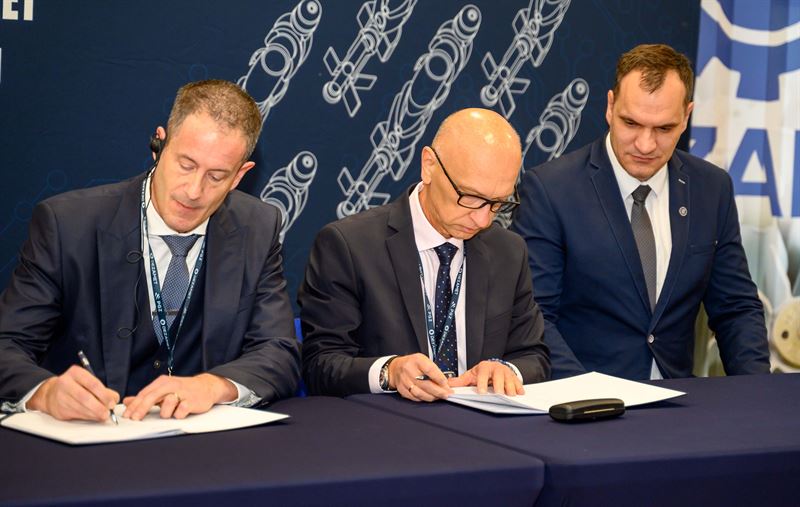
From a material standpoint, by the end of 2023 Portugal had provided more than €122 million in equipment to Ukraine – including Leopard 2 tanks, M113 armoured vehicles, ammunition, generators, uniforms, medical and sanitary supplies, unmanned aerial systems, high-speed vessels, demining equipment, and helicopters. In 2024, within the framework of the Washington Pledge, Lisbon contributed an additional €227.5 million in military and fiduciary support, accompanied by a medium-to-long-term commitment – ten years – to bolster Ukrainian resistance and resilience. Throughout the current year, Portugal not only increased its economic and military support but also entered a joint-production agreement on underwater drones, with the Portuguese Prime Minister expressing readiness to host production domestically by harnessing Ukrainian technological expertise. For Lisbon, cooperation in unmanned systems represents not merely technological complementarity but a strategic opportunity to reinforce its defense-industrial base. Furthermore, the Portuguese Government has already signalled its willingness to participate in peacekeeping missions in Ukraine once hostilities end – thus extending its role conception into the post-conflict horizon.
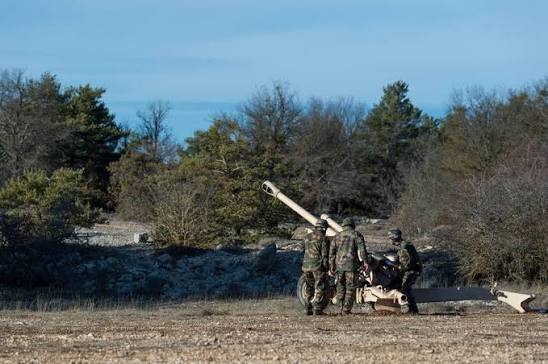
Portugal’s engagement is perhaps most visibly institutionalised through its participation in EUMAM Ukraine, the principal European mission for Ukrainian military training. With twenty Portuguese trainers assigned to specialised domains, the mission aims explicitly at strengthening Ukraine’s capacity to defend its territorial integrity. According to the European External Action Service, over eighty-six thousand Ukrainian soldiers will have been trained and equipped by early 2026—a testament to the mission’s strategic impact. In 2023 alone, approximately one hundred and fifty Ukrainian troops received instruction from the Portuguese Armed Forces in areas such as medical support and infantry training. These contributions position Portugal squarely within the EU’s central instrument for military capacity-building, revealing a sustained commitment of human and material resources despite the country being a net economic beneficiary of the Union. Official documentation further highlights that Portuguese training spans initial military instruction, explosive ordnance disposal, CBRN (Chemical, Biological, Radiological and Nuclear) defence, and combat medical care. These capabilities—highly specialised and risk-intensive—are essential given the nature of the conflict, marked by pervasive mine contamination, persistent CBRN threats, and high casualty rates on the battlefield. By providing expertise in these domains, Portugal enhances not only the operational proficiency of Ukrainian units but also their resilience—contributions that far exceed mere quantitative measures of personnel trained.
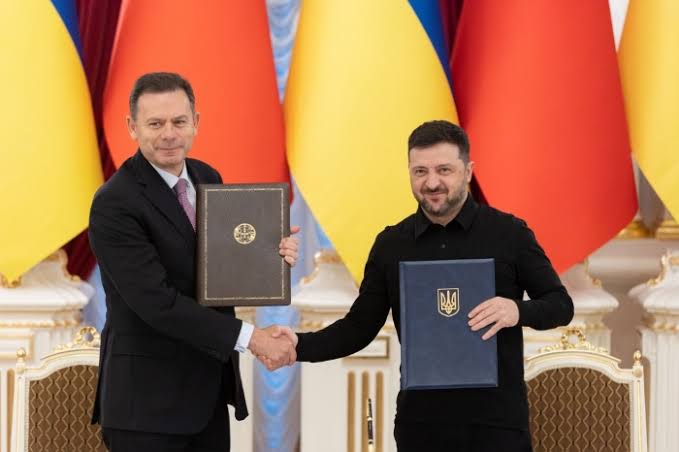
Beyond the EU framework, Portugal also plays a pivotal role within broader multinational coalitions, particularly the F-16 training coalition, having offered to train Ukrainian pilots, technicians, and support crews, and preparing to host the Norwegian-transferred training base. In parallel, the Ministry of Defence announced Portuguese readiness to train Ukrainian forces in the operation of main battle tanks, including Leopard models. Such initiatives, as the Ministry of Foreign Affairs underscores, are indispensable for enabling effective and safe operation of complex weapon systems—reinforcing Portugal’s evolving role identity as a provider of advanced military expertise. This long-term orientation is consolidated through the ten-year Portugal–Ukraine Security Cooperation Agreement and continuous participation in European defence instruments, situating Portuguese military engagement within a coherent, durable strategic posture aligned with the EU and NATO.
Equally significant—though indirectly linked to Ukraine—is Portugal’s active contribution to the reinforcement of NATO’s Eastern Flank, a response that is structurally anchored in the Alliance’s collective defense logic. One of the most visible expressions of this commitment was the deployment of roughly two hundred troops to Romania to strengthen Allied presence and deterrence. Units such as the 7th National Detached Force completed six-month missions in the Eastern Theatre, illustrating the continuity and operational depth of Portugal’s engagement. In 2025, the Portuguese Army emphasised that its presence on the Eastern Flank strengthens both national commitment to NATO and regional peace. Complementing its land deployments, Portugal participates in NATO’s Enhanced Vigilance Activities—initiatives aimed at bolstering observation, readiness, and reaction along the Flank. Though less conspicuous than major battlegroup contributions, these activities are strategically vital for the Alliance’s situational awareness and collective security architecture.
Portugal’s role performance in this context is not limited to the military realm: it is equally political. Lisbon consistently underscores the indivisibility of Allied security and frames the defence of the Eastern Flank as a continental priority amidst Russian aggression. This stance is further reinforced by increased defence spending and ongoing modernisation of the Armed Forces, which reflect Portugal’s adaptation to NATO’s capability expectations. Importantly, despite its geographic remoteness from the conflict, Portugal exhibits a role conception grounded not in geostrategic determinism but in empathic identification with Ukraine and a strong normative alignment with the principles of the Atlantic Charter, transatlantic solidarity, and collective defence. In this sense, Portugal’s actions reveal the interplay between identity, expectations and structural context: while geographically peripheral, it positions itself as a responsible European and Atlantic actor committed to upholding a rules-based security order.
In sum, the regular presence of Portuguese units in Eastern Europe, combined with sustained participation in vigilance activities and alignment with capability-enhancement policies, demonstrates that Portugal not only supports but actively materialises a strategic and operational response to the war in Ukraine. Through this multilayered engagement, Portugal’s evolving role conception—refracted through objectives, methods, and resources—reinforces its identity as a committed European and Atlantic partner, contributing substantively to regional security and the collective management of the most consequential conflict on the continent since the end of the Cold War. Taken together, these contributions illustrate not only an expanding operational commitment but also a broader role transformation shaped by identity, norms, and structural expectations. In this sense, Portugal’s case demonstrates how smaller EU and NATO members can leverage specialised capabilities and normative alignment to exercise disproportionate strategic relevance in times of systemic crisis.
Rogério Abreu Marques
BA International Relations
Table of Contents
ToggleSources:
2. https://data.dre.pt/eli/resolconsmin/75/2025/04/03/p/dre/pt/html
5. https://www.eeas.europa.eu/eumam-ukraine_en
8. https://www.emgfa.pt/pt/comunicacao/Documents/2024%20FND.pdf
22. https://diariodarepublica.pt/dr/detalhe/resolucao-conselho-ministros/174-2024-898705895
26. https://otan.missaoportugal.mne.gov.pt/pt/portugal-na-otan/portugal-nas-missoes-nato
27. https://www.nato.int/en/what-we-do/deterrence-and-defence/strengthening-natos-eastern-flank
30. https://www.exercito.pt/pt/informacao-publica/noticias/8631