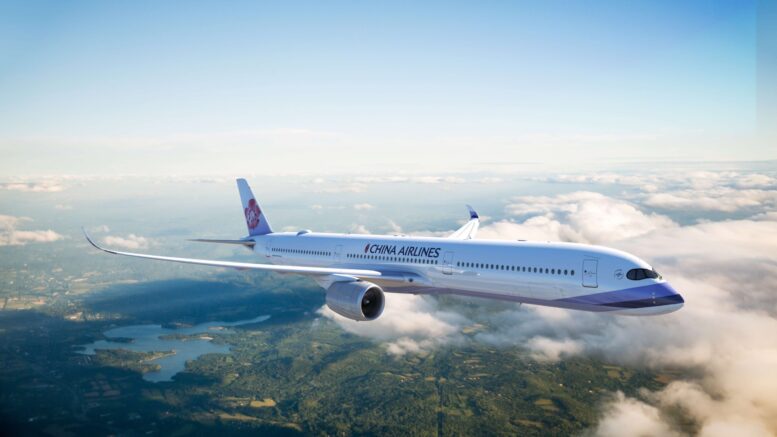

China Airlines has placed a firm order for five additional Airbus A350-1000 aircraft, increasing its total commitment for the type to 15. The deal strengthens the Taiwanese carrier’s long-haul fleet development strategy and expands its existing A350 widebody operations.
The new aircraft will complement China Airlines’ current fleet of 15 A350-900s, which operate across the airline’s global long-haul network. The additional A350-1000s are expected to support route expansion, fleet renewal, and long-term capacity growth.
Announcing the decision, China Airlines Chairman Kao Shing-Hwang said the order aligns with the carrier’s long-term commercial strategy and focus on fleet modernisation.
“Expanding our A350-1000 fleet marks another important step in our long-term growth strategy. The A350’s exceptional efficiency and passenger comfort align with our goals to modernise our fleet, enhance long-haul competitiveness and deliver an elevated travel experience to our customers,” he stated.
Airbus welcomed the follow-on order, noting the continued partnership between both companies and the aircraft’s capability to support future network ambitions.
“We greatly value our long-standing partnership with China Airlines. This follow-on order is a strong vote of confidence in the A350-1000 as the right aircraft for China Airlines’ future network ambitions. Its next-generation efficiency, range and cabin comfort will bring even greater value to the airline and its passengers,” said Benoit de Saint-Exupéry, Airbus Executive Vice President of Commercial Aircraft Sales.
A350: Next-Generation Technology and Efficiency
The Airbus A350 is regarded as one of the world’s most modern widebody aircraft, designed to operate flights of up to 9,800 nautical miles (18,000 kilometres) nonstop. Its long-range performance supports intercontinental mission profiles, while its aerodynamics and onboard systems are engineered to improve operational efficiency and cabin comfort.
The aircraft incorporates lightweight composite materials and is powered by the latest generation Rolls-Royce engines, contributing to a 25 percent reduction in fuel burn, operating costs, and CO₂ emissions compared to previous-generation widebodies.
The A350 also features Airbus’ Airspace cabin platform, delivering improved comfort, air quality, and interior design for passengers and crew.
Airbus noted that the aircraft is currently certified to fly with up to 50 percent Sustainable Aviation Fuel (SAF), with a goal of enabling 100 percent SAF capability by 2030.
As of the end of November 2025, the Airbus A350 family had secured nearly 1,500 orders from 66 customers worldwide, reflecting sustained demand for modern long-haul aircraft amid industry priorities around efficiency, environmental sustainability, operational economics, and passenger experience.
China Airlines’ new A350-1000 order reinforces the growing regional and global shift toward next-generation aircraft as airlines continue to modernise fleets and optimise long-haul operations.