
The United Kingdom and Germany have taken a significant step toward strengthening their land warfare capabilities after signing a £52 million defense contract for state-of-the-art mobile artillery systems. Announced on 28 December 2025 by the Ministry of Defence (MoD), the agreement underlines deepening military cooperation between the two NATO allies at a time of heightened security challenges in Europe.
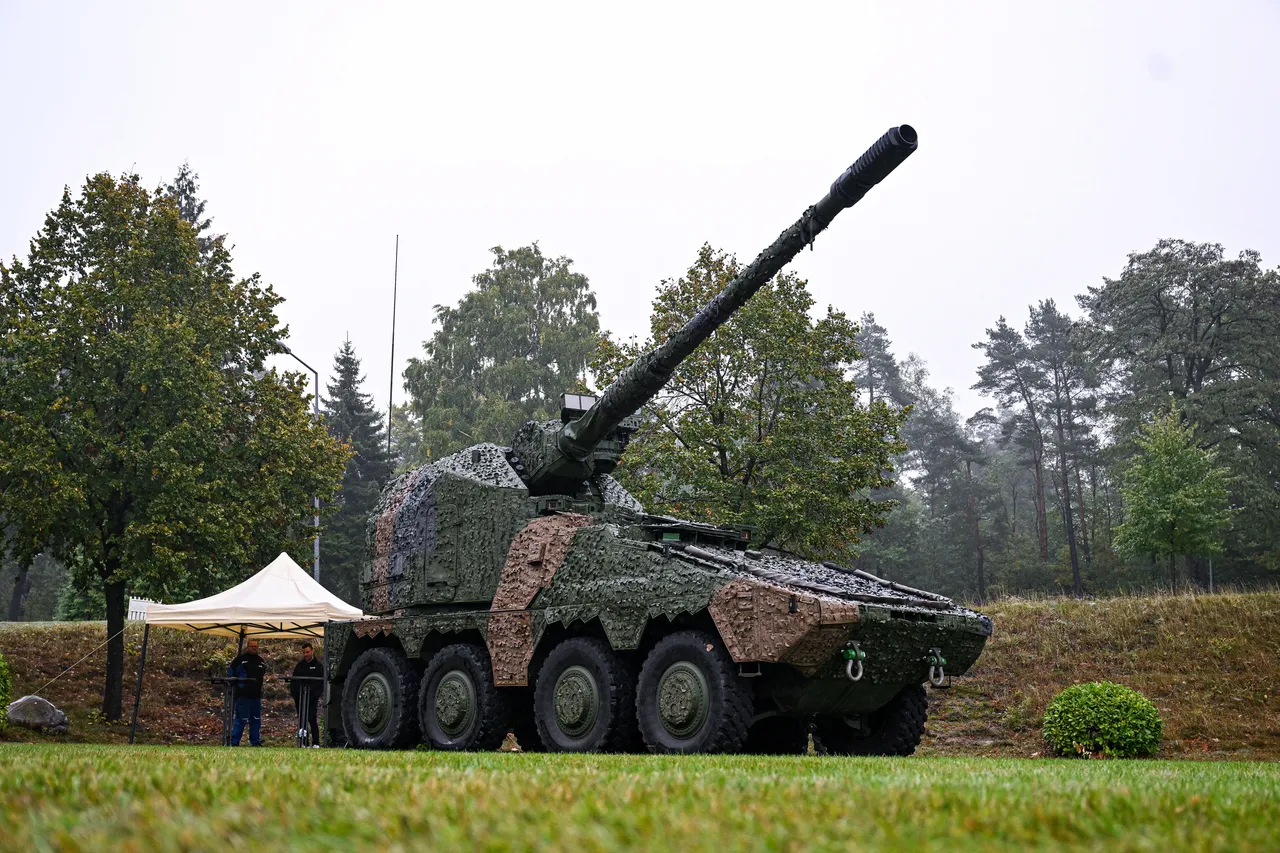
Under the deal, both nations will jointly procure the RCH 155 mobile artillery system, a highly automated platform capable of firing accurately while on the move at speeds of up to 100 km/h. The contract will see the UK receive an Early Capability Demonstrator (ECD) variant of the system, while two additional platforms will be delivered to Germany for joint testing and evaluation.
A Major Leap in Mobile Fires Capability
The RCH 155 represents a step-change in modern artillery warfare. Unlike traditional gun systems that must halt, deploy stabilizers, and prepare firing positions, the RCH 155 is designed to shoot while moving, dramatically reducing vulnerability to counter-battery fire. The system can engage targets at ranges of up to 70 kilometers, delivering rapid and precise firepower before quickly repositioning.
Mounted on the BOXER armored vehicle, the RCH 155 combines long range, mobility, and survivability. Key performance features include a firing rate of up to eight rounds per minute, a 700-kilometre operational range without refueling, and the ability to operate effectively with a crew of just two soldiers due to advanced automation.
For the British Army, the platform is intended as the long-term replacement for its ageing artillery fleet. British forces currently operate 14 Archer artillery system units as an interim solution after donating AS90 self-propelled guns to Ukraine earlier in the conflict with Russia.
Trinity House Agreement Driving Cooperation
This joint procurement is a direct outcome of the Trinity House Agreement, a landmark UK–Germany defense pact signed in October 2024. The agreement committed both governments to closer collaboration across land, sea, air, and industrial defense domains, with an emphasis on interoperability and shared capability development.
By procuring the RCH 155 together, London and Berlin aim to accelerate delivery timelines, reduce programme costs, and ensure that both armies field compatible systems that can operate seamlessly in NATO formations. The MoD confirmed that both nations will share test data, evaluation facilities, and operational lessons, maximizing value for taxpayers while enhancing combat effectiveness.
Lessons from Ukraine Inform Procurement
Speaking on the agreement, UK Minister for Defence Readiness and Industry Luke Pollard MP said the contract reflects battlefield lessons drawn from the war in Ukraine.
“The British Army will soon have new artillery that can fire on the move. This builds on lessons from Ukraine, enabling our Army to hit targets 70km away and move fast away from returning fire so they can fire again,” Pollard said.
He added that modern conflicts have demonstrated the decisive importance of speed, survivability, and precision in artillery operations—factors that are shaping the UK’s procurement priorities under the ongoing Strategic Defence Review.
Strengthening NATO Interoperability
Beyond national requirements, the RCH 155 programme is designed to enhance NATO’s collective defense posture. With both the UK and Germany operating the same artillery system, allied formations will benefit from improved logistics compatibility, shared training standards, and integrated command-and-control arrangements.
Edward Cutts, Senior Responsible Owner of Mobile Fires in the British Army, described the programme as a model for future allied cooperation.
“This joint demonstrator programme exemplifies the strength and ambition of the Trinity House Agreement. By working hand-in-hand with Germany, we’re accelerating the delivery of world-class artillery capability for the British Army while doing so more efficiently than either nation could achieve alone,” he said.
Cutts emphasized that the RCH 155 combines “devastating firepower” with rapid mobility, ensuring UK and German soldiers are equipped to operate effectively in high-intensity conflicts.
Industrial and Economic Impact
The £52 million contract also supports defence industrial growth, aligning with the UK government’s objective of making defence “an engine for growth” during the current parliamentary term. The programme is expected to sustain high-skill engineering and manufacturing jobs across the UK and German defense sectors, while reinforcing Europe’s industrial base.
For Germany, participation in the programme strengthens its role as a leading contributor to NATO land forces, while for the UK it provides a credible pathway to restoring and modernizing artillery capabilities after recent donations to Ukraine.
Strategic Significance
As global security threats evolve, particularly on NATO’s eastern flank, the UK–Germany RCH 155 agreement highlights a broader trend toward joint European defense procurement. By pooling resources, sharing expertise, and fielding interoperable systems, allied nations aim to respond more rapidly to emerging threats while maintaining technological superiority.
The RCH 155 deal not only modernizes artillery capabilities for both armies but also signals a deeper political and military alignment between London and Berlin—one firmly rooted in NATO’s principles of collective defense and shared responsibility.