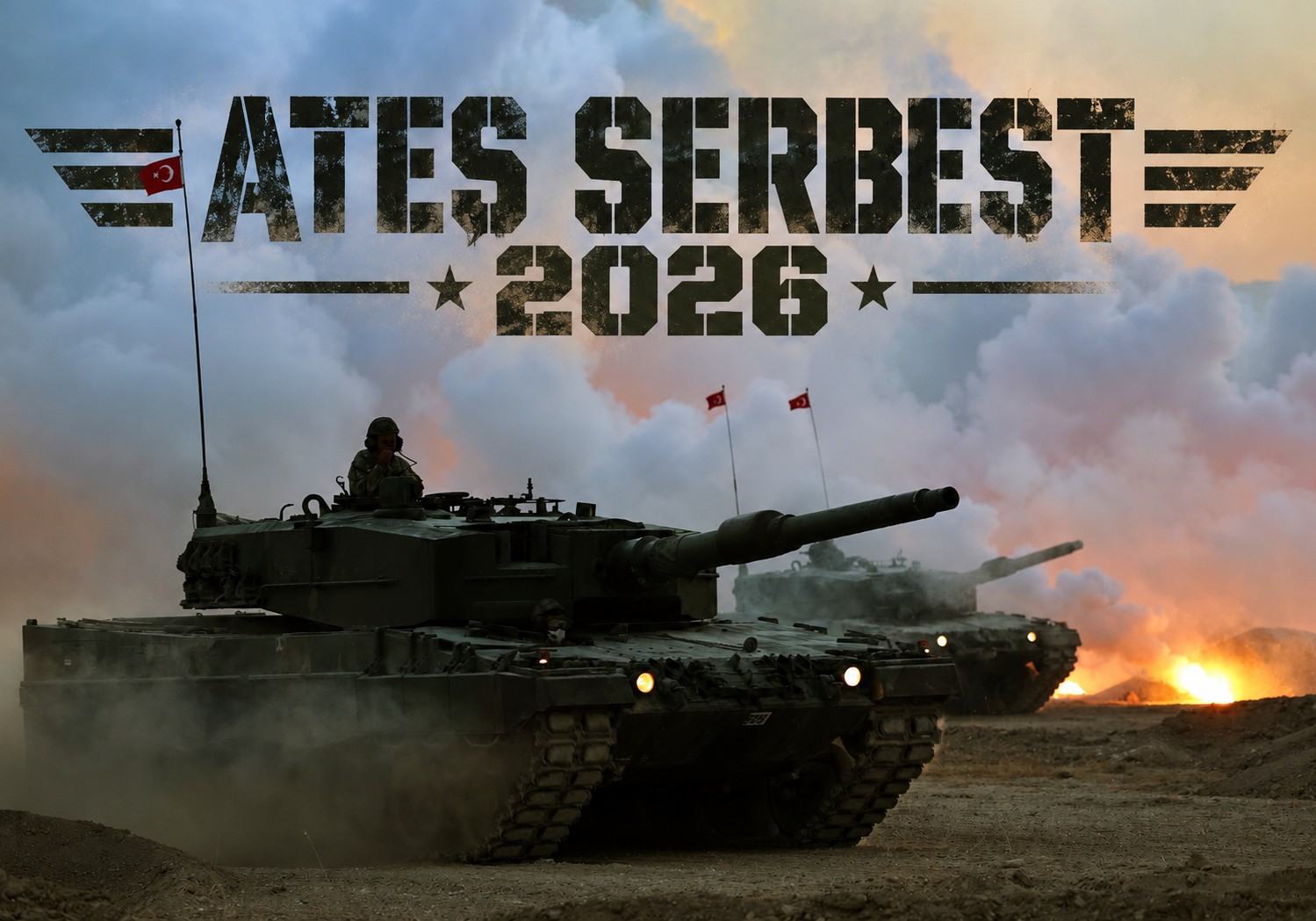

The Turkish Armed Forces demonstrated advanced combat capabilities, indigenous defense technologies and precision-guided weapons during Ateş Serbest 2026, a major military live-fire exercise held on October 13 at the General Nahit Şenoğul Firing and Exercise Area in Polatlı, Ankara. Global Defense Insight (GDI) attended the exercise at the invitation of the Turkish Ministry of National Defence, observing demonstrations involving attack helicopters, artillery, anti-tank guided missiles, autonomous loitering munitions, jet-powered unmanned strike systems and advanced counter-drone technologies.
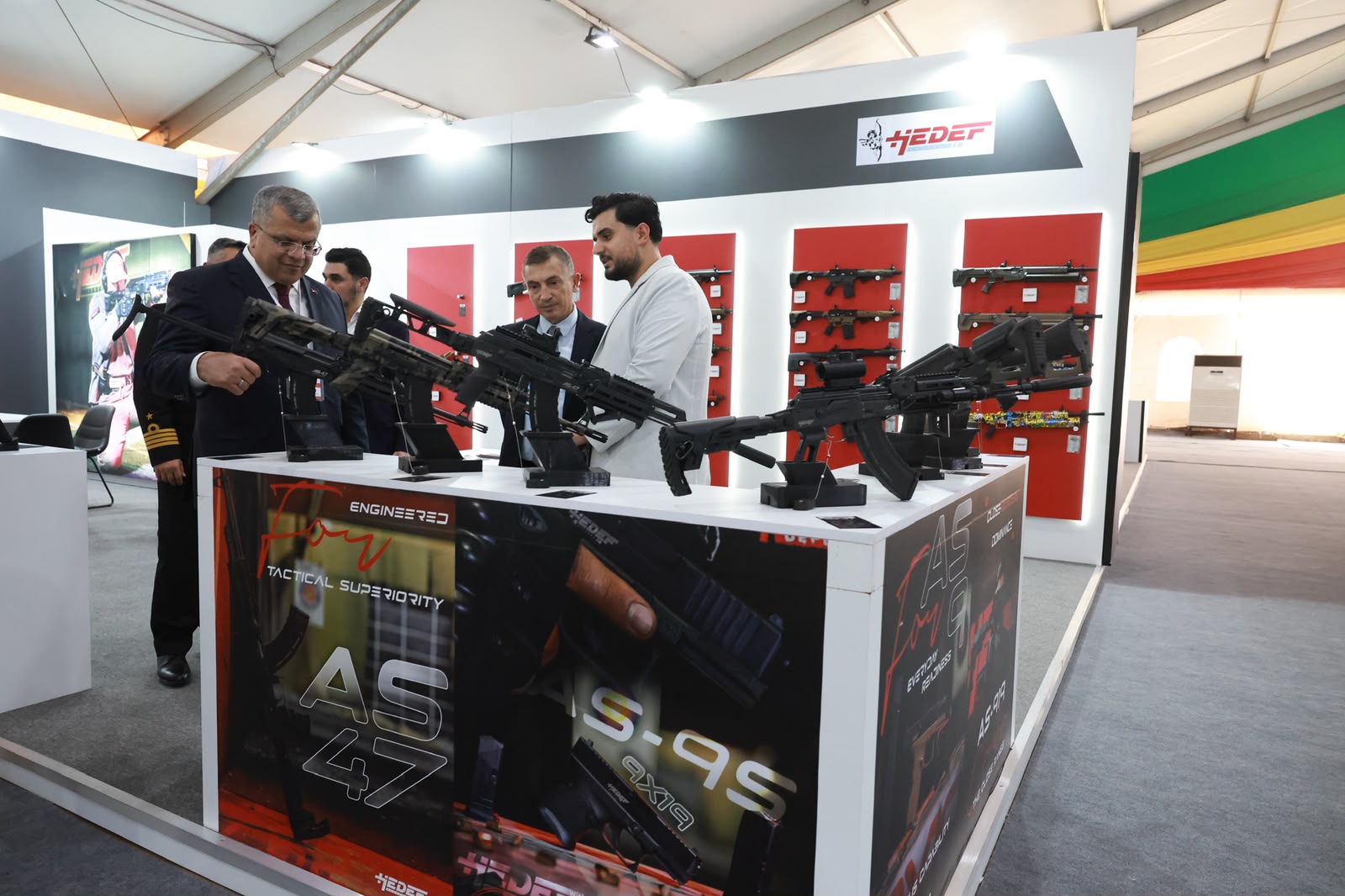
Alongside the exercise, a dedicated defense exhibition was organized for invited visitors, military officials and international media representatives. Leading Turkish defense companies showcased their indigenous military platforms, precision weapons, unmanned systems and electronic technologies, providing the visiting international media delegation with an opportunity to examine Türkiye’s expanding defense-industrial capabilities.
The event was attended by
- Turkish Minister of National Defence Yaşar Güler;
- Chief of the Turkish General Staff General Selçuk Bayraktaroğlu;
- Commander of the Turkish Land Forces General Metin Tokel;
- Commander of the Turkish Air Force General Rafet Dalkıran; and
- other senior military officials and delegations.
Combining live-fire demonstrations with an exhibition of advanced military technologies, Ateş Serbest 2026 highlighted the Turkish Armed Forces’ evolving operational capabilities and the growing contribution of Türkiye’s indigenous defense industry to military modernization.
Turkish Armed Forces Demonstrate Combined-Arms Firepower at Ateş Serbest 2026
The exercise featured coordinated live-fire engagements involving different branches and weapon systems of the Turkish Armed Forces, demonstrating their ability to employ conventional firepower alongside advanced precision-strike technologies.
The demonstrations included air-to-ground engagements, anti-armor operations, artillery fire support, unmanned strike missions and counter-unmanned aircraft capabilities.
The activities illustrated how various military assets can be employed together to achieve operational objectives, particularly in environments requiring rapid target identification, coordinated fire support and precision engagement.
Beyond demonstrating individual weapon systems, the exercise emphasized the integration of different capabilities within a broader combat environment.
The participation of indigenous guided weapons and unmanned platforms also reflected Türkiye’s efforts to incorporate emerging technologies into established military operational concepts.


T129 ATAK Helicopters Demonstrate Air-to-Ground Strike Capabilities
Among the notable demonstrations was the participation of the T129 ATAK attack helicopter, which conducted rocket-firing engagements against designated ground targets.
Manufactured by Turkish Aerospace Industries (TUSAŞ), the T129 ATAK is a twin-engine attack and tactical reconnaissance helicopter designed for close air support, armed reconnaissance and anti-armor operations.
The helicopter incorporates advanced avionics, electro-optical targeting equipment and integrated weapon systems intended to support operations under demanding tactical conditions.
During Ateş Serbest 2026, the T129 demonstrated its ability to deliver airborne firepower in support of ground operations, highlighting the continuing operational importance of attack helicopters within combined-arms warfare.
Rotary-wing attack platforms provide ground commanders with responsive fire support and the ability to engage threats across different battlefield environments.
The demonstration also highlighted Turkish Aerospace Industries’ role in supporting Türkiye’s military aviation capabilities through aircraft production, systems integration and aerospace engineering.
Turkish Aerospace’s AYAZ, SÜPER ŞİMŞEK and ŞİMŞEK-K Successfully Strike Ground Targets
Turkish Aerospace Industries demonstrated its expanding portfolio of indigenous unmanned strike technologies during Ateş Serbest 2026, conducting successful warhead-equipped missions with three jet-powered unmanned aerial systems.
According to the company, AYAZ, SÜPER ŞİMŞEK and ŞİMŞEK-K successfully engaged designated ground targets, demonstrating their strike capabilities during the exercise.
A notable development was the first capability demonstration of AYAZ, a delta-wing, jet-powered loitering munition developed by Turkish Aerospace Industries.
The platform conducted a warhead-equipped flight and successfully struck a ground target, marking an important milestone in its development.
AYAZ represents an emerging class of high-speed unmanned strike systems, combining a delta-wing configuration with jet propulsion and an integrated warhead.
Its introduction further expands Türkiye’s growing portfolio of unmanned military technologies, particularly in the field of precision-strike and expendable unmanned platforms.
Alongside AYAZ, SÜPER ŞİMŞEK and ŞİMŞEK-K also completed warhead-equipped flights and successful ground-target engagements.
The demonstrations highlighted the continued development of jet-powered unmanned systems designed for different operational requirements.
Compared with conventional propeller-driven unmanned aircraft, jet-powered platforms offer different speed and flight-performance characteristics, potentially supporting missions that require faster target approaches and specialized strike profiles.
The successful engagements demonstrated the systems’ ability to conduct strike missions under the exercise conditions, although their broader operational performance will depend on factors including guidance capabilities, range, payload configuration and mission requirements.
The participation of all three platforms reflected Turkish Aerospace Industries’ continued diversification into advanced unmanned combat technologies.
The AYAZ jet-powered loitering munition was among the significant new technologies introduced during the exercise.
ROKETSAN’s KARAOK Anti-Tank Guided Missile Hits Target


Another important live-fire demonstration involved the KARAOK anti-tank guided missile, developed by Turkish defense manufacturer ROKETSAN.
Turkish military personnel successfully launched the man-portable missile against a designated ground target during the exercise.
KARAOK is designed to provide infantry units with an indigenous precision-guided anti-armor capability against armored vehicles and other battlefield threats.
The missile incorporates an imaging infrared seeker and fire-and-forget guidance, enabling it to continue toward its designated target without requiring continuous guidance from the operator after launch.
This capability is particularly relevant for infantry operating in contested environments, where minimizing exposure to enemy fire and reducing the time required for target engagement can be critical.
The demonstration highlighted the growing integration of advanced guided weapons into Turkish infantry capabilities.
It also underscored ROKETSAN’s contribution to Türkiye’s indigenous missile-development programs, which encompass a broad range of guided weapons, precision munitions and strike systems.
STM Conducts Coordinated Attack with 20 KARGU Loitering Munitions
Autonomous unmanned warfare represented another significant technological component of Ateş Serbest 2026.
Turkish defense engineering company STM demonstrated its swarm intelligence technology through a coordinated live-fire attack involving 20 KARGU rotary-wing loitering munitions.
During the demonstration, the unmanned aircraft operated under the supervision of a single operator while using an autonomous coordination architecture to navigate toward designated targets.
According to STM, the swarm communicated through a distributed control structure, enabling the aircraft to exchange information and coordinate their movements.
Upon reaching the designated operational area, the 20 KARGU systems divided into two groups of 10 and conducted synchronized attacks against simulated enemy infantry targets using anti-personnel warheads.
The successful engagement illustrated advances in autonomous mission coordination and the potential for multiple unmanned aircraft to perform collective strike operations.
Unlike conventional remotely piloted systems, autonomous swarms are designed to distribute tasks among several platforms, potentially reducing the number of personnel required to manage multiple aircraft during a mission.
STM previously demonstrated a 20-aircraft KARGU swarm engagement during EFES 2026, making the Ateş Serbest demonstration another milestone in the company’s autonomous warfare development efforts.
According to STM, KARGU has been exported to 15 countries across four continents, reflecting international interest in tactical loitering-munition technologies.
The exercise highlighted the growing operational relevance of autonomous unmanned systems and their potential role in future battlefield operations.
STM’s BOYGA UAV Delivers Precision Strike with 81 mm Munition
STM also demonstrated its BOYGA ammunition-dropping unmanned aerial vehicle, which successfully engaged a designated target using an 81 mm munition.
BOYGA is designed to provide tactical military formations with an airborne munition-delivery capability, using specially adapted ammunition and ballistic estimation technology to support accurate engagement.
According to STM, the system has an operational range of 10 kilometers, an endurance of approximately 30 minutes while carrying ammunition and an operating altitude of up to 3,000 meters.
The demonstration illustrated the increasing use of relatively compact unmanned aircraft as platforms for precision-strike missions.
The participation of BOYGA alongside KARGU and Turkish Aerospace Industries’ jet-powered unmanned systems also demonstrated the diversity of Türkiye’s emerging unmanned warfare capabilities.
These platforms represent distinct approaches to battlefield engagements, ranging from reusable munition-dropping aircraft and autonomous rotary-wing loitering munitions to high-speed jet-powered strike systems.
MKE TOLGA Laser Weapon Destroys Drone at 760 Meters
One of the prominent counter-drone demonstrations at Ateş Serbest 2026 involved the 20-kilowatt fiber laser weapon system developed by Türkiye’s Mechanical and Chemical Industry Corporation (MKE).
Integrated into the MKE TOLGA Short-Range Air Defense System, the laser weapon successfully destroyed an unmanned aerial target at a distance of 760 meters.
The system combines four 5-kilowatt fiber lasers to deliver a total power output of 20 kilowatts.
According to MKE, the directed-energy weapon is designed to counter aerial threats through different engagement modes, including optical sensor disruption and physical destruction.
The company states that the system can temporarily disrupt susceptible optical sensors at distances of approximately 2,500 to 4,500 meters, cause permanent optical sensor damage at shorter ranges and physically damage suitable targets at distances between 100 and 1,500 meters under specified conditions.
The laser system features a 360-degree turret and precision-tracking technology designed to support engagements against moving targets.
Its successful demonstration represented an important milestone in Türkiye’s development of directed-energy technologies for short-range air defense.
Integrated Counter-Drone Defense with MKE TOLGA
Beyond the laser system, MKE demonstrated additional components of the TOLGA short-range air defense architecture, including 12.7 mm and 20 mm weapon configurations.
The company also demonstrated its 20 mm twin-barrel weapon system, which has a stated combined rate of fire of up to 3,000 rounds per minute.
TOLGA incorporates several detection and engagement technologies, including the GÖKBÖRÜ active electronically scanned array radar, acoustic sensors, electro-optical equipment, electronic jamming systems and integrated command-and-control capabilities.
The architecture is intended to provide multiple defensive options against different aerial threats, including unmanned aircraft and other low-altitude targets.
The increasing use of drones and loitering munitions in contemporary conflicts has created demand for layered air defense systems capable of combining electronic countermeasures with kinetic and directed-energy engagements.
The TOLGA demonstration highlighted Türkiye’s efforts to develop such capabilities through an indigenous, integrated air defense architecture.
Defense Exhibition Showcases Indigenous Turkish Military Technologies
In addition to the live-fire activities, a dedicated defense exhibition was organized alongside Ateş Serbest 2026, allowing invited visitors and members of the international media delegation to examine military technologies presented by leading Turkish defense manufacturers.
The exhibition provided an important complement to the exercise, bringing together defense companies involved in the development and production of military platforms, guided weapons, aerospace technologies, electronics and advanced battlefield systems.
Among the major companies associated with the exhibition and the wider event were ASELSAN, ROKETSAN, Turkish Aerospace Industries, MKE and other leading Turkish defense enterprises.
Visitors were able to examine displayed military equipment and gain a closer understanding of the technological developments supporting Türkiye’s defense modernization programs.
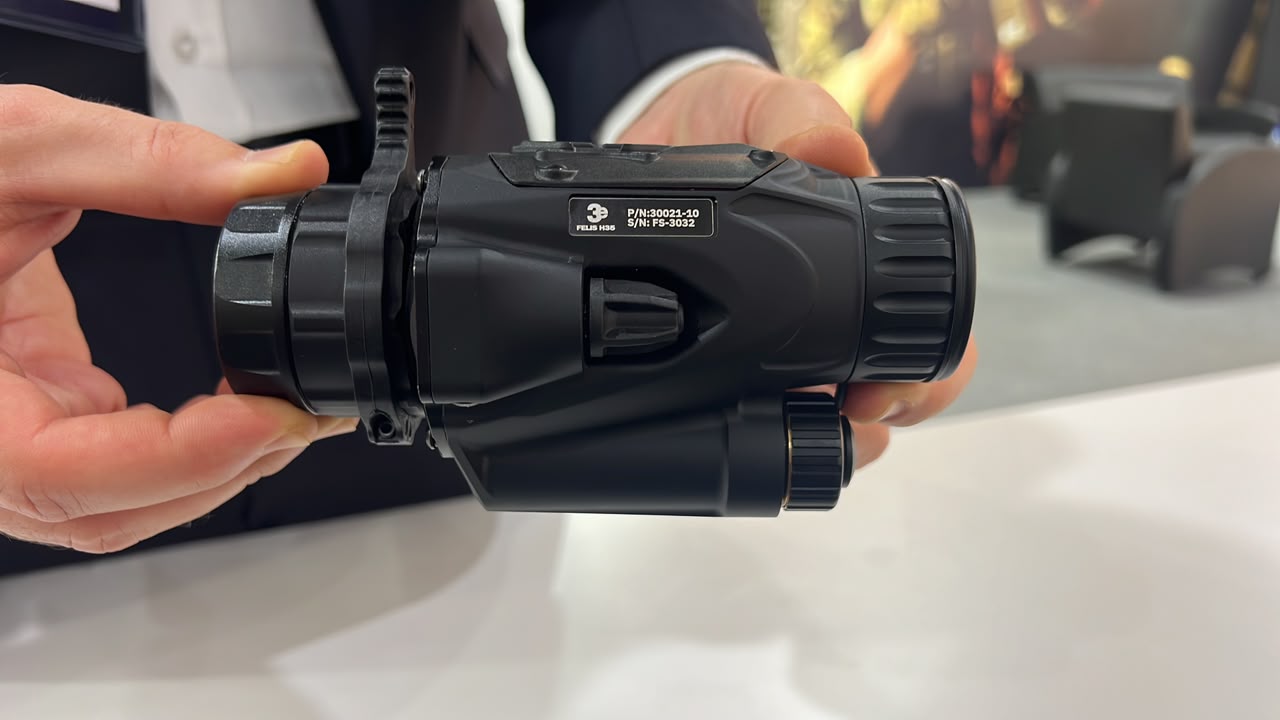
The exhibition covered multiple areas of military technology, including missile systems, unmanned platforms, precision-guided weapons, electro-optical technologies, electronic warfare and air defense solutions.
The international media delegation also visited the exhibition area, which provided an opportunity to observe the technologies showcased by participating manufacturers and examine their potential military applications.
Major Turkish Defense Companies Highlight Industrial Capabilities
ASELSAN is a major developer of defense-electronics technologies, with capabilities spanning radar systems, military communications, electronic warfare, electro-optical sensors and integrated air defense systems.
ROKETSAN specializes in guided missiles, rockets, precision-strike technologies and advanced munition systems for land, air and maritime applications.
Turkish Aerospace Industries contributes to Türkiye’s military aviation and aerospace-development programs, including helicopters, unmanned aircraft, advanced combat aviation and specialized strike platforms.
MKE remains an important manufacturer of military ammunition, weapons and associated defense technologies, including emerging counter-drone systems.
The exhibition illustrated the breadth of Türkiye’s defense-industrial ecosystem and the increasing integration of indigenous technologies into military programs.
It also provided international media representatives with a broader perspective on the country’s defense-manufacturing capabilities and ongoing technology-development initiatives.
By combining operational demonstrations with a dedicated exhibition, Ateş Serbest 2026 presented both the battlefield application of selected military systems and the wider industrial capabilities supporting their development.
Analysis: What Ateş Serbest 2026 Reveals About Türkiye’s Military Modernization
Beyond its immediate significance as a live-fire exercise, Ateş Serbest 2026 illustrated several developments shaping the modernization of the Turkish Armed Forces.
A central feature was the increasing integration of conventional military firepower with precision-guided weapons, unmanned strike platforms and advanced counter-drone technologies.
Attack helicopters, artillery and infantry weapons continue to provide essential combat capabilities. However, their effectiveness increasingly depends on accurate targeting information, coordination between military units and the availability of suitable precision weapons.
The T129 ATAK and KARAOK demonstrations illustrated the continued importance of conventional air-to-ground fire support and guided anti-armor capabilities.
At the same time, the successful engagements conducted by AYAZ, SÜPER ŞİMŞEK and ŞİMŞEK-K highlighted the growing role of jet-powered unmanned strike systems in Türkiye’s indigenous defense-development efforts.
STM’s KARGU swarm and BOYGA demonstrations reflected another aspect of this transformation: the increasing ability of relatively small unmanned platforms to conduct coordinated and precision-strike missions.
These systems offer different operational characteristics and may complement conventional combat platforms rather than replace them.
Offensive Unmanned Systems and Counter-Drone Capabilities
The simultaneous demonstration of unmanned strike platforms and advanced air defense technologies was particularly significant.
While Turkish Aerospace Industries and STM demonstrated different categories of offensive unmanned systems, MKE showcased technologies intended to counter aerial threats.
This reflected an increasingly important characteristic of modern warfare, where advances in unmanned attack technologies are generating corresponding requirements for detection, electronic warfare and interception capabilities.
As unmanned systems become more capable and widespread, military forces require defensive architectures that can address threats with different sizes, speeds, operating altitudes and flight characteristics.
Layered counter-drone systems incorporating electronic warfare, guns and directed-energy weapons represent one approach to addressing these challenges.
However, their effectiveness will depend on factors including sensor performance, target identification, environmental conditions, communications resilience and integration with wider defensive networks.
Indigenous Defense Development and Operational Integration
Ateş Serbest 2026 also highlighted the strategic importance of Türkiye’s investments in indigenous defense research, engineering and manufacturing.
The participation of Turkish-developed aircraft, missiles, unmanned strike systems and counter-drone technologies demonstrated the expanding capabilities of the country’s defense-industrial sector.
The accompanying exhibition reinforced this development by providing a broader view of the manufacturers and technologies supporting military modernization.
For the Turkish Armed Forces, the development of indigenous systems offers opportunities to align equipment with operational requirements, strengthen national engineering expertise and improve support for selected military capabilities.
Nevertheless, successful performance during a controlled exercise does not independently establish effectiveness across every operational environment.
Sustained combat performance also depends on training, logistics, electronic warfare resilience, maintenance, system reliability and the ability to integrate equipment into military command structures.
The significance of Ateş Serbest 2026 therefore extended beyond individual weapon demonstrations, illustrating the broader effort to integrate emerging technologies into a coordinated military capability.
Conclusion
Ateş Serbest 2026 demonstrated the Turkish Armed Forces’ combat firepower and the expanding contribution of Türkiye’s indigenous defense industry to military modernization.
The exercise featured live-fire demonstrations involving the T129 ATAK attack helicopter, ROKETSAN’s KARAOK anti-tank missile, STM’s KARGU and BOYGA unmanned systems, Turkish Aerospace Industries’ AYAZ, SÜPER ŞİMŞEK and ŞİMŞEK-K strike platforms, and MKE’s TOLGA directed-energy air defense technology.
The accompanying exhibition added an important industrial dimension, allowing invited visitors, senior military officials and international media representatives to examine indigenous military technologies presented by leading Turkish defense companies.
Together, the demonstrations and exhibition illustrated the increasing relationship between advanced military technologies, operational requirements and Türkiye’s defense-industrial development.
Global Defense Insight’s participation at Ateş Serbest 2026, at the invitation of the Turkish Ministry of National Defence, provided an opportunity to observe these developments firsthand and assess their implications for contemporary military operations and the future development of indigenous defense capabilities.