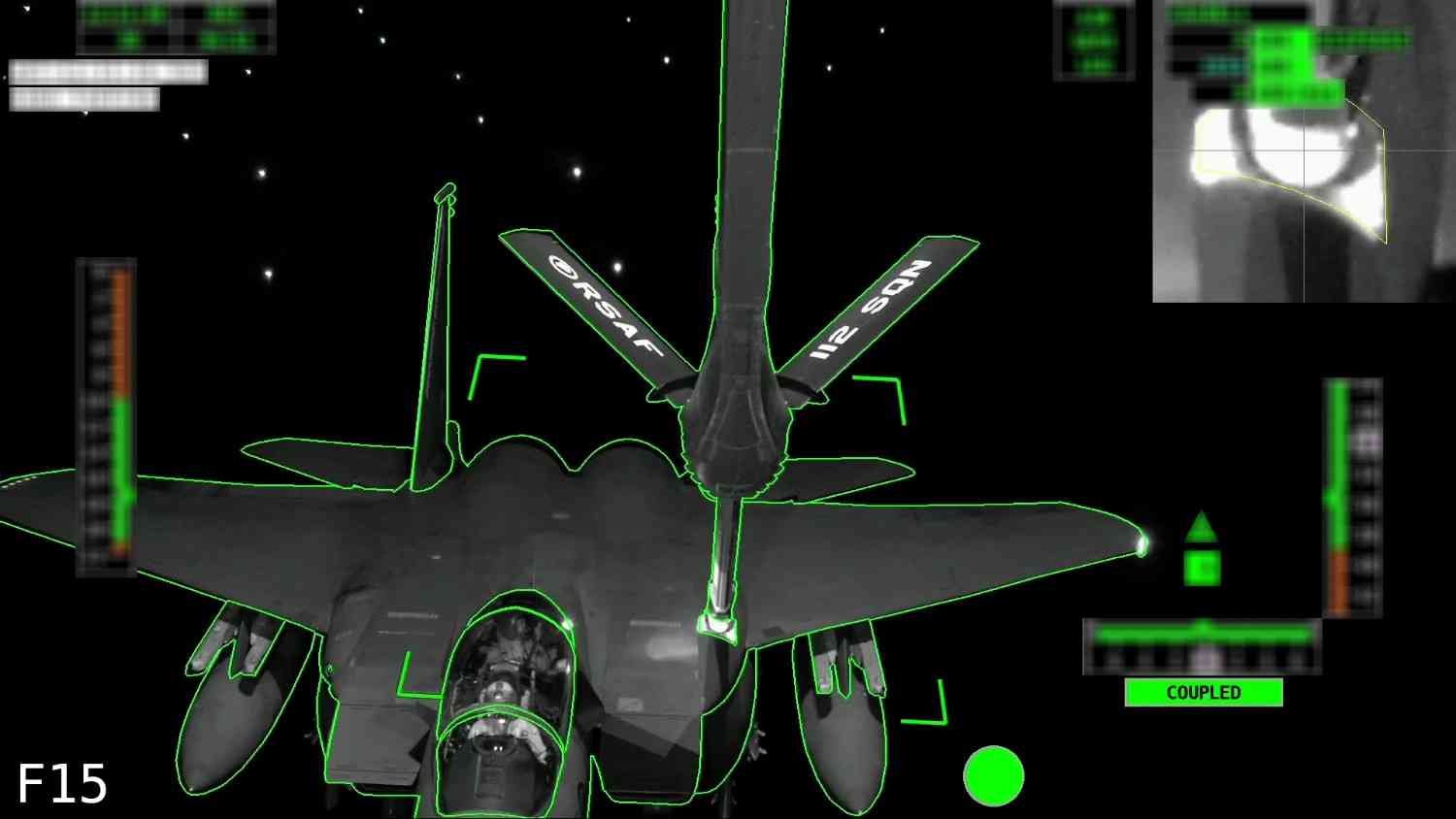

Airbus and Singapore have achieved a global first with the full certification of the Automatic Air-to-Air Refueling (A3R) capability on the Airbus A330 MRTT, marking a major milestone in the evolution of military aerial refueling.
The certification was formally granted by Spain’s National Institute for Aerospace Technology (INTA) following an extensive qualification and flight-test campaign conducted in close cooperation with the Republic of Singapore Air Force (RSAF) and Singapore’s Defence Science and Technology Agency (DSTA).
With this approval, Singapore becomes the first air force worldwide to introduce a fully certified automated refueling system on an operational wide-body tanker fleet, setting a new benchmark in aerial refueling safety, precision, and automation.
Table of Contents
ToggleUpdate: Full Day-and-Night Certification Confirmed
The certification confirms that the A3R system is cleared for both daytime and nighttime operations, across an expanded flight envelope and with multiple receiver aircraft types. According to Airbus and Singaporean authorities, the campaign validated system performance, redundancy, fail-safe behavior, and human–machine interaction under operationally realistic conditions.
The RSAF’s 112 Squadron, which operates Singapore’s A330 MRTT fleet, will be the first unit globally to employ the A3R system as part of routine aerial refueling missions.
A Multi-Year Development and Test Campaign
The joint Airbus–Singapore effort to validate A3R began in 2020, reflecting Singapore’s long-standing role as a launch customer and co-developer of advanced aerospace capabilities.
The test program involved extensive flight trials conducted in both Spain and Singapore, using RSAF A330 MRTTs as tanker platforms. To validate compatibility across different mission profiles, RSAF F-16 and F-15 fighter aircraft were used as receiver aircraft during the trials.
INTA’s certification process required the system to demonstrate consistent performance during:
-
Multiple refueling geometries
-
Different closure speeds and altitudes
-
Day, dusk, and night conditions
-
Normal, degraded, and contingency modes
The approval confirms that A3R meets the stringent safety and airworthiness requirements applied to military aviation systems operating in complex, multi-aircraft environments.
What Is A3R and Why It Matters
Developed by Airbus Defence and Space under its SMART MRTT roadmap, the A3R system represents a fundamental shift from traditional manual boom operation.
Instead of relying solely on a human operator, A3R uses:
-
Advanced computer vision
-
High-resolution cameras
-
Automated tracking algorithms
-
Precision flight control logic
These technologies allow the system to automatically detect, track, and engage receiver aircraft, guiding the refueling boom with minimal manual input.
While an operator remains in the loop to supervise the process and intervene, if necessary, automation significantly reduces workload and fatigue, particularly during long-duration missions or night operations.
Operational Impact for the RSAF
For the RSAF, the introduction of A3R delivers several operational advantages. Automated refueling improves consistency and repeatability, reducing the likelihood of human-induced errors during high-stress or degraded-visibility conditions.
Major-General Kelvin Fan, Chief of Air Force of the RSAF, noted that the capability enhances aerial refueling effectiveness while reinforcing Singapore’s commitment to innovation and technological leadership.
The system also supports higher sortie generation rates by enabling more efficient refueling operations, an important factor for air forces operating limited tanker fleets while supporting multiple receiver aircraft.
Airbus and Singapore: A Proven Innovation Partnership
Airbus leadership emphasized that the A3R milestone reflects a long-term, trust-based partnership with Singapore.
Mike Schoellhorn, Chief Executive Officer of Airbus Defence and Space, described the certification as a clear demonstration of what sustained collaboration between industry and a technologically advanced customer can achieve.
Singapore, through DSTA, played a central role in system validation, ensuring seamless integration between aircraft systems, operational procedures, and certification requirements. According to DSTA Chief Executive Ng Chad-son, the achievement demonstrates effective technology integration while setting a new global benchmark for automated aerial refueling.
Broader Implications for Global Air Forces
Beyond Singapore, the certification of A3R is expected to influence future tanker modernization programs worldwide. As air forces face increasing operational tempo and personnel constraints, automation offers a way to enhance capability without expanding crew size.
Automated refueling is particularly relevant in:
-
Coalition operations
-
Distributed air operations
-
High-threat or contested environments
By reducing crew workload and increasing precision, A3R supports longer missions, safer refueling in degraded conditions, and greater operational resilience.
A New Benchmark in Aerial Refueling
With A3R now fully certified, the A330 MRTT becomes the first tanker aircraft globally capable of operational automatic air-to-air refueling, moving the concept from demonstration to frontline service.
As Airbus continues to evolve the A330 MRTT platform under its SMART MRTT vision, automation and digitalization are expected to play an increasingly central role in shaping the future of air mobility and power projection.
For Singapore, the achievement reinforces its position at the forefront of aerospace innovation. For Airbus, it validates years of investment in automation and computer vision technologies. And for the global defense aviation community, it signals the beginning of a new era in aerial refueling, defined by precision, safety, and intelligent automation.