USA’s anti-air defence strategy was a gradual escalation that actually began during last June when Israel attacked Iran during its Operation Rising Lion. Medium to long range Iranian and Russian origin systems were taken out during SEAD operations. Iran’s lack of air force seriously impaired its ability to respond to Israeli aircraft that could fly uncontested over Iranian cities and critical military sites. Iranian SAM systems like the S-300, Khordad, and Bavar were taken out early on during the conflict. Likewise, the current conflict also witnessed a similar campaign to take out remaining Iranian air defences. This time the USA even proceeded to degrade Iran’s other capabilities like logistics that would require many years to replenish and seriously hinder Iran’s wartime transport roles. Many Iranian aircraft like C-130s, IL-76s, and other transport aircraft were bombed by US forces, as per CENTCOM released footage. Iran did not fly them out to safe territories.
USA also employed its drones parallel to the role of Iranian drones, although on a smaller scale. The LUCAS drone saw its employment against Iran after its first recorded usage in Venezuela earlier this year. USA has majorly relied on UAVs for ISR and close air support missions over Iran. US/Israeli MALE UCAVs like the MQ-9 Reaper and Hermes fly for longer duration over Iranian airspace and use their advanced sensors to monitor ground activity around Iranian missile sites . When launchers are spotted they either strike through their own munitions or direct US strike aircraft like the F-15 to strike those targets, impairing Iran’s ability to utilize all of its launchers.
Table of Contents
ToggleThe New Penetrators:
USA’s non-contact war doctrine also saw the usage of stand-off munitions. In addition to land and ship launched Tomahawk cruise missiles, US bombers like the B-52, B-1B, B-2, and combat aircraft like the F-35, F-16s, and F-15s utilized stand-off weapons like the, JASSM-ER, Small Diameter GBU bombs, and other long range precision munitions that could be launched from friendly airspaces. Israel likewise employed its own array of similar arsenal like Air Launched Ballistic Missiles (Golden Horizon), Air LORA, SPICE series, ROCKs system and Ice Breakers.
American aerial assets also used bunker busters and penetrator bombs. The new GBU-72/B Advanced Penetrator that weighs 5,000 pounds saw its first use against targets in Iran. For decades, Iran’s most prized nuclear infrastructure was considered genuinely untouchable by conventional means.
USA also used land-based precision guided munitions from its bases in the Gulf to strike targets in Iran. It used PrSM missiles from HIMARS vehicles from its multiple bases in the Gulf, especially Kuwait. These employed shoot-and-scoot methods to deliver strike capability at a lower cost than using air-launched munitions or expensive UCAVs.
Targeting, Intelligence, and Space as an Active Combat Domain
USA’s active satellite intelligence plays a crucial role. These assets provide real-time targeting and surveillance data over Iran’s critical missile cities and nuclear sites. The conflict also shows that open-source satellite imagery exposed USA’s own vulnerabilities. Imagery of the critical damage inflicted to US bases in Kuwait, Bahrain, Saudi Arabia, and Qatar was publicly available. The USA moved to restrict vendors like Vantor, Planet Labs, and the NASA FIRMS system from releasing imagery of the Middle East. But new entrants like the Chinese Mizar Vision have democratized open-access information, serving as a disincentive for the US monopoly over the information theatre.
Decapitation as the Primer:
No previous US military operation against Iran had ever targeted its supreme leader. The 2020 killing of General Qasem Soleimani, tactically audacious as it was, struck a military commander, not the sovereign head of a theocratic state. The events of February 28, 2026 crossed a threshold that had long been considered politically and legally unthinkable. For months before the attack, the CIA had been tracking the locations and patterns of Khamenei and learned that a senior leadership meeting was scheduled at his compound. What distinguishes this as a new tactic is the integration of sustained human intelligence, satellite surveillance, and real-time targeting into a single, time-sensitive kinetic operation. The willingness to strike a head of state before hostilities had formally commenced, and to do so during active diplomatic negotiations, represents a break from traditional norm that will shape international security calculations for years.
In all prior US-Iran confrontations, space was a supportive domain. Satellites provided imagery, GPS guided weapons, and communications linked commands. In the 2026 conflict, for the first time, space operations were explicitly acknowledged as an active combat dimension. While not openly acknowledged, this would hint at obstruction of Iranian space-based assets, especially satellites that could track and guide their missiles.
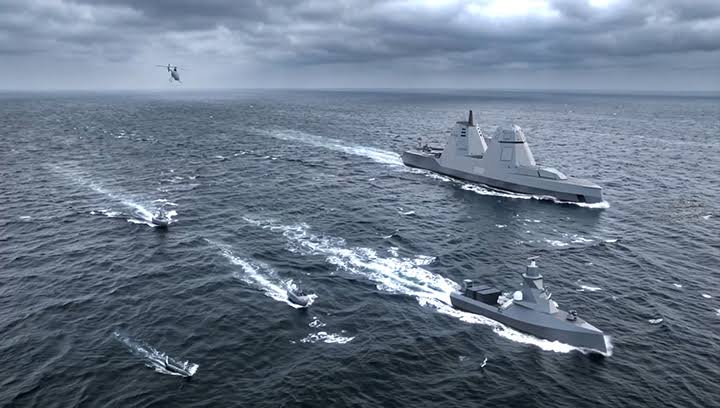
Iran’s closure of the Strait of Hormuz, through which approximately 20 percent of the world’s seaborne oil normally passes, represented a classic asymmetric pressure play, weaponizing geography against a technologically superior adversary. The US response was itself historically novel: a naval blockade of Iran’s ports and coastlines designed to counter-blockade the blockader. Rather than a traditional close blockade with warships lying in wait inside the Strait, the US implemented a distant blockade of vessels that had paid tolls to Iran, an approach with advantages in tactical risk while targeting Iran’s economic lifeblood from further offshore. This blockade is not just maritime only. It also employs drones like MQ-9s and Maritime Patrol Aircraft like the P-8 that identify shipping vessels and relay data to command centres
AI and the New US War Tempo:
This is also the first conflict where AI systems are being extensively used. At the operational heart of the US AI targeting effort is the Maven Smart System (MSS), built by the data analytics firm Palantir and now embedded across the US military’s command and targeting architecture. Maven Smart System consolidated nine separate DoD targeting tools into one AI platform. Anthropic’s Claude large language model is embedded within the Maven system to summarize intelligence, analyze data, and simulate scenarios, dramatically compressing what once took hours or days into minutes. This posits serious challenges to International Humanitarian Law, arms control, and the issue of attribution. AI-based targeting on the basis of classified algorithms brings new challenges for all parties to a conflict. What has been evident in the current conflict is AI defining the tempo of operations and fusing siloed intelligence into a compact, actionable database.
Cost Attrition, Iranian Resilience, and Lessons from Ukraine
However, it is not the case that USA’s tactics have paid off entirely. On the contrary, the cost attrition has been massive. Iran was able to strike sensitive radar sites across the Gulf, deriding the efficacy of USA’s layered Gulf shield. Iran’s mass volume of drones and missiles allows it to prolong the conflict and exhaust costly American systems at a fraction of the cost. While Western systems are efficient, their magazine depths are limited, and once they are expended this leaves an open window for the Iranians.
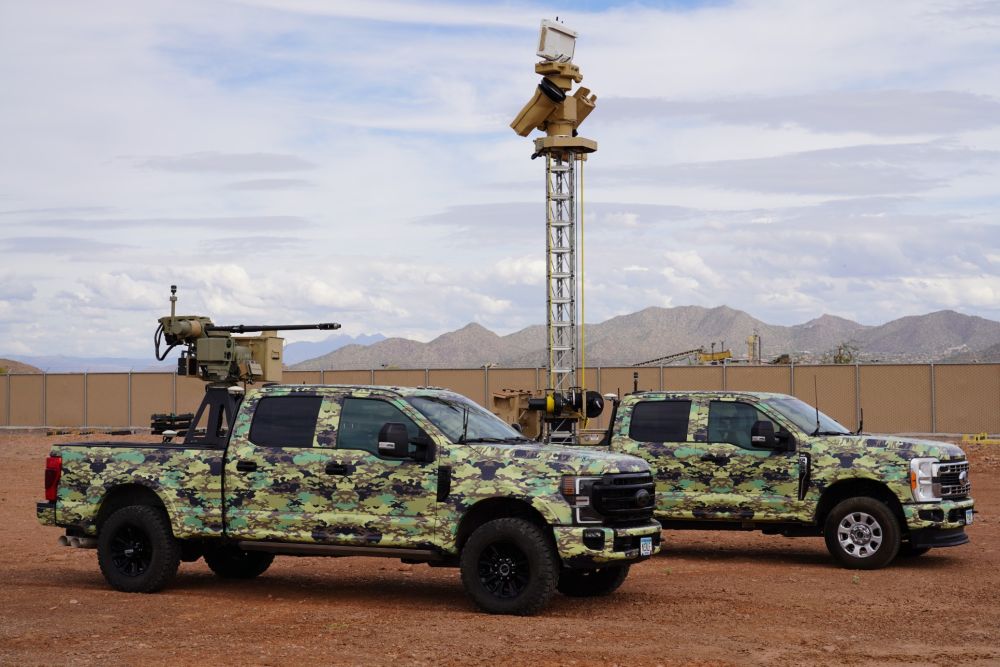
The emerging tactic by the US and Gulf allies was to mainstream combat learnings, especially in the counter-drone domain, from Ukraine. Ukrainian advisors were sought to advise Gulf militaries on changing tactics because Ukraine faces similar attritional warfare from Russia. Ukraine developed very cheap interceptor drones like the Sting that have been effective in countering Russian Geran drones, Russia’s version of the Shahed-136
Conclusion
The primary takeaways from this conflict are USA’s employment of an AI-based decision system in active command operations, the usage of nuclear powered submarines to deliver stand-off payloads like the Tomahawks, reliance on stand-off munitions as the primary strike architecture, and the emergence of American loitering drones in the war theatre.
Taken together, these developments signal something more significant than a set of new weapons or platforms. They reflect a doctrinal evolution in how the United States conceptualizes and prosecutes conflict at every level of the kill chain. The integration of AI targeting, space operations, low-cost one-way attack drones, and ground-based precision fires into a unified operational framework marks a qualitative shift from the force employment models of even a decade ago. The speed at which targeting decisions are now made, compressing hours of human analytical work into seconds, raises urgent and as yet unanswered questions about accountability, the laws of armed conflict, and the stability of deterrence in a world where decision cycles outpace institutional oversight.
The Iranian response, though asymmetric and costly in its own terms, has also demonstrated that mass-volume attrition strategies retain their value against technologically superior but magazine-constrained adversaries. The lesson is not lost on other potential US adversaries. The Strait of Hormuz closure, the strikes on US Gulf bases, and the demonstrated ability to impose costs on allied infrastructure collectively illustrate that the era of low-risk, high-precision US power projection is not without its limits.
What the conflict ultimately reveals is a battlefield in transition, where the advantages of technological sophistication are real but not unlimited, where open-source intelligence challenges the traditional monopoly on information, and where the rules and norms governing the use of force are struggling to keep pace with the tools now available to military planners. The ongoing war serves a real-time laboratory where other states are observing and revisiting their own doctrines. The conflict has laid bare certain tactical realities of weapon employment and logistical issues, alongwith highlighting the efficacy of attritional warfare against a superior adversary. America;s new tactics will surely be analysed by other militaries, especially China and Russia that will re orient their force postures after drawing critical lessons from both Iran and the US military operations.
Hammad Waleed
The US-Israel joint attack on Iran and the latter's kinetic response has marked a new evolution in non-contact warfare on a wide scale. Analyzing the US attacks, the overview can be multidimensional if we cover degradation of Iranian air defenses, counter-force and counter-value targeting across Iran, and defending against incoming Iranian salvos of drones and ballistic missiles.