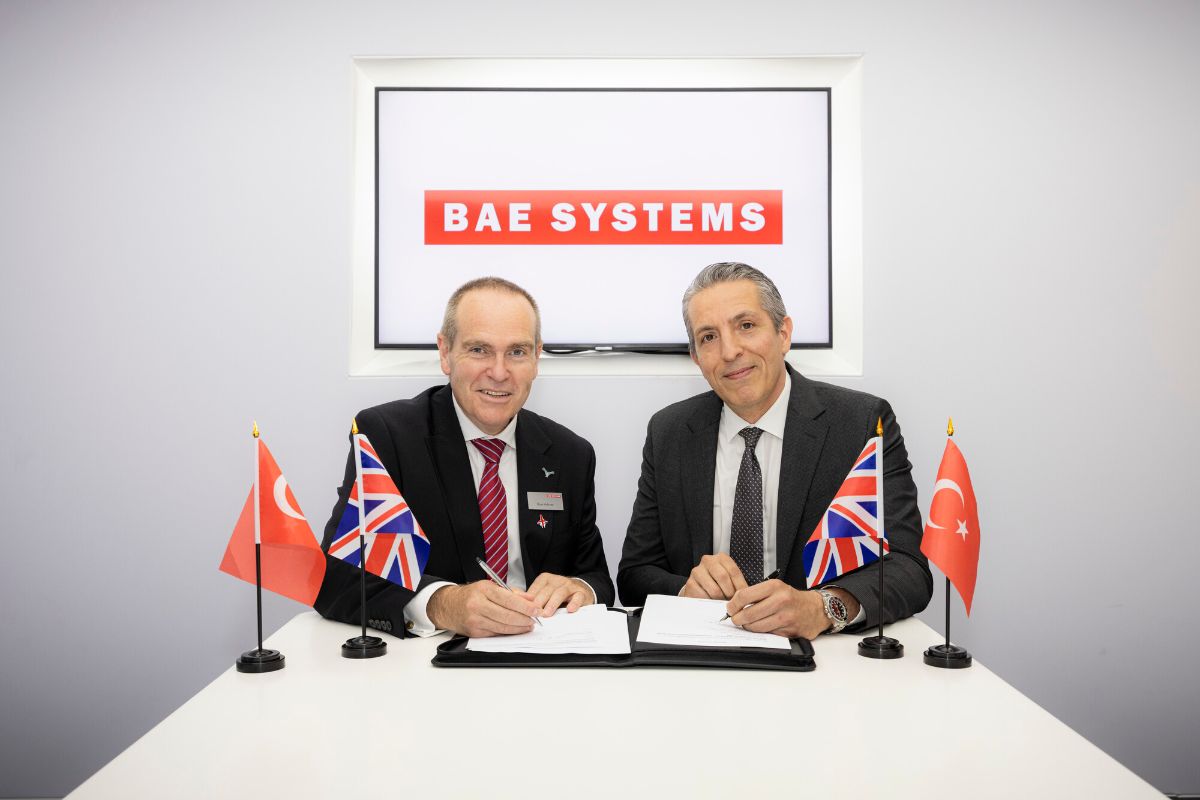

BAE Systems and Turkish defense technology company TUALCOM have signed a Memorandum of Understanding (MoU) to explore cooperation on advanced technologies for future autonomous air systems, with a particular focus on resilient communications, assured navigation and electronic warfare capabilities.
Announced on August 12, 2026, the agreement establishes a strategic framework through which the two companies will identify opportunities to integrate their respective technologies into future autonomous platforms. The collaboration is expected to support potential customers in the United Kingdom, Türkiye and wider international markets.
Table of Contents
ToggleFocus on Resilient Autonomous Air Systems
The partnership comes as defense forces increasingly seek autonomous and uncrewed aircraft capable of operating effectively in contested and degraded environments.
Future autonomous systems are expected to face environments where satellite navigation, communications links and traditional command-and-control networks could be disrupted by electronic warfare, jamming or other forms of interference. Maintaining reliable connectivity and navigation under such conditions has therefore become a key requirement for next-generation air platforms.
BAE Systems and TUALCOM will explore technologies intended to help autonomous aircraft continue to sense, communicate, navigate and support decision-making even when conventional systems are denied or degraded.
Communications, Navigation and Electronic Warfare at the Center
TUALCOM specializes in radio-frequency communications, assured navigation and electronic warfare systems designed for use in demanding operational environments.
The company has invested in technologies intended to improve the resilience of military platforms against communications disruption and navigation interference. Under the new agreement, these capabilities could be combined with BAE Systems’ experience in military aviation, systems integration and advanced aerospace development.
Dave Holmes, Managing Director of BAE Systems’ FalconWorks division, said future autonomous capability would depend not only on advanced aircraft but also on the resilience of the technologies that enable those aircraft to operate.
He said the collaboration would bring together complementary expertise and help accelerate the development of sovereign and exportable technologies for defense customers.
TUALCOM Chief Executive Officer Ali Pastonoglu said the company had made significant investments in RF communications, assured navigation and electronic warfare technologies designed for demanding operational conditions.
He added that cooperation with BAE Systems would provide an opportunity to combine the strengths of both companies and accelerate the development of technologies supporting the next generation of autonomous defense systems.
FalconWorks to Lead the Collaboration
The work will be conducted through FalconWorks, BAE Systems’ advanced research and technology business within its Air sector.
FalconWorks focuses on accelerating the development of emerging aerospace technologies through experimentation, advanced engineering and collaboration with specialist industry partners.
Under the initial phase of the agreement, teams from BAE Systems and TUALCOM will identify advanced development opportunities related to resilient autonomy. Concepts will then be assessed and evaluated before potentially progressing into future defense programs.
No specific aircraft, platform, contract value or development timeline has been announced.
Responding to Contested Battlespace Requirements
The agreement reflects a broader shift across the defense industry toward developing autonomous systems that can function with reduced dependence on vulnerable external networks.
Modern military operations increasingly involve electronic attack, GPS interference and communications jamming, creating a growing requirement for platforms that can maintain operational effectiveness when traditional positioning and connectivity are compromised.
This trend is driving investment in secure communications, alternative navigation technologies and electronic warfare systems that can be integrated directly into autonomous platforms.
For future collaborative combat aircraft, unmanned aerial vehicles and other networked air systems, these capabilities could become as critical as sensors, weapons or propulsion systems.
UK-Türkiye Defense Cooperation Continues to Expand
The BAE Systems-TUALCOM agreement also highlights the expanding defense and aerospace relationship between the United Kingdom and Türkiye.
Both countries have developed significant capabilities in military aviation, unmanned systems, electronic warfare and defense electronics, creating opportunities for industrial collaboration and export-oriented development.
For TUALCOM, cooperation with one of Europe’s largest defense companies could provide a pathway for its technologies to be assessed for integration into a wider range of international aerospace programs.
For BAE Systems, the partnership provides access to specialist Turkish expertise in communications, navigation and electronic warfare technologies that could strengthen the resilience of future autonomous systems.
Although the MoU represents an early-stage framework rather than a commitment to a specific program, it positions both companies to address one of the most important requirements shaping future air warfare: ensuring autonomous systems can continue operating effectively in increasingly contested electromagnetic environments.