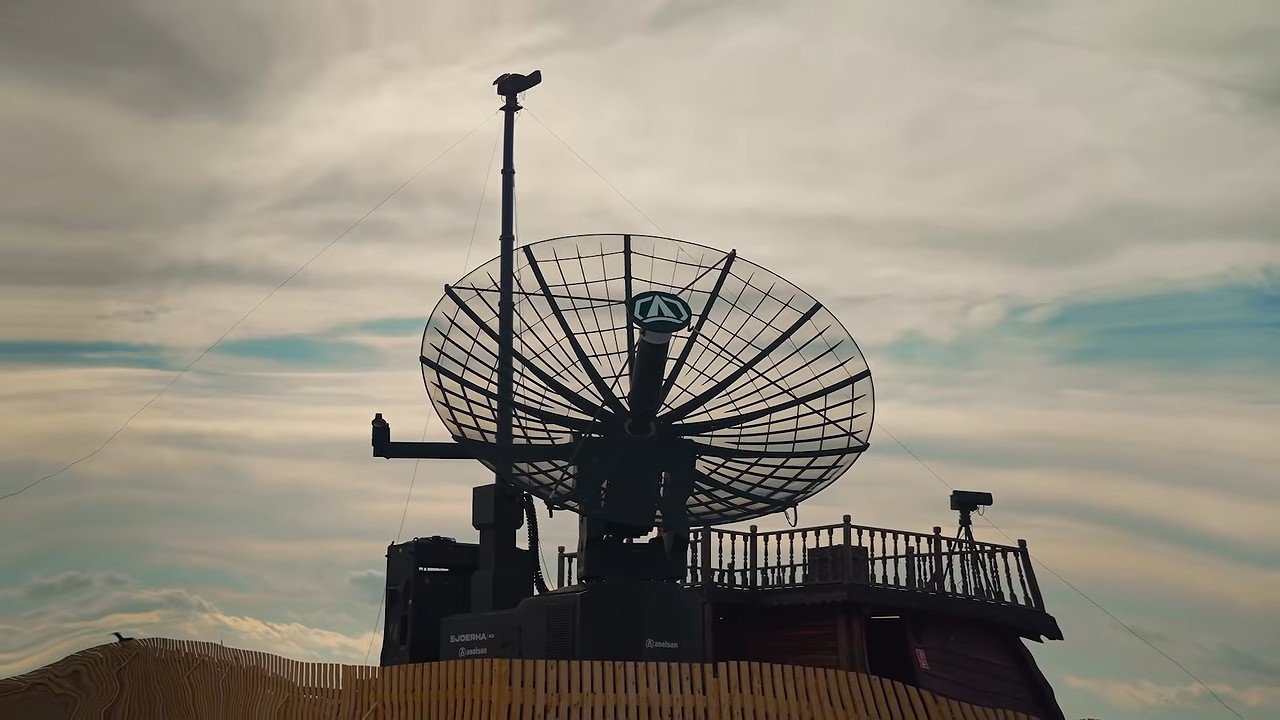

Cambridge Pixel demonstrated its SAPIENT-compliant radar processing technology during a NATO counter-unmanned aircraft systems exercise held at the Capu Midia Training Range in Romania.
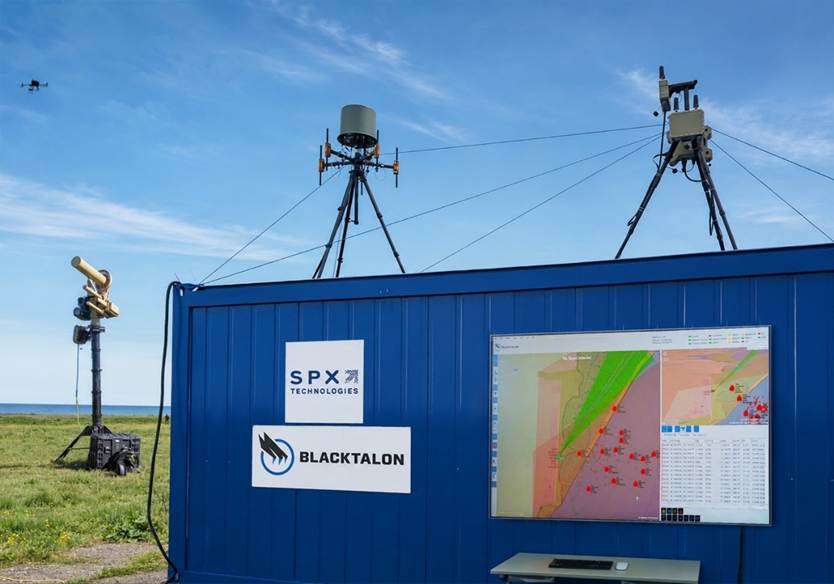
The company’s software was deployed as part of the SPX Technologies BlackTalon counter-UAS system during the Layered Counter-UAS Initiative Exercise, known as LCI-X Crucible 1-26.
Hosted by Romania as part of Exercise Eastern Phoenix 26, the event was held from April 14 to 25, 2026. It marked the first activity conducted under a NATO Allied Command Transformation initiative designed to evaluate counter-UAS capabilities in realistic and threat-informed operational environments.
Approximately 500 military personnel, technical specialists and industry representatives from Romania and other NATO member states participated in the exercise. The event brought together a range of unmanned aircraft and counter-UAS technologies for testing, evaluation and interoperability demonstrations.
Table of Contents
ToggleCambridge Pixel Software Supports BlackTalon Counter-UAS System
The BlackTalon system deployed during the exercise incorporated Cambridge Pixel software for radar processing, multi-sensor track fusion, data recording and operator visualization.
The software combined data from radar, electro-optical sensors and other surveillance systems to generate a unified air picture for detecting and tracking unmanned aircraft.
SAPIENT-compliant interfaces supported data exchange and integration between sensors and systems supplied by different manufacturers.
This type of interoperability is increasingly important in counter-UAS operations, where no single sensor is likely to provide sufficient coverage against the full range of potential threats.
Radar can provide persistent detection and tracking, while electro-optical and infrared systems may support target identification and visual confirmation. Other sensors can contribute radio-frequency detection, acoustic data or additional surveillance information.
By combining these inputs, an integrated counter-UAS system can provide operators with a more comprehensive understanding of the threat environment.
NATO Exercise Tests Open Sensor Integration
SAPIENT, or Sensor Association Service, is an open standard developed by the United Kingdom’s Defence Science and Technology Laboratory.
The standard is designed to enable plug-and-play integration among sensors, decision-support systems and surveillance platforms.
SAPIENT is published as BSI Flex 335 V2.0 and is associated with NATO standardization recommendations under STANREC and AEDP-4869.
Its architecture allows sensors and other system components to exchange standardized messages rather than depending entirely on proprietary interfaces.
For defense organizations, this approach can simplify the integration of new sensors, reduce dependence on a single vendor and support the gradual modernization of existing surveillance and counter-UAS systems.
It may also allow military operators to combine technologies from multiple suppliers according to operational requirements.
Realistic Testing Validates SAPIENT Interoperability
Nick Booth, product manager at Cambridge Pixel, said large-scale exercises provide a valuable opportunity to assess whether open standards can operate effectively outside laboratory environments.
“Exercises like LCI-X Crucible 1-26 are the right place to test how well an open standard actually works in practice,” Booth said.
“Bringing together sensors from multiple vendors under SAPIENT in a realistic environment is the kind of validation that matters far more than a datasheet claim. We are pleased to have contributed to it.”
The exercise allowed participating companies and military organizations to assess counter-UAS technologies against representative operational scenarios.
Such evaluations can help identify limitations involving detection range, tracking accuracy, sensor coordination, system latency, operator workload and interoperability.
They can also provide information needed to refine military requirements and future procurement programs.
Growing NATO Focus on Counter-UAS Capabilities
NATO members are expanding investments in counter-UAS systems as commercially available drones become more capable, affordable and widely used.
Small unmanned aircraft can be employed for intelligence, surveillance and reconnaissance, artillery spotting, electronic warfare and direct attack missions.
The growing use of first-person-view drones, loitering munitions and autonomous systems has increased demand for layered defenses capable of detecting, identifying, tracking and defeating multiple types of aerial threats.
A layered counter-UAS architecture may incorporate radar, electro-optical sensors, radio-frequency detection, electronic warfare systems, interceptor drones, directed-energy weapons and conventional kinetic effectors.
Open standards such as SAPIENT can support these architectures by enabling sensors and command-and-control systems from different manufacturers to operate within a shared network.
Cambridge Pixel Expands SAPIENT-Compliant Product Portfolio
Cambridge Pixel said it is continuing to develop its range of SAPIENT-compliant radar and sensor-processing products.
The company’s SPx Track Manager, VSD and SPx Server products provide software components for sensor integrators and system developers seeking to add SAPIENT functionality to new or existing counter-UAS systems.
SPx Track Manager is designed to manage and fuse target tracks from multiple sensors. SPx Server supports radar acquisition and processing, while the company’s visualization software provides operator display and control functions.
Together, these technologies can support surveillance systems requiring radar processing, target tracking, recording, display and sensor-level interoperability.
Cambridge Pixel said further updates to its SAPIENT-compatible product range are planned throughout 2026.
The company develops radar processing, tracking and display software for defense, security, maritime surveillance, air traffic monitoring and counter-UAS applications.
Exercise Supports Future NATO Counter-UAS Development
The deployment of the BlackTalon system at LCI-X Crucible 1-26 demonstrated how open software interfaces can support the integration of radar, electro-optical systems and other sensors within a common counter-UAS architecture.
The exercise also provided NATO members and industry partners with an opportunity to evaluate how these systems perform under realistic conditions.
As unmanned aircraft threats continue to evolve, NATO and allied governments are expected to place greater emphasis on interoperability, modularity and rapid technology integration.
SAPIENT-compliant systems could support these objectives by allowing military organizations to combine new sensors and countermeasures without redesigning an entire surveillance architecture.