
Climate change is increasingly emerging as a critical national and regional security challenge across South Asia, where extreme weather events, water scarcity, melting Himalayan glaciers, and vulnerabilities in critical infrastructure are intersecting with longstanding geopolitical tensions. From devastating floods and heatwaves in Pakistan to cross-border environmental disasters in the Himalayan region, climate-related threats are placing growing pressure on national institutions, disaster preparedness mechanisms, and regional cooperation frameworks. As countries confront these challenges, climate security is becoming an essential consideration in defense planning, resource management, technological development, and broader national security strategies, raising important questions about institutional resilience and the ability of governments to respond effectively to nontraditional security threats.
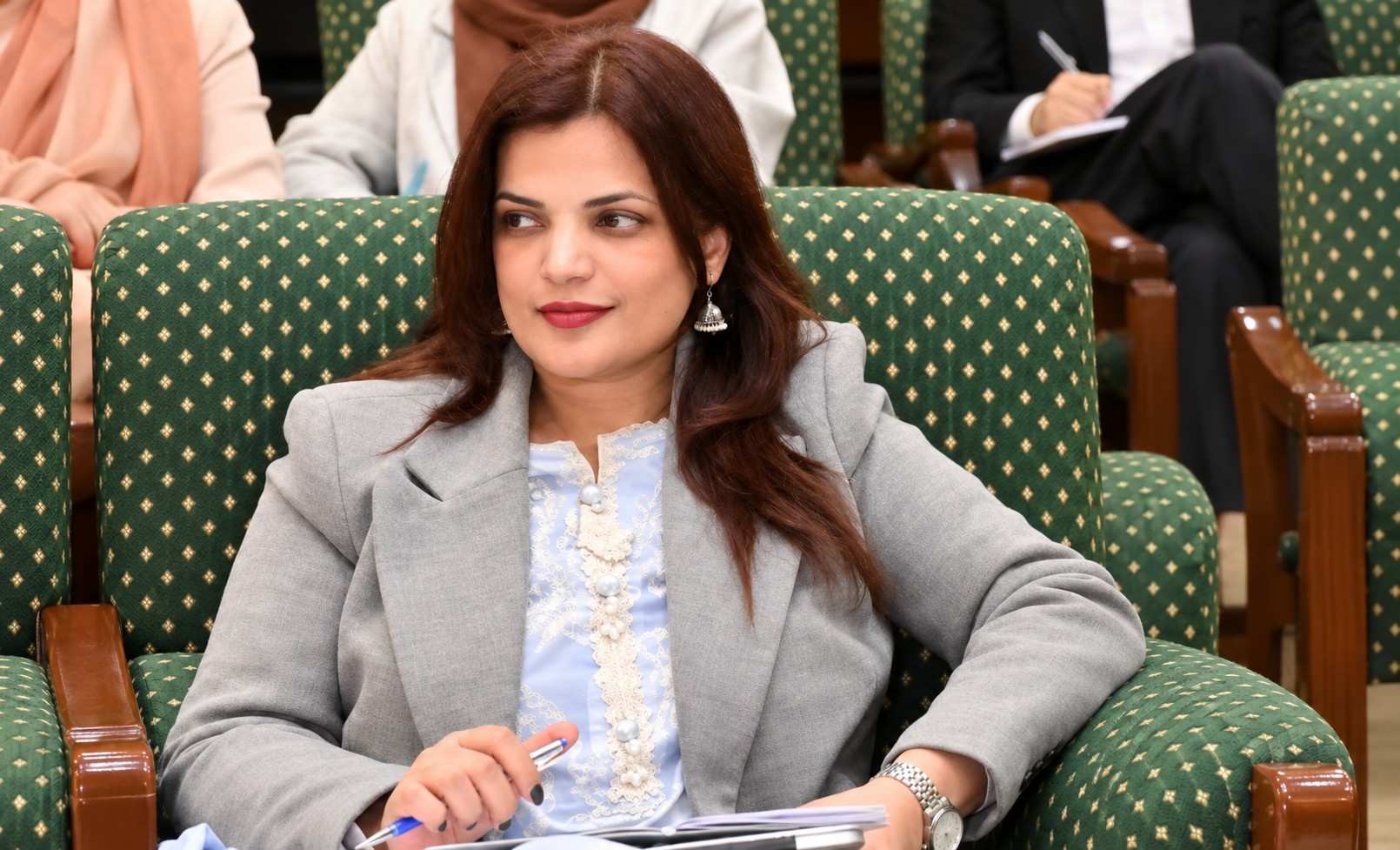
In an exclusive interview with Global Defense Insight (GDI), Dr. Samrana Afzal, Assistant Professor of International Relations at Fatima Jinnah Women University and Head of Outreach and Partnerships at the Pakistan Institute of Environmental Governance and Research (PIGER), examines how climate change acts as a threat multiplier in South Asia and its implications for regional stability. Speaking with Warda Kalsoom, Dr. Afzal discusses the intersection of climate change, national security, and governance, including the strategic implications of the Indus Waters Treaty, cross-border disaster management, the environmental demands of expanding digital infrastructure, and the role of armed forces in climate resilience. Drawing on her extensive academic and policy experience, she also outlines the need for stronger regional cooperation, effective early warning systems, and institutional reforms to address the evolving security challenges posed by climate change.
The idea of climate change as a “threat multiplier” is now common in security discourse. Does the concept genuinely explain how climate change drives insecurity, or does it hide the political and governance failures that turn a hazard into a crisis?
The concept is useful, but only if treated as a conditional explanation not as a substitute for political analysis. The IPCC finds that climate variability and extremes can increase conflict risks, particularly where poverty, inequality, political marginalisation, dependence on climate-sensitive livelihoods, and weak institutions already exist. It also finds that the climate–conflict relationship is not universal or mechanically causal; socioeconomic and governance conditions strongly mediate outcomes.
That makes “threat multiplier” a shorthand for interaction: a hazard can intensify livelihood loss, displacement, competition, or distrust, while institutions determine who is protected, who bears the cost, and whether grievances are resolved. Used carelessly, however, the phrase can make political choices sound like natural consequences of climate change. It can obscure land-use decisions, unequal access to water, poor infrastructure, exclusionary relief, and failures of public accountability. The concept is most valuable when it directs attention to those mediating institutions rather than implying that climate change itself produces violence.
The August 2026 Nepal-Tibet flood began on one side of a border and devastated communities on the other. Do existing regional arrangements for early warning and data sharing work in practice, or do they exist mainly on paper?
The August 2026 disaster points to a serious gap between dialogue about cooperation and an operational, dependable warning system. Nepal and China had discussed flood, weather, and glacier-related risks at a May meeting, but Reuters reported that Nepali officials still wanted more information on glacier movement and water levels. China said it had shared information in a timely manner; the available reporting does not establish that a specific missing warning would have prevented the disaster.
The operational shortcomings were nevertheless clear. The flood struck a relatively unmonitored area, destroyed monitoring stations, and disrupted downstream data. Nepal’s warning team received notice of the flood and sent a public alert after contacting local authorities; the warning came as the torrent was already moving downstream. The lesson is not simply “share more data”: high-altitude monitoring is technically difficult, stations can fail during extreme events, and protocols need to specify what data are shared, how quickly, through which channels, and what happens when sensors are lost.
Regional and bilateral arrangements should therefore be judged by performance under stress, not by the existence of meetings or declarations. A practical system would include continuous river-level and precipitation feeds, glacier and landslide alerts, redundant communications, agreed warning thresholds, and routine joint exercises. Nepal’s existing arrangements with India for some meteorological and river information show that data exchange is possible; the key challenge is expanding it to hazards and locations that are not covered reliably.
Pakistan has endured devastating floods and punishing heatwaves in recent years, yet its national security thinking still gives priority to conventional threats. Is this a failure of imagination, of institutions, or of resources?
It is not simply a failure of imagination. Pakistan’s National Security Policy 2022–2026 explicitly adopts a “comprehensive national security” approach and includes climate and water security within human security. It also recognises that national security depends on citizen welfare, governance, and the interaction between traditional and non-traditional threats. The problem is the gap between that framing and sustained implementation.
The scale of exposure is unmistakable. Pakistan’s 2022 floods affected 33 million people and caused estimated damages above US$14.9 billion and economic losses of about US$15.2 billion; the estimated need for resilient recovery was at least US$16.3 billion. NDMA guidance also reports that the 2024 heatwave caused 568 reported human fatalities and 2,547 heatstroke cases, alongside livestock losses. Such shocks affect public health, food and water security, infrastructure, livelihoods, and the state’s ability to deliver services—not only emergency management.
The most defensible diagnosis is a combination of institutional and fiscal constraints, reinforced by strategic priorities that often privilege conventional security. Climate policy crosses federal, provincial, and local responsibilities, while preparedness, urban planning, water management, and resilient public services require coordination and continuity. The National Security Policy itself describes the need for whole-of-government coordination and acknowledges the challenge of turning its ambitions into implementation. Resource scarcity matters, but it does not explain everything: spending choices, risk-sensitive planning, maintenance, and accountability also determine how much damage a hazard produces.
Water stress and pressure on the Indus system are often linked to India-Pakistan tensions. How strong is the evidence that climate pressure makes conflict more likely, as opposed to creating space for cooperation?
The evidence does not support a simple claim that climate pressure makes India–Pakistan conflict inevitable. The IPCC finds limited evidence for a universal direct causal link between climate change and violent conflict; where risks rise, political and socioeconomic context-including government capacity and inequality-matters greatly. Research on shared waters likewise cautions against equating scarcity with “water wars”: water stress can heighten political tension, but shared rivers have also created incentives for cooperation.
The Indus case is unusually delicate because climate stress meets deep political mistrust and a treaty under severe strain. The Indus Waters Treaty historically maintained technical cooperation through a Permanent Indus Commission and dispute-resolution procedures, but India placed it “in abeyance” in April 2025, halting routine meetings and data exchange, according to a 2026 PLOS Water analysis. The treaty’s design also does not directly address several contemporary challenges, including climate-adaptive allocation, groundwater, environmental flows, and drought-sharing.
So climate change is better understood as raising the stakes and increasing uncertainty than as independently causing interstate conflict. The more immediate danger is that reduced predictability and data-sharing become securitised, while domestic water-management problems are blamed on the other state. Conversely, shared exposure to floods, droughts, glacier change, and groundwater depletion could support cooperation if both governments restore technical channels and develop joint monitoring and risk-management arrangements. The evidence points to a political choice, not a climatic inevitability.
India’s data centre expansion is projected to demand much more water and electricity in regions that are already stressed. Does this show that digital growth and climate security are in direct tension, or can the two be reconciled through better planning?
There is a real tension, but it is not an unavoidable one. A 2026 CEEW–SYSTEMIQ study estimates that India’s data-centre capacity could rise from about 1.5 GW in 2025 to 4.5–6.5 GW by 2030. It estimates current annual water use at about 150 billion litres and says both water use and electricity consumption could more than double by 2030. Those pressures are especially important where facilities rely on stressed municipal supplies or add demand to constrained electricity grids.
The same study suggests that planning can substantially reduce the trade-off. It identifies siting, cooling, and power sourcing as consequential long-term choices; notes that only five of 15 state policies reviewed explicitly included sustainability provisions; and finds that renewable energy developers consider up to roughly 80% renewable supply feasible through geographically diversified solar–wind portfolios combined with storage. Water-efficient or closed-loop cooling, wastewater reuse, transparent reporting of water use, and avoiding high-stress locations can also reduce local burdens, though different cooling choices involve energy, cost, and technical trade-offs.
The policy concern is therefore not digital growth in itself, but growth without integrated planning for water, land, power, and climate exposure. India can pursue digital infrastructure while reducing risks, but incentives and approvals should be tied to verifiable resource-efficiency and resilience standards rather than investment volume alone.
Should armed forces be given a larger formal role in climate resilience, or is this a risky drift for institutions that are meant to focus on defence?
Armed forces should have a clear, formal role in preparedness and emergency response, but not a general mandate to govern climate resilience. Their logistics, communications, transport, engineering, and search-and-rescue capabilities can be valuable when disasters overwhelm civilian capacity. Research on the Bay of Bengal region describes military involvement in humanitarian assistance and disaster relief as an established part of regional disaster practice.
The boundary matters. If routine climate adaptation, local risk planning, or public-service delivery is transferred to military institutions, it can weaken civilian accountability and divert attention from the civilian agencies responsible for those functions. A sound model is therefore “civilian-led, military-enabled”: civilian authorities set priorities and direct response; the military provides time-limited support under transparent rules, with clear triggers, coordination procedures, and a plan for handover. Armed forces should also assess climate risks to their own bases, supply chains, and operations.
If you could place one new institution, treaty, or mechanism at the centre of South Asia’s response to climate risk by 2040, what would it be, and what would stop it from working?
I would put a South Asian Climate Risk and Early Warning Compact at the centre of regional action: a standing, technically led arrangement for sharing near-real-time river, weather, glacier, and hazard information, backed by common warning protocols, joint exercises, and agreed support for downstream communities. It should complement not replace existing bilateral treaties and national disaster agencies. Nepal’s 2026 flood illustrates why a compact must cover operational details such as sensor redundancy, alert timelines, communication channels, and the continuity of data-sharing during political crises.
Its most likely obstacle is political trust, not a shortage of technical ideas. South Asia has regional disaster-management frameworks and proposals for exchanging real-time hazard information, but the challenge is turning broad commitments into sustained, funded operational cooperation. In the Indus context, the suspension of routine treaty-based data exchange shows how technical channels can become vulnerable to wider political disputes. A viable compact would therefore need narrow, clearly defined humanitarian and scientific obligations, independent technical verification, reliable financing, and participation by national hydrological agencies and local disaster authorities. Without political protection for data exchange and credible implementation, it could become another framework that exists mainly on paper.