
The famous warning, “Winter is coming,” immortalized by the television series Game of Thrones, was never merely a reference to the arrival of a harsh season. It symbolized the consequences of complacency, political arrogance, and the failure of those in power to recognize approaching dangers. Today, this fictional warning carries an unsettling relevance in an international environment increasingly defined by geopolitical confrontation, economic uncertainty, and the growing vulnerability of global energy supplies. As Europe confronts the possibility of renewed energy-market disruptions, the fundamental question is no longer whether the continent possesses sufficient economic resources to withstand another crisis, but whether its political leadership has adequately understood the strategic consequences of its decisions over the past decade.
For much of the post-Cold War era, Europe enjoyed the benefits of an economic order built on globalization, relatively affordable energy, and expanding international trade. The European Union emerged as a formidable economic bloc, capable of influencing international regulatory standards, shaping trade policies, and exercising considerable diplomatic leverage. This prosperity, however, contributed to a growing perception that Europe’s economic influence could be translated into geopolitical authority without equivalent investments in strategic independence. European governments increasingly relied on sanctions, regulatory frameworks, and diplomatic pressure as instruments of international influence, often underestimating the degree to which their own economies depended on external energy suppliers, overseas manufacturing networks, and maritime trade routes beyond their immediate control.
The European Union’s relationship with Russia provides perhaps the clearest example of this contradiction. For decades, Russian natural gas and oil played an important role in supporting European industrial competitiveness, particularly in Germany and other energy-intensive economies. The relationship was commercially advantageous, but it also created significant strategic vulnerabilities. Russia’s invasion of Ukraine in 2022 fundamentally transformed European security calculations, prompting extensive sanctions and an accelerated effort to reduce dependence on Russian energy. Although these measures reflected legitimate concerns about European security and the principles of international sovereignty, their economic consequences exposed the limitations of a system that had allowed commercial efficiency to take precedence over long-term strategic resilience. Europe’s dependence on Russian energy was not simply an unfortunate inheritance; it was the result of political and economic choices made over several decades.
The subsequent diversification of European energy imports was necessary, but it did not eliminate the continent’s exposure to geopolitical uncertainty. Instead, it redistributed some of that exposure across an increasingly complex network of suppliers, transportation corridors, and international markets. Liquefied natural gas imports, expanded energy infrastructure, and greater cooperation with alternative suppliers have improved Europe’s ability to respond to disruptions. Nevertheless, additional reliance on internationally traded energy has also made the continent sensitive to fluctuations in global prices and maritime security conditions. This raises a fundamental strategic dilemma: Europe has sought to reduce its dependence on one geopolitical rival while remaining exposed to instability in other regions where its political influence and military capabilities are considerably more limited.
The Middle East occupies a particularly important position in this evolving equation. The Strait of Hormuz and Bab el-Mandeb represent two of the world’s most strategically significant maritime chokepoints, carrying substantial volumes of energy shipments and international commercial traffic. The Strait of Hormuz connects major Gulf energy exporters to global markets, while Bab el-Mandeb provides access between the Indian Ocean and the Red Sea, forming an essential segment of the shipping route linking Asia, the Middle East, and Europe through the Suez Canal. Any prolonged disruption to these passages would carry consequences extending far beyond the countries directly involved in regional conflicts. Higher shipping insurance premiums, longer transportation routes, delayed deliveries, and increased energy prices could place additional pressure on already vulnerable economies.
The strategic problem becomes more complicated when regional conflicts intersect with the interests of major international powers. The Middle East has long been characterized by competing security arrangements, unresolved political disputes, and external military involvement. In such an environment, a localized confrontation can rapidly produce consequences for international trade and energy security. The involvement of the United States, regional military powers, and other influential actors may alter the balance of deterrence, but it can also increase the complexity of crisis management. For European governments, the challenge is particularly acute because their economic interests depend heavily on regional stability, even though they cannot independently determine the course of events. This uncomfortable reality exposes the distance between the European ambition for strategic autonomy and the practical limitations imposed by global economic interdependence.
Europe’s difficulties are not confined to energy security. Its ambition to exercise international regulatory leadership has also generated questions about the relationship between political objectives and economic competitiveness. The European Union’s Corporate Sustainability Due Diligence Directive, intended to strengthen corporate accountability for human rights and environmental impacts across supply chains, reflects an effort to extend European standards throughout international commerce. The objectives of responsible business conduct and environmental protection are important, but the broader regulatory approach has faced criticism from industry groups and international suppliers concerned about compliance costs, administrative burdens, and competitive disadvantages. Such policies should not be portrayed as the cause of Europe’s energy challenges, but they do illustrate a wider strategic tension: a continent seeking to influence the conduct of global economic actors must remain conscious of its own dependence on those same international networks.
The central issue is not whether Europe should abandon its environmental commitments, democratic principles, or international obligations. Rather, it concerns the extent to which its policies are supported by sufficient economic strength, industrial capacity, and geopolitical realism. Regulatory influence is not necessarily equivalent to strategic power, just as economic prosperity does not automatically guarantee security. A government may possess the authority to impose trade restrictions or establish demanding commercial standards, but its ability to sustain those decisions during a prolonged international crisis depends on the resilience of domestic industries, reliable supply chains, and the availability of affordable energy. Without these foundations, policies designed to demonstrate strength may eventually expose deeper vulnerabilities.
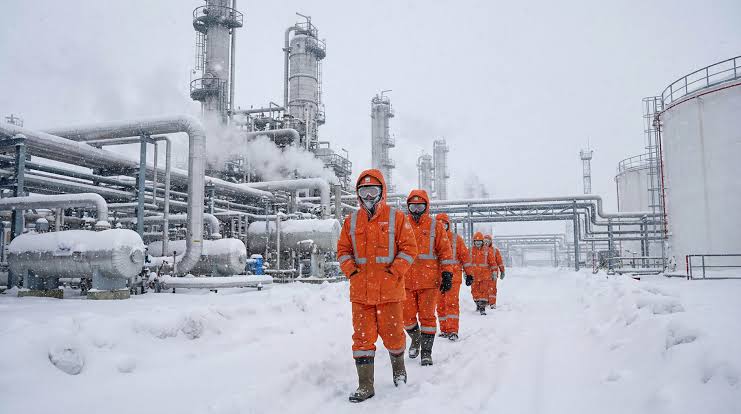
The approaching winter adds another dimension to this debate. European economies have made considerable progress in diversifying their energy sources, expanding infrastructure, and improving preparedness since the energy shock that followed Russia’s invasion of Ukraine. Nevertheless, the possibility of simultaneous disruptions across several supply routes remains a serious concern. Energy security cannot be assessed solely through the availability of fuel reserves or the ability to purchase additional imports. It must also be measured against affordability, industrial demand, transportation costs, and the capacity of households to withstand sudden price increases. Even where physical shortages can be avoided, sustained energy inflation can undermine manufacturing competitiveness, increase food production and distribution costs, and place additional financial pressure on ordinary citizens.
The political implications of such pressures should not be underestimated. European societies have already experienced significant debate over inflation, migration, industrial decline, defense spending, and the distribution of public resources. Another prolonged economic shock could intensify existing divisions and create additional challenges for governments attempting to maintain public confidence. Political instability does not arise automatically from higher energy prices, nor should widespread unrest be treated as inevitable. However, history demonstrates that prolonged economic hardship can deepen dissatisfaction with political institutions, particularly when citizens perceive that national leaders have failed to anticipate foreseeable risks. A population asked to accept higher living costs, increased defense expenditures, and greater economic uncertainty may reasonably demand a clearer explanation of the strategic decisions that produced those sacrifices.
For Britain, the dilemma is particularly significant. Although the United Kingdom is no longer a member of the European Union, its economy remains closely connected to European markets and exposed to many of the same international energy and security pressures. At the same time, Britain continues to maintain substantial defense commitments through NATO and its wider international partnerships. The challenge for British policymakers is therefore not simply to balance military ambitions against budgetary constraints, but to determine whether the country’s industrial and economic foundations can adequately support its long-term strategic responsibilities. National defense cannot be separated indefinitely from economic security, and military preparedness cannot compensate for weaknesses in energy resilience or critical infrastructure.
Perhaps the most dangerous consequence of the present international environment is the increasing relationship between economic insecurity and military escalation. Energy supply routes have become inseparable from wider discussions of maritime security, deterrence, and geopolitical competition. Governments facing disruptions to essential commercial corridors may come under growing pressure to deploy military assets, support naval coalitions, or take more assertive measures to protect their interests. Such actions may be defensible under particular circumstances, but they also increase the importance of diplomacy and crisis management. In regions where multiple military powers operate in close proximity, even a limited confrontation can create unintended escalation. The danger of a wider conflict is real, although the suggestion that an energy crisis will inevitably lead to nuclear war would overstate the available evidence.
What makes the present situation especially concerning is that the global economy has limited tolerance for repeated, overlapping disruptions. The financial and social consequences of the COVID-19 pandemic were followed by inflationary pressures, supply chain difficulties, and significant changes in international energy markets. Governments have subsequently faced the challenge of increasing defense expenditures while continuing to fund public services, infrastructure development, and economic recovery. Developing economies are often particularly vulnerable to these pressures because they possess fewer financial resources to absorb sharp increases in imported energy and food costs. Consequently, a serious geopolitical disruption affecting European energy markets would not remain an exclusively European problem. Its consequences could spread through international trade, currency markets, transportation networks, and the broader developing world.
The uncomfortable lesson emerging from these developments is that international influence must be supported by strategic restraint and a realistic understanding of national capabilities. Europe undoubtedly possesses advanced economies, strong institutions, considerable technological expertise, and the capacity to adapt to changing circumstances. It would therefore be misleading to portray the continent as being on the verge of inevitable collapse. Yet these advantages cannot substitute for coherent long-term planning. European governments must strengthen energy diversification, protect critical maritime infrastructure, reinforce industrial competitiveness, and maintain diplomatic relationships capable of reducing the risks of regional escalation. Above all, they must recognize that strategic independence cannot be achieved simply through political declarations or by replacing one external dependency with another.
There is also a broader lesson for the international community. The increasing tendency to view global affairs through the framework of competing political blocs risks undermining the economic cooperation upon which modern prosperity depends. The United States, Europe, China, Russia, and the major energy-producing regions of the Middle East remain connected through commercial relationships that cannot be dismantled without significant consequences. While genuine security concerns and political disagreements must be addressed, the assumption that economic coercion or military pressure can consistently deliver favorable outcomes deserves careful scrutiny. Durable security requires not only the capacity to confront adversaries, but also the political judgment to identify where negotiation, compromise, and mutual economic interests can prevent unnecessary confrontation.
Ultimately, Europe’s predicament reflects a wider crisis of strategic judgment in an increasingly fragmented international order. For too long, political leaders across the world have tended to assume that economic interdependence would restrain conflict, that international markets would remain accessible, and that technological and financial superiority could compensate for geographical vulnerabilities. Recent geopolitical developments have challenged each of these assumptions. Energy security, industrial resilience, diplomatic credibility, and military preparedness are not separate policy considerations; they are interconnected dimensions of national security. A failure in one can quickly undermine the others.
The warning that winter is coming should therefore be understood as more than a prediction about seasonal energy demand. It is a metaphor for the consequences of policies that fail to account for the limits of power, the fragility of economic interdependence, and the unpredictable nature of geopolitical competition. Europe still has the resources, expertise, and institutional capacity to strengthen its position, but doing so requires an honest assessment of past decisions and a willingness to place practical resilience alongside political ambition. The greatest danger is not the arrival of winter itself, but the possibility that political leaders will continue to mistake influence for invulnerability until the consequences of their assumptions become impossible to ignore.
The real question is not whether Europe can survive another difficult winter, but whether its leadership can recognize that strategic power is measured not by the ability to impose decisions on others, but by the capacity to endure the consequences of its own.