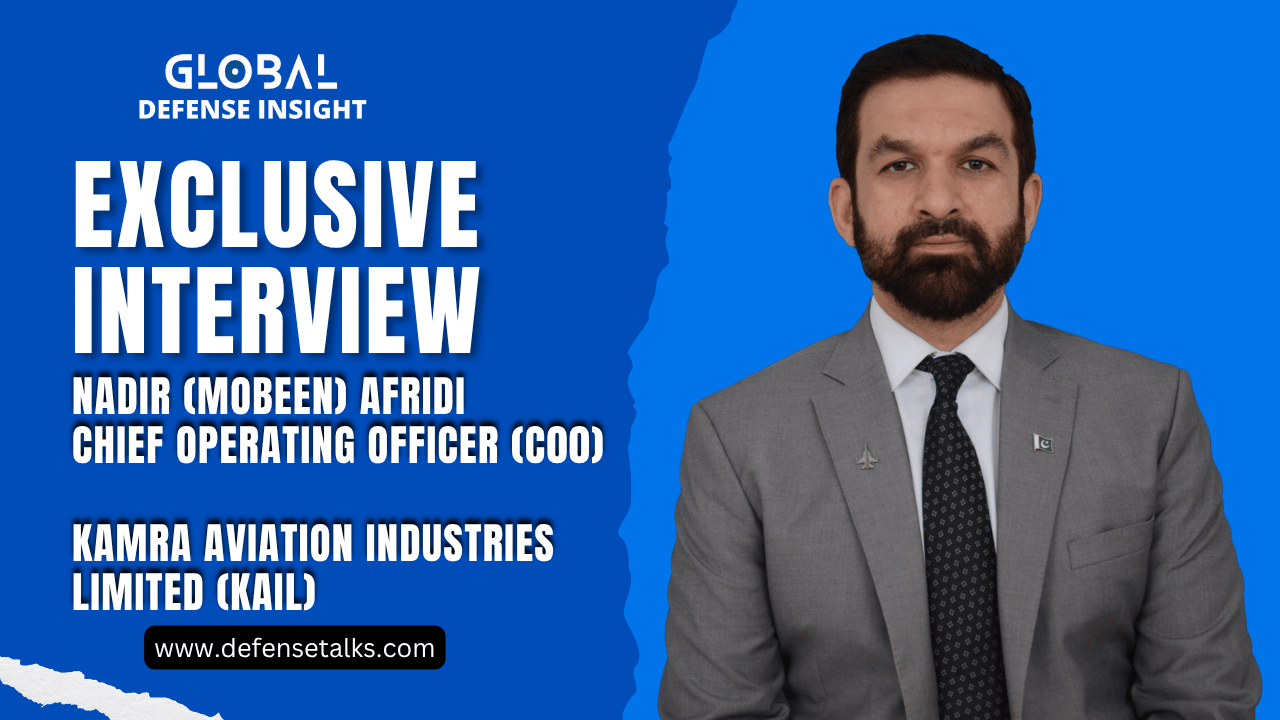

In an exclusive interview with Global Defense Insight, Nadir (Mobeen) Afridi, Chief Operating Officer of Kamra Aviation Industries Limited, outlined the company’s role in commercializing Pakistan’s indigenous aerospace capabilities and connecting the country’s aviation industry with international markets. As the commercial arm of Pakistan Aeronautical Complex, KAIL supports aircraft exports, maintenance, repair and overhaul services, precision manufacturing, technical support and global supply-chain management.
Afridi said KAIL’s growth strategy is focused on expanding MRO and manufacturing capacity, strengthening specialized aerospace services and adopting digital systems to improve operational efficiency and traceability. He also highlighted the company’s contribution to defense indigenization, export-oriented growth and its long-term ambition to become a trusted international aerospace partner and future Tier-1 supplier.
Q1. Could you provide an overview of KAIL’s role within Pakistan’s aerospace and aviation ecosystem?
Kamra Aviation Industries Limited (KAIL) serves as the primary commercial arm of Pakistan Aeronautical Complex (PAC), Kamra, bridging indigenous aerospace capabilities with the global market.
KAIL functions as a capability integrator and front-end commercial interface, responsible for marketing aerospace platforms, managing global supply chains and delivering MRO & technical services. Its role is central to ensuring that Pakistan’s aerospace competencies are not only operationally sustained but also commercially viable and globally competitive.
Through this positioning, KAIL contributes directly to operational readiness, lifecycle support and international outreach of Pakistan’s aerospace industry.
Q2. What are the key operational capabilities and priority areas currently being developed at KAIL?
KAIL operates on a “one-stop shop” model for aerospace services. Encompassing aircraft sales, MRO, precision manufacturing, technical services and global logistics management. This includes export of platforms such as the Mushshak and Super Mushshak alongside comprehensive support services.
Priority areas include enhancement of MRO capabilities, expansion of specialized coatings and manufacturing capacity along with integration of digital systems to improve traceability, efficiency and turnaround times.
Additionally, KAIL is focused on scalable service delivery and export-oriented growth ensuring alignment with both operational demands and international market expectations.
Q3. How is KAIL contributing to Pakistan’s objective of defense indigenization and self-reliance?
KAIL plays a critical role in advancing Pakistan’s indigenization agenda by localizing key aerospace processes and reducing dependence on external supply chains.
Commercial revenues generated through KAIL are reinvested into indigenous R&D and capability enhancement, creating a sustainable cycle of growth and contributing directly to technological sovereignty.
Q4. What strategic initiatives are driving KAIL’s growth in the near to medium term?
KAIL’s growth strategy is anchored in capacity expansion, capability diversification and global engagement.
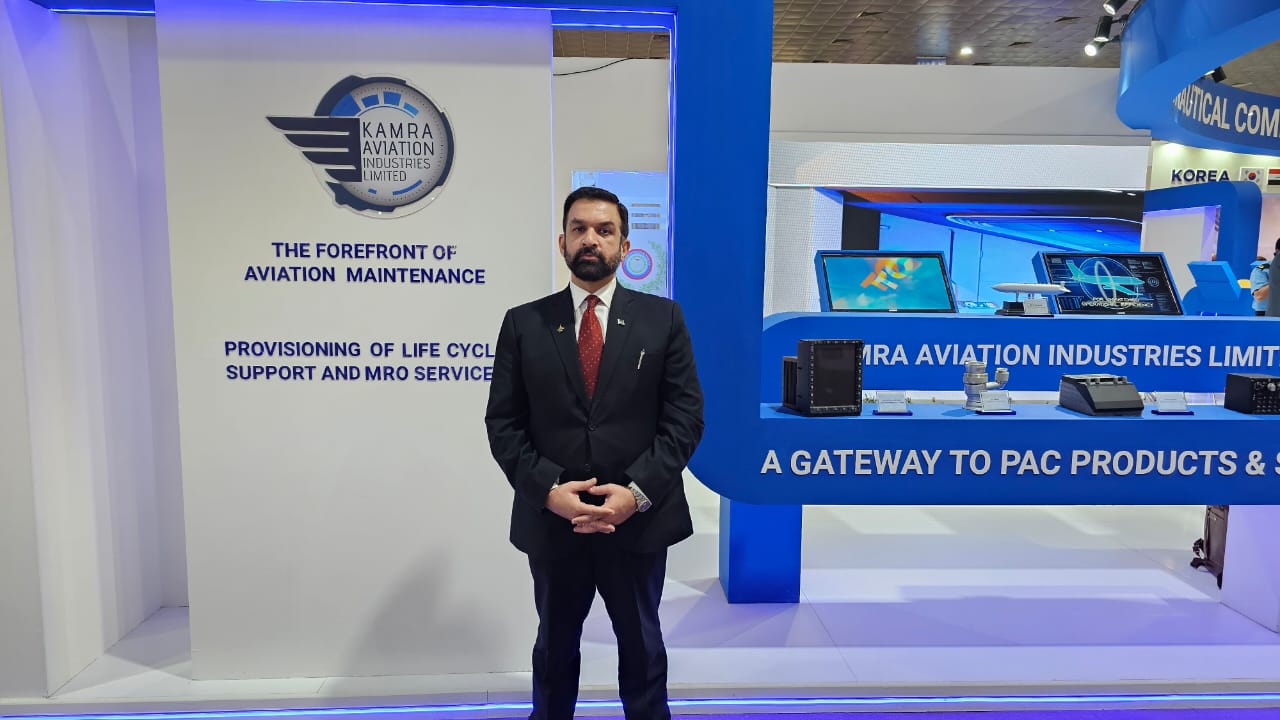
Key initiatives include strengthening MRO infrastructure, scaling manufacturing capabilities and expanding specialized service offerings. Simultaneously, KAIL is enhancing its global footprint through participation in international defense exhibitions such as the World Defense Show and IQDEX while exploring targeted market opportunities across the globe.
Collaboration with national platforms such as the National Aerospace Science and Technology Park (NASTP) is also enabling integration of emerging technologies, ensuring that KAIL remains aligned with future industry trends.
Q5. How does KAIL ensure compliance with international standards in quality, safety, and aviation operations?
KAIL maintains strict adherence to international quality, safety and aviation standards, supported by robust internal systems and continuous process oversight.
The organization operates under globally recognized certifications including AS9100 Rev D and ISO 9001 while ensuring compliance with OEM-specific quality requirements.
These frameworks are reinforced through structured audits, trained personnel and standardized procedures ensuring consistency, reliability and credibility in all global operations.
Q6. From a leadership perspective, how do you foster efficiency and a high-performance culture within the organization?
KAIL’s performance culture is driven by a combination of military-grade discipline and commercial efficiency. Leadership emphasizes clarity of roles, accountability and execution excellence.
Continuous investment in technical training, exposure to complex operational environments and alignment with organizational objectives ensures that the workforce remains capable, agile and results-oriented.
Q7. What is your long-term vision for positioning KAIL in the regional and global aerospace market?
KAIL’s long-term vision is to position itself as a regionally competitive and globally relevant aerospace services and manufacturing entity.
The focus remains on strengthening indigenous capabilities, expanding export potential and delivering cost-effective, high-quality solutions across both military and civil domains.
With sustained investment in capability development and operational excellence, KAIL aims to evolve into a trusted international partner and a future Tier-1 aerospace supplier contributing meaningfully to Pakistan’s emergence as a regional aerospace hub.