Missile defence, particularly through space medium, has remained a far-fetched dream. China’s Radar Shield, a nationwide missile defence network, pitted against the US’s Golden Dome missile defence system, highlights that space is not merely a global common but has, once again, become a decisive layer in major powers’ deterrence frameworks. Although both Golden Dome and Radar Shield are defensive in nature, their development has paved the way for heightened strategic tensions, an accelerated arms race, and an unstable deterrence equilibrium.
The US Golden Dome, inspired by the Reagan era’s Strategic Defence Initiative, signifies the evolution in American missile defence approach: ambitious as ever and increasingly space-centric. It is a multi-domain, layered missile defence system, which can detect, track, and neutralise short and medium-range, as well as intercontinental ballistic missiles in all flight phases. It follows the strategic logic of deterrence by denial, i.e., undermining the adversary’s confidence that its missile strike, be it conventional or nuclear, would impart the desired effect. However, as Golden Dome rests on the integration of space-based sensors, air-borne radars, ground and sea-based interceptors, and advanced command networks, building this complex architecture remains a persistent challenge.
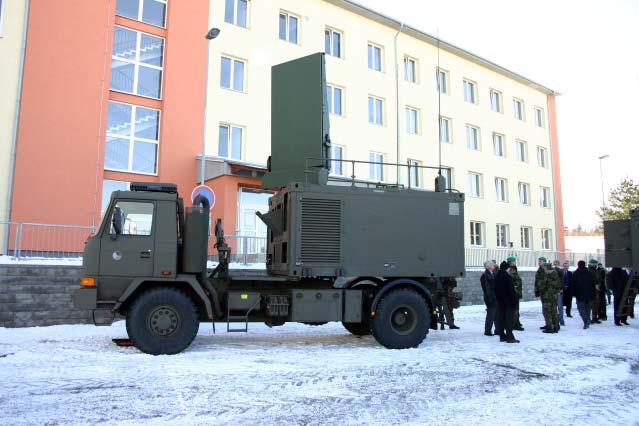
In parallel, China has made significant breakthroughs in data fusion and network integration. In a much simpler architecture, called Radar Shield, China has successfully integrated space-based sensors, satellites, air-borne systems, and sea and ground radars into a unified network. Operating on the principle of early warning, Radar Shield aims to enhance situational awareness through high-speed data integration. It would not only help China detect and track missile threats but also determine whether an incoming missile carries a conventional or nuclear warhead, thereby facilitating decision-making in conflict situations.
What’s more surprising is how China has quietly and swiftly responded to American Golden Dome ambitions. Several reports from China claim that Radar Shield has cleared the test and delivery phases, and is now in the implementation stage. On the other hand, the Golden Dome still largely remains a concept, facing technical, bureaucratic, and budgetary hurdles. China has responded to the US’s costly initiative by simply restructuring its existing capabilities into an integrated architecture that works effectively against incoming missiles towards mainland China, Taiwan, as well as the First and Second Island Chains.
Although China’s quick response to Golden Dome does not undermine its purpose, it highlights that while the US continues to focus on smaller adversaries, its strategic competitors are far ahead in the game. While neutralising a salvo of incoming ICBMs should remain a strategic priority of the US, none of its perceived rogue states, Iran or North Korea, possess such a large number of ICBMs. Its true competitors, on the other hand, not only possess that scale of ICBM inventory but also the capability to shield against counterattacks, while the US still requires several decades before the Golden Dome becomes fully operational.
Consequently, the US pursuit of the Golden Dome is only driving strategic anxieties and destabilising the existing deterrence equilibrium. It is steering the states towards the Cold War logic of missile-driven arms race that followed the simple idea of ‘numbers.’ While the US continues a staggeringly expensive Golden Dome, its adversaries are reaching for cost-effective solutions, i.e., build as many missiles as possible to overwhelm the Golden Dome through mass, which would saturate the system. Equipping those missiles with decoys and chaff would further help reduce the rate of interception and neutralisation. Therefore, by combining simpler measures like an integrated radar shield network and building traditional missiles en masse, the US adversaries enjoy a clear advantage.
For volatile regions like South Asia, where deterrence is already fragile, and escalation ladders are short, the US normalisation of expansive missile defence concepts legitimises India’s pursuit of BMD and space-based surveillance. It not only undermines crisis stability in the region but compresses decision timelines and incentivises regional arms racing rather than restraint. Keeping this in view, Pakistan is focused on early warning, crisis communication, and space-based situational awareness instead of pushing the region towards costly and destabilising missile defence architecture.
Overall, while the US Golden Dome initiative, in its current form, is mainly rhetoric, it is generating risks and liabilities far more dangerous than what would be possible for the US and its allies to cater to and/or counter. Instead of glorifying the Golden Dome, the US needs to show the world how unrestricted missile development and unchecked advanced technologies threaten strategic stability and fuel an uncontrolled arms race. Rather than spending billions of dollars on expansive space-based interceptors, the need of the hour is to employ diplomatic means to find workable solutions towards strategic risk reduction. In sum, China’s Radar Shield has shown that the Golden Dome is not the solution the US seeks for network dominance or strategic stability.

Maheera Munir
Maheera Munir is a researcher at the Centre for Aerospace and Security Studies (CASS), Lahore, Pakistan. She can be reached at info@casslhr.com.