
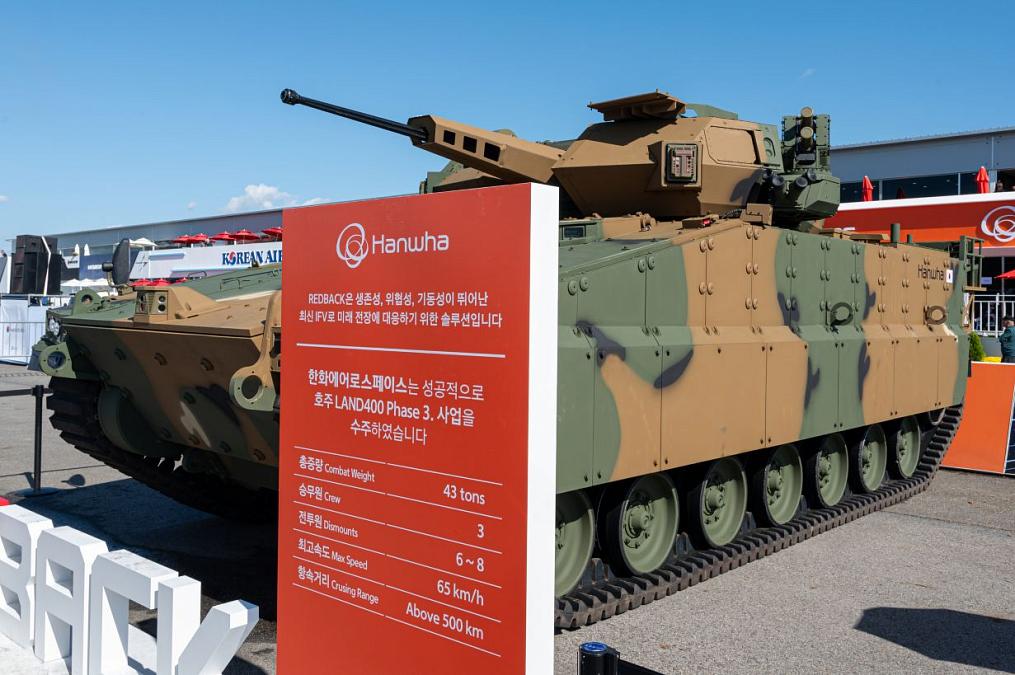

Hanwha Aerospace has reaffirmed its long-term commitment to Europe’s defense industrial transformation, emphasizing local production, technology cooperation, and supply chain resilience as NATO allies move to strengthen defense industrial capacity.
The South Korean aerospace and defense company outlined its position during the NATO Defense Industry Forum in Ankara, where NATO allies, policymakers, and industry leaders discussed Europe’s defense industrial transformation and long-term industrial resilience. Hanwha said its approach is guided by its “Built with Europe, for Europe” vision, focused on localization, industrial cooperation, and stronger European defense supply chains.
Table of Contents
ToggleHanwha Highlights “Built with Europe, for Europe” Strategy
Speaking during a panel session held as part of the Allies in Ankara program on the sidelines of the NATO Summit, Jacek Cyrek, President and CEO of Hanwha Aerospace Europe, said the company is working to support Europe’s defense industrial base through long-term partnerships, local production, and technology cooperation.
Cyrek said the security environment is changing at an “unprecedented speed,” with new technologies, emerging threats, and shifting geopolitical realities reshaping defense, deterrence, and resilience. He added that technology delivers its greatest value when it is built on trust, shared purpose, and strong partnerships.
“Our vision extends beyond platforms and systems,” Cyrek said. “We are committed to strengthening sovereign capabilities, fostering industrial cooperation, and contributing to a stronger and more resilient NATO ecosystem.”
Local Production and Technology Transfer in Europe
Hanwha Aerospace said it is expanding its European industrial network through localization, industrial investment, and long-term partnerships. The company said this strategy is already being implemented through localized manufacturing and technology transfer in Poland and Romania, while additional partnerships are being expanded across the Nordic region and Western Europe.
The focus on localization reflects a broader shift in European defense procurement. NATO members are increasingly seeking industrial partnerships that can deliver not only advanced equipment, but also domestic production capacity, supply chain security, maintenance support, and technology transfer.
This is particularly important as European countries reassess their defense production capacity amid the war in Ukraine, rising demand for ammunition and land systems, and the need to sustain deterrence over the long term. For NATO allies, resilient supply chains and scalable production are becoming central parts of national defense planning.
South Korea’s Role in NATO Defense Industrial Cooperation
The forum also highlighted the growing importance of cooperation between NATO allies and Indo-Pacific partners. Participants emphasized that European and Indo-Pacific security challenges are increasingly connected, creating a stronger case for deeper industrial and strategic cooperation between NATO and trusted Asian defense partners.
South Korea has become an increasingly important defense industrial partner for European countries due to its advanced manufacturing base, rapid production capacity, and growing portfolio of export-ready defense systems. Hanwha Aerospace is one of the country’s leading defense companies, with a portfolio that includes self-propelled howitzers, multiple rocket launchers, armored vehicles, air defense systems, precision-guided munitions, aircraft engines, launch systems, and space technologies.
For European customers, South Korean defense cooperation offers a combination of near-term capability delivery and long-term industrial collaboration. For South Korea, deeper engagement with NATO strengthens its position as a global defense industry actor and supports closer links between Euro-Atlantic and Indo-Pacific security frameworks.
Korea–NATO Defense Industry Partnership 2.0 Proposed
During the NATO Defense Industry Forum, South Korean President Lee Jae Myung proposed a “Korea–NATO Defense Industry Partnership 2.0,” calling for deeper cooperation in joint research, co-development, co-production, and long-term industrial collaboration.
According to the release, Lee said combining NATO’s decades of operational experience with South Korea’s proven technology and reliable production capacity would strengthen security in both Europe and the Indo-Pacific.
The proposal signals Seoul’s interest in moving beyond arms exports toward a more structured defense industrial relationship with NATO. Such cooperation could support future joint development programs, expanded production partnerships, and closer alignment between European and South Korean defense industries.
Hanwha Engages NATO and Transatlantic Stakeholders
Alongside its participation in the forum, Hanwha Aerospace co-hosted a networking reception with the Munich Security Conference and the Atlantic Council on the sidelines of the NATO Summit. The event brought together representatives from NATO institutions, allied governments, defense companies, think tanks, and international media.
Hanwha said the reception provided another platform to exchange views on Europe’s defense industrial transformation and strengthen dialogue with key stakeholders across the transatlantic defense community.
Strategic Significance
Hanwha Aerospace’s message at the NATO Defense Industry Forum underscores the growing role of South Korea in Europe’s defense industrial transformation. As NATO allies seek to rebuild industrial capacity, increase production, and reduce supply chain vulnerabilities, companies able to offer both advanced systems and local industrial partnerships are becoming increasingly important.
For Europe, Hanwha’s approach supports a wider effort to strengthen sovereign defense capabilities while maintaining access to proven foreign technology and production capacity. For South Korea, the focus on NATO cooperation reflects its emergence as a major defense industry partner beyond the Indo-Pacific.
The next phase will depend on how quickly Korea–NATO defense industrial cooperation develops into practical programs, joint research initiatives, co-production arrangements, and expanded European procurement opportunities.












