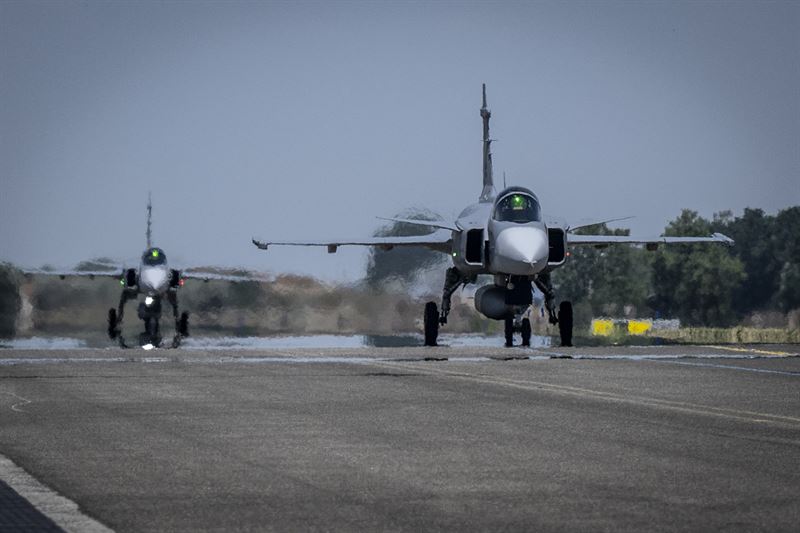

Hungary has completed the expansion of its combat aviation fleet after receiving the final two Saab Gripen C fighter jets under a 2024 contract amendment between the Swedish Defence Materiel Administration (FMV) and the Hungarian Ministry of Defence. The delivery increases the Hungarian Air Force’s Gripen fleet to 18 aircraft, reinforcing the country’s air defense capabilities and NATO commitments.
The two aircraft arrived at Kecskemét Air Base, marking the conclusion of a procurement program designed to enhance fleet availability, operational readiness, and long-term air sovereignty missions.
Table of Contents
ToggleHungary Strengthens Air Defense with Additional Gripen Fighter Jets
With the latest deliveries, Hungary now operates a total of 18 Gripen C/D aircraft, including 16 single-seat Gripen C fighters and 2 twin-seat Gripen D aircraft.
The expansion comes as European nations continue investing in defense modernization amid a rapidly evolving security environment. Hungary’s fighter fleet is responsible for protecting national airspace, conducting NATO Air Policing missions, supporting alliance operations, and maintaining rapid reaction alert capabilities.
The additional aircraft provide greater operational flexibility, increased sortie generation capacity, and improved fleet resilience during maintenance cycles.
Why Hungary Is Expanding Its Gripen Fleet
Hungary first selected the Saab Gripen as its primary combat aircraft in the early 2000s. Over the past two decades, the platform has become the backbone of the Hungarian Air Force.
The acquisition of additional Gripen fighters addresses several operational requirements:
- Increased airspace monitoring and defense capabilities
- Enhanced NATO interoperability
- Improved pilot training capacity
- Greater operational availability during maintenance periods
- Long-term force modernization objectives
As regional security concerns continue to evolve across Europe, maintaining a credible air combat capability remains a strategic priority for Budapest.
Saab Highlights 20 Years of Gripen Operations in Hungary
Commenting on the milestone, Lars Tossman, Senior Vice President and Head of Saab Aeronautics, emphasized the long-standing partnership between Saab and the Hungarian Air Force.
“We are proud of the Hungarian Air Force, which has now operated Gripen fighters for 20 years. Thanks to the support and service contract, the Hungarian Gripen fleet will maintain high availability and be continuously upgraded to fulfill all mission requirements for at least a decade ahead.”
The accompanying support package includes maintenance, logistics, training support, and future capability upgrades designed to keep the aircraft operationally relevant through the 2030s.
Saab Gripen: Key Capabilities
The Saab JAS 39 Gripen is a lightweight, multirole fighter aircraft developed for air defense, air-to-air combat, reconnaissance, and precision strike missions.
Saab Gripen C Specifications
| Capability | Details |
|---|---|
| Manufacturer | Saab (Sweden) |
| Type | Multirole Fighter Aircraft |
| Maximum Speed | Mach 2 (approximately 2,400 km/h) |
| Combat Radius | Around 800 km |
| Ferry Range | Over 3,200 km |
| Service Ceiling | 50,000+ ft |
| Engine | Volvo RM12 Turbofan |
| Hardpoints | 8 |
| Air-to-Air Missiles | AIM-120 AMRAAM, IRIS-T, Meteor |
| Air-to-Ground Weapons | Precision-guided munitions, anti-ship missiles |
| NATO Compatible | Yes |
The Gripen is widely regarded as one of the most cost-effective Western fighter aircraft, offering low operating costs while maintaining advanced combat capabilities.
Hungary’s Role in NATO Air Policing
Hungary’s Gripen fleet plays a critical role in NATO’s collective defense framework. Hungarian fighter aircraft routinely conduct:
- Quick Reaction Alert (QRA) missions
- Airspace interception operations
- NATO Air Policing deployments
- Joint exercises with allied nations
- Regional deterrence missions
The enlarged fleet is expected to improve Hungary’s ability to meet both national and alliance obligations.
Future Outlook
The completion of the Gripen deliveries marks another step in Hungary’s broader military modernization strategy. Alongside investments in land systems, air defense, and military infrastructure, the expanded fighter fleet strengthens Budapest’s ability to contribute to regional security and NATO operations.
With a support and upgrade framework extending well into the next decade, the Hungarian Air Force’s Gripen fleet is expected to remain the cornerstone of the country’s air combat capability for years to come.