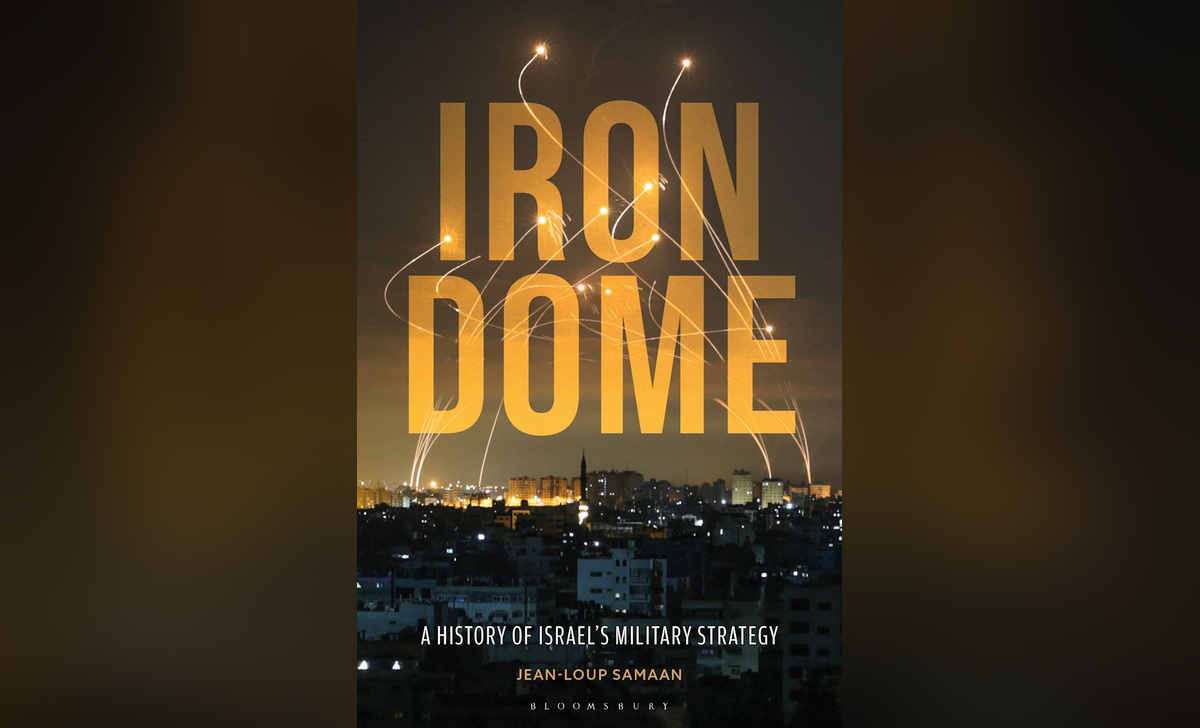

Iron Dome: A History of Israel’s Military Strategy is an important work in modern strategic studies. It systematically challenges the notion that technology equals strategic success. This book, published by Bloomsbury Academic in July 2026, explores the evolution of a tactical weapon into a national symbol using extensive field research and interviews. It examines the impact of this system on Israeli politics, defence procurement and statecraft.
Samaan has extensive institutional and regional experience on the topic. He is Senior Research Fellow at the Middle East Institute, National University of Singapore and Associate Expert at the Institute Montaigne. He has held positions at the NATO Defence College as a researcher and has worked in various defence structures in Europe and the Middle East.
Samaan has authored several peer-reviewed books on regional security architecture, including Israel’s Foreign Policy Beyond the Arab World and monographs for the US Army War College Press regarding missile defence. His familiarity with the structural dynamics of the Israel Defense Forces (IDF) and regional non-state actors allows him to look past official military public relations.
Few defensive systems have garnered as much public attention as Israel’s Iron Dome in modern military history. The system is known worldwide through news coverage of interceptor missiles intercepting short-range rockets over civilian centres. It is often described as a straightforward triumph of engineering over asymmetric threats. Jean-Loup Samaan, however, believes that military innovations cannot be evaluated solely on technical standards.
The book shows that the operational success of Iron Dome became an important factor in the Israelis strategic calculations as well as strategic restrictions. The system has saved civilians and political leadership from the immediate impact of rockets and saved them from having to make hard political decisions regarding the Israel-Palestine conflict, by intercepting incoming threats. The events of 7 October 2023, however, showed that whilst technological protection may address immediate threats, it would not prevent the security challenges.
The book is organised chronologically and thematically, taking the reader from the system’s controversial development to its use in major operations. Samaan traces its evolution through four stages, beginning with its conception amid strong scepticism within the IDF and the rapid engineering effort that followed. Phase 2 examines the securing of US funding and the establishment of strategic co-production arrangements. Phase 3 focuses on operational performance during escalations such as Operation Pillar of Defence (2012) and Operation Protective Edge (2014). Finally, Phase 4 examines the post-7 October environment and the limitations of relying heavily on defensive technology.
Samaan links the genesis of Iron Dome to the aftermath of the 2006 Lebanon War, when thousands of Katyusha rockets exposed weaknesses in Israel’s civil defence. The project initially faced considerable resistance within the IDF, whose traditional doctrine emphasised offensive manoeuvre, pre-emption and rapid victories on enemy territory. Many officers regarded active defence as a costly diversion of resources that could weaken Israel’s ability to seize the initiative. The book demonstrates how civilian leadership and political intervention eventually overcame this resistance and enabled the programme to move rapidly towards production.
A central focus of the book is the defence relationship between Jerusalem and Washington. Samaan details how the US evolved from an early skeptic of the short-range interceptor programme into its primary financial contributor. This financial backing sustained production and formalised co-production agreements, tying Israel’s long-term defence sustainability directly to the US political and industrial base.
The main chapters analyse major confrontations involving Israel and non-state actors, including Operation Pillar of Defence and Operation Protective Edge. Through these cases, Samaan demonstrates how improvements in interception rates affected the domestic political environment. Iron Dome became more than a defensive system. It reassured the public, reduced the immediate economic and human costs of rocket attacks and gave political leaders greater freedom to avoid an immediate ground response. In Samaan’s formulation, the system effectively introduced a third option into the traditional choice between military escalation and diplomacy: managing the conflict.
This defensive shield enabled governments to maintain the geopolitical status quo at home at manageable costs. This is very similar to the classic strategic paradoxes, as expressed by BH Liddell Hart, for example, that a defensive victory can result in structural stagnation. Samaan demonstrates that treating a deep political crisis as a technical problem allowed underlying security issues to grow unaddressed until the system’s structural limits were breached.
This shift represented a significant change in the relationship between military power and political decision-making. Rather than eliminating the source of the threat, Iron Dome could mitigate its immediate effects and allow the underlying conflict to persist. The system therefore created a strategic paradox. Its operational success could reduce the urgency of confronting the political problems generating repeated rounds of violence. Samaan’s broader argument is that treating a deep political crisis primarily as a technical problem can provide short-term stability while allowing underlying tensions to remain unresolved.
The book also highlights the economic challenge of missile defence. Iron Dome’s cost structure places technologically sophisticated and expensive interceptors against comparatively inexpensive rockets. While this exchange can be justified when protecting civilian lives and critical infrastructure, sustained attacks create a requirement for continuous replenishment and industrial production. The issue therefore extends beyond the performance of individual interceptors to the financial sustainability of the wider defence architecture.
This argument has become more relevant in the context of the development of missile warfare towards ballistic missiles, drones, larger salvos and saturation attacks. In 2025, the 12-Day War between Israel and Iran, followed by the 2026 US-Iran-Israel War, highlighted the increasing threats posed by continuous and sophisticated missile attacks on even the most sophisticated air-defence systems. Instead of just intercepting individual threats, the challenge now is whether defence can be effective and economically viable in the face of prolonged, high-volume attacks. Israel’s multi-layered architecture, along with ongoing dependence on the US for support and replenishment of interceptors, is testament to the fact that missile defence is a technology, industry, financial and alliance ecosystem. Iron Dome, therefore, provides a wider lesson for states that invest in air and missile defence: technological superiority can make a difference in reducing vulnerability, but it is not enough to ensure strategic security.
The strength of the book lies in its objective analysis. Samaan maintains a balanced, analytical perspective on a highly polarised topic, avoiding uncritical praise and ideological critique. Moreover, with bureaucratic insight, the book successfully exposes internal institutional rivalries. By documenting the early disputes between the IDF Air Defense Command, the Ministry of Defense, and aerospace contractors, Samaan provides a clear look at how modern military procurement operates in practice.
There are limitations as well. Due to the classified nature of operational military data, certain technical variables remain unaddressed. Readers looking for comprehensive technical architecture, technological components and operational capabilities will not find them here. The book focuses heavily on elite-level bureaucratic decision-making and high-level strategy, but gives less attention to the broader political and ideological motivations underlying Israeli policy, including those associated with the Israeli-Palestinian conflict and the pursuit of a “Greater Israel”.
This is especially true of Samaan’s thesis that Iron Dome provided Israel with more political freedom. Its causal role may be somewhat overstated. Interception of incoming rockets is not the same as managing the conflict; Iron Dome does not solve the root causes of conflict or stop it from happening again. The framing is problematic, because it emphasises the defensive success of Iron Dome and downplays the offensive military operations and their contribution to sustaining the conflict. Moreover, its utility against Iranian-backed proxies has been diluted, while direct Iranian missile and drone attacks expose vulnerabilities that the system alone cannot adequately address. Lastly, Iron Dome might have facilitated some policy decisions, but it was far from being the sole driver of Israel’s policy on conflict; the domestic political environment, strategic doctrine and broader political goals also influenced Israel’s decision-making.
Iron Dome: A History of Israel’s Military Strategy is an important book for defence analysts, military historians and international relations students. Samaan’s narrative is clear and situates technological innovation in its political context. The book offers a broader lesson that applies well beyond the Middle East: a defensive shield can mitigate threats, but it cannot replace a coherent grand strategy. As Western militaries build out automated defence grids and complex missile networks, Samaan’s study serves as a reminder that tactical success does not guarantee long-term security if decoupled from statecraft.
Table of Contents
ToggleEzba Walayat Khan
The writer is a Research Assistant at the Centre for Aerospace and Security Studies (CASS), Lahore, Pakistan. She can be reached at info@casslhr.com.