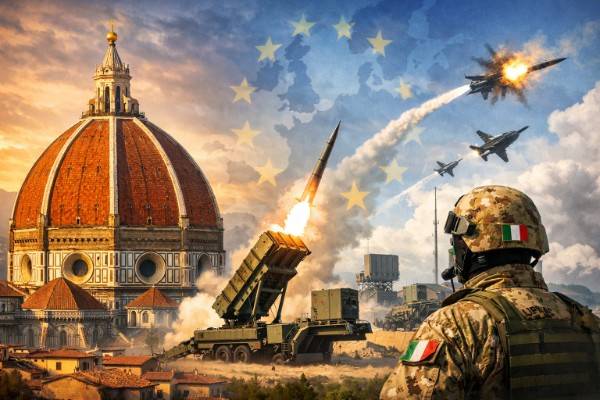

The successful launch of the upgraded SAMP/T NG air-defense missile system on December 3rd, equipped with Leonardo’s latest-generation KRONOS Grand Mobile High-Power Radar Sensor, marks a significant milestone for Italy’s airspace-defense capabilities. This development also aligns with broader changes unfolding across Europe, where Germany’s €52 billion procurement wave is reshaping the continent’s defense landscape and signaling a shift toward greater industrial coordination.
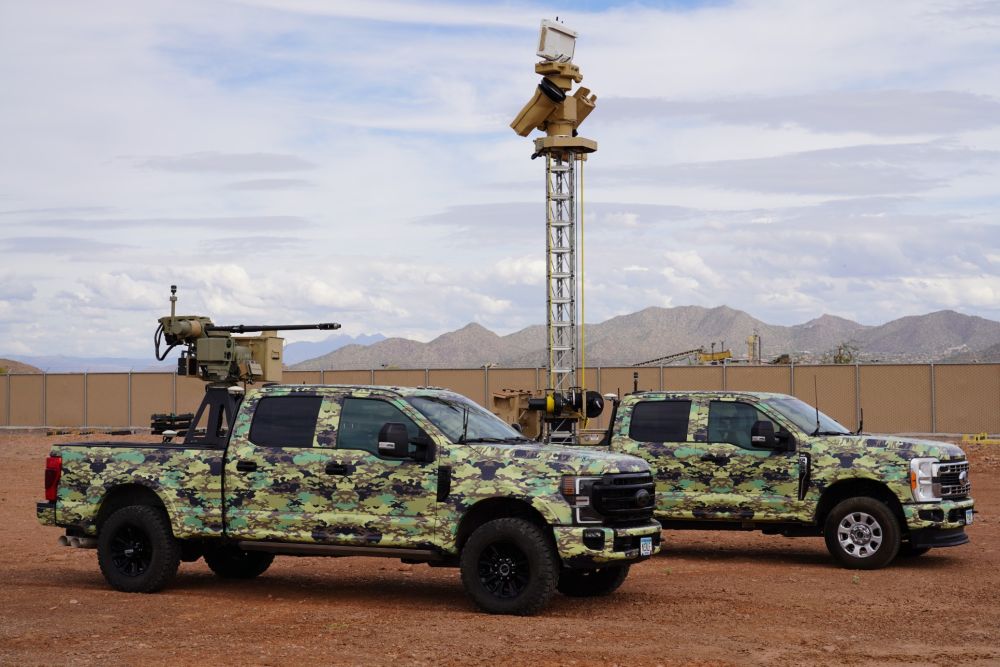
The Leonardo-developed radar, built on a multifunctional AESA electronically scanned architecture equipped with cutting-edge technologies, demonstrated outstanding performance during the test. It successfully tracked the target and guided the interceptor missile to a record-breaking distance for the Eurosam SAMP/T system during ground-based demonstration activities.
Leonardo seeks to consolidate its role as a global security leader. This achievement reflects Italy’s ambitions to strengthen its industrial excellence and position Europe in next-generation air-defense and missile-defense systems. The company, whose largest shareholder is the Italian Ministry of Economy and Finance, has become central to Europe’s defense-industrial landscape.
The demonstration is paired with the announcement of the Michelangelo Security Dome, Italy’s answer to advanced air-defense needs and clearly inspired by Israel’s Iron Dome. Presented in Rome on November 27th, 2025, in the presence of Defense Minister Guido Crosetto, the initiative outlines a two-phase plan: starting next year, the creation of protected areas around sensitive sites, each covered by a 10–15 km no-fly zone, and by 2029, the development of a national defense “dome” designed for later integration into a broader European framework and expected to be operational around 2030.
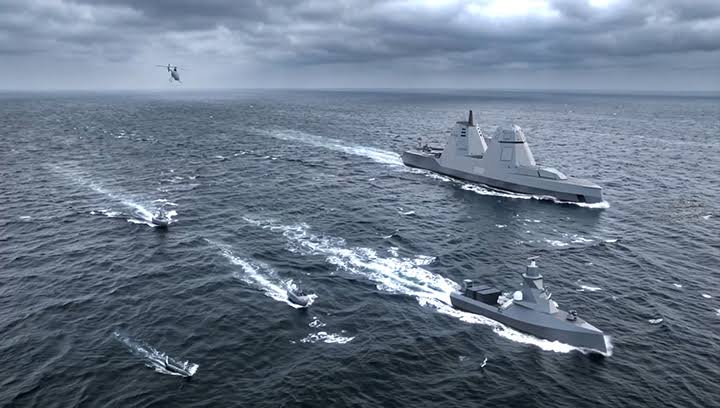
More specifically, the dome is not intended to be a standalone system, but rather is conceived as an interoperable architecture, integrating next-generation ground, naval, air, and space-based sensors. Together, they will form a digital structure in which cyber-defense, AI, and command-and-control networks cooperate to detect, track, and neutralize threats, designed to withstand overwhelming attacks, including hypersonic missiles and drone swarms.
Predictive algorithms will be implemented to anticipate threats and optimize response times, making AI the anchor of system efficiency and facilitating allied coordination. The initiative aligns with Leonardo’s growing investment in cybersecurity, which has expanded from €400 million to over €1 billion in turnover over the past three years, alongside the training of more than 2,000 engineers specialized in artificial intelligence domains.
Leonardo CEO Roberto Cingolani highlighted the urgency of such innovations:
“In a world where threats evolve rapidly and become increasingly complex, where defending costs more than attacking, defense must be able to innovate, anticipate and open up to international cooperation.”
The Michelangelo Dome follows a different path from Germany’s European Sky Shield Initiative (ESSI), launched in 2022 and joined by 24 countries. Italy and France opted out, choosing instead to invest in European-developed alternatives. In this framework, the Michelangelo Dome draws from national and European sources and is designed to be compatible with NATO members’ existing systems rather than requiring equipment changes.
The announcement also came during a tense week in which NATO officials were urged by the United States to strengthen their defense capabilities by 2027. In this context, a closer defense partnership between Italy and Germany could prove crucial for maintaining U.S. engagement in NATO’s defense structures.
Meanwhile, as disagreements continue and historical U.S.–EU relations show signs of strain, the Bundestag is preparing to vote for the approval of 29 major military procurement contracts. These include Puma infantry fighting vehicles, Arrow interceptors, surveillance satellites, and a tranche of 20 Eurofighter Typhoons. As part of the Eurofighter consortium, alongside Germany, Spain, and the UK, Leonardo (holding a 36% workshare) will benefit significantly.
Leonardo’s Caselle Torinese plant produces several key aircraft components, such as the left wing and the rear fuselage, while other facilities produce about 60% of the aircraft electronics. Deliveries of the Eurofighters are scheduled between 2031 and 2034, with service expected until 2060. This plan reflects Germany’s commitment to deploy Eurofighters in Poland to protect the eastern flank and the Euro-Atlantic area with a “drone wall”, as stated by European Commission President Ursula von der Leyen during the State of the Union address in September.
Beyond intra-European cooperation, Germany and Italy are also in talks with Turkey about exporting Eurofighters as part of broader NATO defense objectives. Meanwhile, Leonardo has partnered with Boeing to support the U.S. Army’s Flight School Next (FSN) training program using the AW119T, the world’s only single-engine training helicopter of its class. Its reliability, advanced digital avionics, NVG-compatible cockpit, and full VFR/IFR training capabilities make it ideal for next-generation pilot instruction.
Whether all these promises will hold remains to be seen. What is certain, however, is that Europe must strengthen its capacity to defend its borders. Drone walls and isolated systems alone cannot counter emerging threats such as cyber-attacks or hypersonic missiles. Yet these initiatives signal a growing willingness among European states to move toward greater coordination, addressing the two strategic weaknesses that have long hindered the Union: communication and integration.
If Italy’s Dome and Germany’s Eurofighter expansion converge into a coherent European architecture, they could finally move the EU beyond symbolic cooperation and toward a credible collective deterrent.
References:
- https://www.fortuneita.com/2025/10/16/la-germania-ordina-20-nuovi-eurofighter-altre-buone-notizie-per-leonardo/
- https://www.websim.it/notizie/blue-chip/italia/leonardo-la-germania-approva-contratti-militari-per-52-mld-di-euro/
- https://www.startmag.it/spazio-e-difesa/eurofighter-typhoon-ecco-come-la-germania-fa-felice-leonardo/
- https://www.reuters.com/business/aerospace-defense/us-sets-2027-deadline-europe-led-nato-defense-officials-say-2025-12-05/
- https://www.wired.it/article/leonardo-vuole-costruire-liron-dome-europeo/
- https://www.difesaonline.it/2025/11/27/leonardo-cingolani-presenta-michelangelo-the-security-dome/
- https://www.politico.eu/article/ursula-von-der-leyen-drone-wall-plan-crash-eu-reality/

Beatrice Caldarone
Beatrice Caldarone is an International Relations graduate from LUMSA University of Rome and currently serves as a Policy and Advocacy Officer at Eduxo. She has experience in EU affairs, youth engagement, and just transition policy. Beatrice actively contributes to policy development through her volunteer roles with the European Student Think Tank and the World Food Forum Italy Chapter, where she serves as an Event Officer involved in local consultations and youth-led policy recommendations. As a delegate of the Young Ambassadors Society to COP30, she contributed to discussions on youth perspectives in climate negotiations and co-authored the Thematic Brief on Local Communities and Indigenous Peoples.