
Türkiye’s STM has launched Tunku Osman Jewa (143), the third and final Malaysia LMS Batch 2 corvette for the Royal Malaysian Navy, completing the launch phase of the three-ship program as work shifts toward outfitting, systems integration, testing and delivery in 2027.
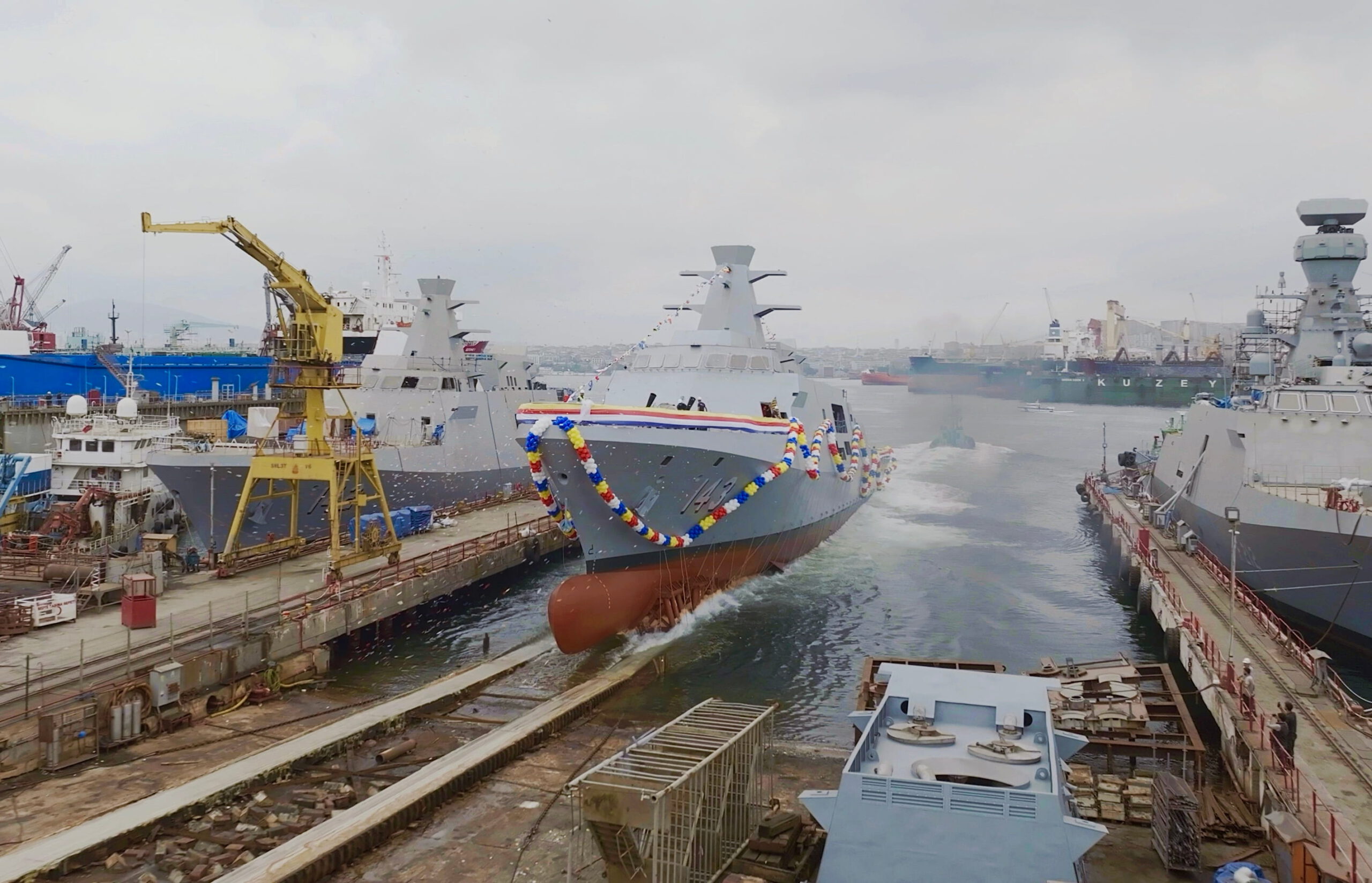
Turkish naval engineering company STM has launched Tunku Osman Jewa (143), the third and final corvette being built for the Royal Malaysian Navy (RMN) under the Littoral Mission Ship Batch 2, or LMS Batch 2, program. The vessel entered the water during a ceremony at Istanbul Shipyard on August 9, 2026, marking another major milestone in Malaysia’s naval modernization program.
The latest launch means all three Malaysia LMS Batch 2 corvettes are now afloat. The first vessel, Tunku Laksamana Abdul Jalil (141), was launched on May 24, followed by Raja Laut (142) on June 7 and Tunku Osman Jewa on August 9. STM describes the achievement as completing the launch of three corvettes within four months.
All three vessels are scheduled to be delivered to the Royal Malaysian Navy in 2027, following completion of outfitting, combat-system integration, harbor acceptance tests and sea acceptance trials. Malaysian Defence Minister Mohamed Khaled Nordin said in June that the LMS Batch 2 program remained on schedule for delivery by the end of 2027.
Table of Contents
ToggleSTM Completes Launch Phase of Malaysia LMS Batch 2 Program
The LMS Batch 2 project represents an important development in defense-industrial cooperation between Türkiye and Malaysia. According to STM, it is the first government-to-government defense procurement agreement between the two countries and Türkiye’s first corvette export program in the Asia-Pacific region.
The program formally advanced following the signing of a government-to-government memorandum on defense-product procurement and the handover of the Letter of Acceptance in Ankara on June 10, 2024. Steel cutting for the three vessels followed in Istanbul on December 4, 2024, while keel laying took place on April 8, 2025.
STM serves as the main contractor and is responsible for ship design, project and construction management, procurement of materials and systems, integration, testing, Integrated Logistic Support and preparation of technical documentation.
With the launch phase completed, the focus now moves to installing and integrating the ships’ weapons, sensors, combat-management architecture and other mission systems before harbor and sea trials.
Turkish Defense Systems Equip Malaysia’s New Corvettes
The Malaysia LMS Batch 2 program also represents a significant export showcase for Türkiye’s naval-defense ecosystem.
STM says technologies from nearly 50 Turkish defense companies are being incorporated into the three corvettes, with major systems supplied by companies including ASELSAN, HAVELSAN and ROKETSAN.
HAVELSAN is supplying the Combat Management System and gun fire-control system. ASELSAN is providing several major sensor, electronic-warfare and weapon components, including the 3D search radar, fire-control radar, Identification Friend or Foe system, 30 mm remote-controlled gun, electronic support measures equipment and chaff decoy system.
ROKETSAN’s ATMACA surface-to-surface missile system will provide the ships with their principal long-range anti-surface warfare capability. STM’s published configuration provides for eight surface-to-surface missiles in two four-missile launcher groups.
The combination gives the vessels capabilities across anti-surface warfare (ASuW), anti-air warfare (AAW), asymmetric warfare and electronic warfare, allowing them to undertake a broader combat role than their “Littoral Mission Ship” designation alone might suggest.
Malaysia LMS Batch 2 Corvette Specifications
STM describes the LMS Batch 2 design as a modern, flexible naval platform developed to meet Royal Malaysian Navy operational requirements. The corvette combines relatively compact dimensions with anti-ship missiles, air-defense weapons, advanced sensors and aviation facilities.
| Specification | Malaysia LMS Batch 2 |
|---|---|
| Type | Multi-role corvette / Littoral Mission Ship |
| Main Contractor | STM |
| Operator | Royal Malaysian Navy |
| Overall Length | 99.56 meters |
| Maximum Beam | 14.42 meters |
| Draft | 3.94 meters |
| Displacement | Approximately 2,500 tons |
| Maximum Speed | More than 26 knots |
| Cruising Speed | 14 knots |
| Range | More than 4,000 nautical miles at 14 knots |
| Endurance | 14 days |
| Personnel Capacity | 111 officers, crew and guests |
| Propulsion | CODAD |
| Main Engines | 4 diesel engines |
| Shafts | 2 |
| Propellers | 2 controllable-pitch propellers |
| Generators | 4 diesel generators |
| Main Gun | 1 × 76 mm naval gun |
| Anti-Ship Missiles | 2 × 4 SSM launchers |
| Secondary Gun | 1 × 30 mm gun |
| Surface-to-Air Missile Arrangement | 2 × 2 SAM launchers, configured for 16 missiles |
| Decoy Systems | 2 decoy launcher systems |
| Aviation Facilities | Flight deck and hangar for a medium-size helicopter |
STM’s latest published specifications identify the propulsion arrangement as a four-engine CODAD system, with a maximum speed exceeding 26 knots and a range of more than 4,000 nautical miles at a cruising speed of 14 knots.
Sensors and Combat Management Systems
The LMS Batch 2 corvettes will carry an integrated sensor and command architecture intended to support air, surface and electronic-warfare missions.
The published sensor suite includes:
- Combat Management System
- 3D surveillance radar
- Integrated IFF system
- Fire-control radar with electro-optical suite
- Gun Fire Control System
- Two Target Designation Sights
- Combat Electronic Support Measures system
- LINK-Y tactical data link
- Electronic plotting system
The ships are designed around a low-radar-cross-section configuration and incorporate redundancy in their sensors, weapons and critical systems to improve survivability and operational availability.
A helicopter deck, enclosed hangar and refueling facilities also allow the corvettes to operate a medium-size helicopter, expanding their surveillance, maritime-security and potentially targeting capabilities beyond the ship’s own sensor horizon.
Three LMS Batch 2 Corvettes for the Royal Malaysian Navy
The three vessels are named after figures associated with Malaysia’s history and armed forces.
Tunku Laksamana Abdul Jalil (141), the first vessel, was launched on May 24, 2026. It is named after the late Tunku Abdul Jalil, who held the title of Tunku Laksamana, or Prince Admiral.
Raja Laut (142), launched on June 7, commemorates a historical figure associated with the administration of Selangor and development of regional maritime trade.
The final vessel, Tunku Osman Jewa (143), honors General Tunku Osman Tunku Mohammad Jewa, a senior figure in the development of Malaysia’s armed forces. Its August 9 launch completed the three-ship launch sequence.
What Happens Next for Malaysia LMS Batch 2?
Launching a warship marks the transition from hull construction toward the more complex process of turning the platform into an operational combat vessel.
The three Malaysia LMS Batch 2 corvettes will now undergo outfitting and systems integration, including installation and integration of weapons, radars, electronic-warfare systems, command-and-control equipment and supporting machinery.
This will be followed by harbor acceptance testing and sea acceptance trials to validate propulsion, navigation, sensors, weapons, combat systems and overall platform performance before the Royal Malaysian Navy formally accepts the vessels. STM has maintained that all three ships are planned for delivery during 2027.
For Malaysia, the program will introduce three heavily armed new-generation surface combatants as the Royal Malaysian Navy replaces aging vessels and strengthens its ability to operate in an increasingly demanding regional maritime environment. For Türkiye, the project demonstrates the growing export reach of its naval shipbuilding and defense-electronics industries, while placing systems from STM, ASELSAN, HAVELSAN and ROKETSAN aboard a major Southeast Asian naval platform.