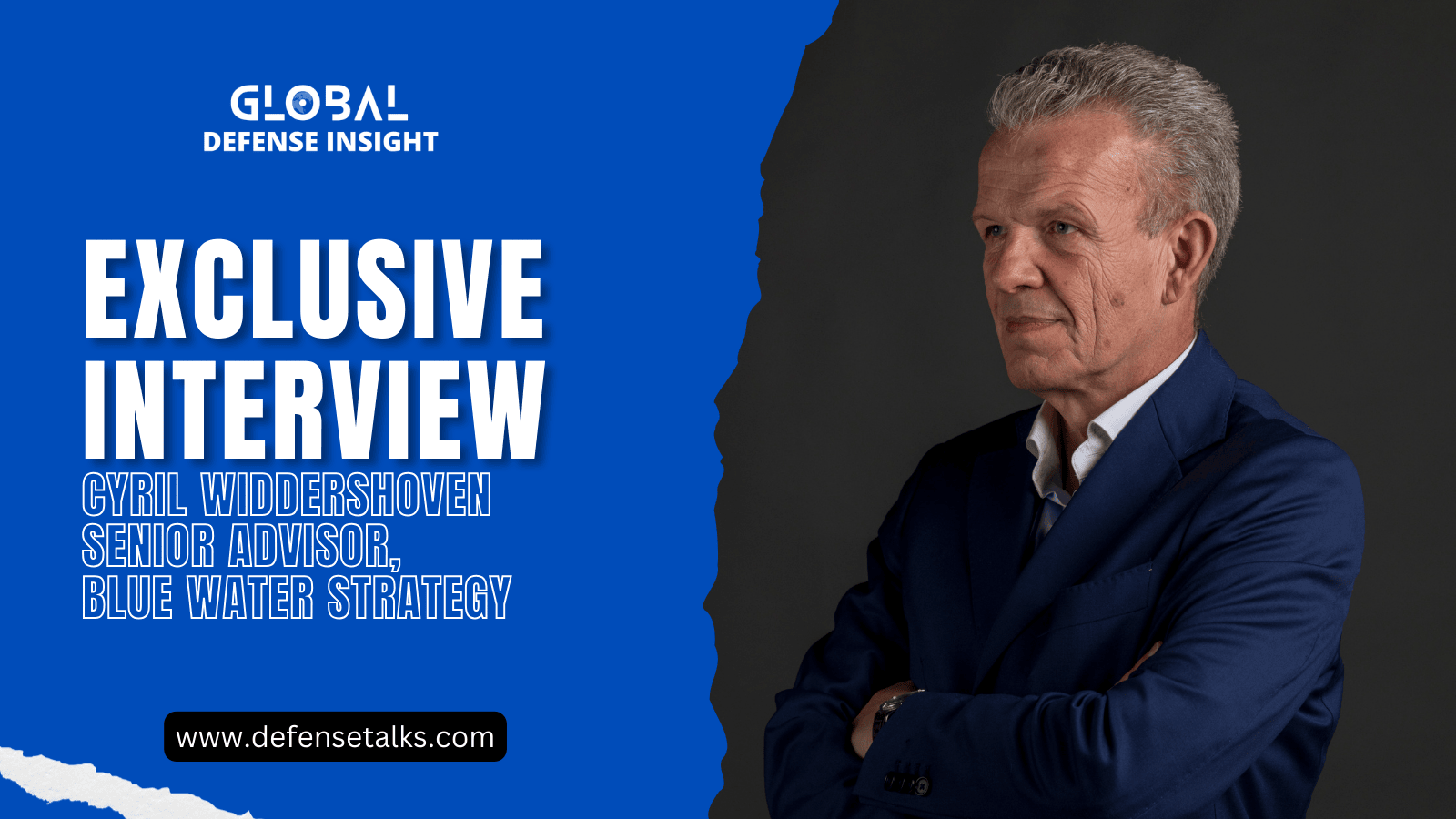

Amid escalating geopolitical tensions in the Middle East, the security of maritime trade routes, particularly around the Strait of Hormuz, has become a critical concern for global energy markets and international shipping. In an exclusive interview, Global Defense Insight spoke with Cyril Widdershoven, Senior Advisor at Blue Water Strategy and a geopolitical strategist specializing in commodities, maritime security, and supply-chain risks across the EMEA region. He shared his insights on the evolving maritime security environment, the vulnerabilities of global energy chokepoints, and the broader geopolitical implications for international trade.
1. How do you evaluate the current maritime security environment in the Persian Gulf, particularly around the Strait of Hormuz, amid the ongoing regional tensions?
The overall security environment, especially the maritime security environment, in the Gulf has shifted from a high-risk environment to what is now regarded as a contested maritime battlespace. In the current situation, shipping is no longer simply operating under elevated risk premiums. Taking all into account, shipping is now navigating a region where military activity, asymmetric threats, and commercial traffic intersect.
At present, we are looking at a classic textbook example of hybrid maritime disruption. Tehran has been able to disrupt or even block trade by not even formally closing the strait. By creating only enough operational uncertainty, it can force shipowners, insurers, and charterers to reconsider whether passage remains commercially viable.
2. Considering the strategic importance of the Strait of Hormuz for global energy flows, what would be the likely economic and energy market consequences if shipping traffic through the strait were disrupted?
First, energy markets react instantly, not only on fundamentals but especially on emotions. First effects will be an oil price spike, as markets will be looking at a potential loss of several million barrels per day. LNG markets will be especially stressed, particularly in Asia and Europe, as they rely partly on Qatari gas shipments. There will, for sure, be a bidding/price war between Europe and Asia within days.
Second, another impact will be on related sectors, especially refined products, petrochemicals, fertilizers, and industrial feedstocks, as the Gulf is a main exporting region. These disruptions or losses will quickly cascade into manufacturing, agriculture, and global supply chains.
The main cascading result will be higher energy prices, higher freight costs, and increased inflationary pressures across the global economy.
Shipping vulnerability here is linked to a wide spectrum of threats, including:
- drones and anti-ship missiles
- naval mines
- fast-boat harassment
- electronic warfare, such as GPS and AIS interference
- cyber risks affecting navigation systems
4. How are shipping companies, insurers, and energy markets currently adapting their risk assessments in response to growing instability in maritime chokepoints such as the Strait of Hormuz and Bab al-Mandeb?
To date, the industry has responded rapidly and pragmatically, as evidenced by shipping companies, insurers, and energy traders shifting from efficiency-driven logistics models to risk-driven operational planning.
Shipping operators are increasingly reassessing voyage planning. At the same time, they are delaying transits and rerouting vessels where possible. Shipping companies have also emphasized tightening internal security protocols.
Energy markets are typically adjusting to such situations or crises. Commodity traders have been incorporating geopolitical risk premiums into pricing models. However, looking at increased stress in the sector, it seems they did not expect the current scenarios at all. Energy companies are already considering alternative supply routes, strategic stockpiling, and longer-term diversification of supply. Again, the loss of Gulf oil, gas, and LNG is not easy to replace, and it may be entirely impossible for other parties to do so, at least not on short notice. The IEA’s decision to open the Strategic Petroleum Reserves (OECD strategic reserves) will dampen some volatility, but the real crisis has not been resolved.
5. What role do multinational naval coalitions and maritime security initiatives play in protecting global trade routes in times of regional conflict?
Don’t, however, expect that naval coalitions, not even the US Navy, can eliminate risk. In the current arena, the Gulf environment is complex and contested. It also entails an increasingly long list of modern asymmetric threats (drones, mines, and missiles), all of which can challenge even sophisticated naval forces.
The main value of multinational naval operations is risk mitigation rather than risk elimination. Naval forces can be instrumental in stabilizing the maritime environment, reassuring commercial shipping, and coordinating responses to incidents.
6. Looking ahead, do you foresee any long-term shifts in global energy supply chains or maritime trade routes if instability in the Gulf region continues?
First, energy producers and consumers will intensify their efforts to diversify supply routes. Pipelines bypassing chokepoints such as Hormuz will become strategically more important.
Second, energy importers will increasingly invest in expanding strategic stockpiles and storage capacity.
Third, existing maritime logistics networks may shift toward alternative hubs for storage, bunkering, and transshipment.