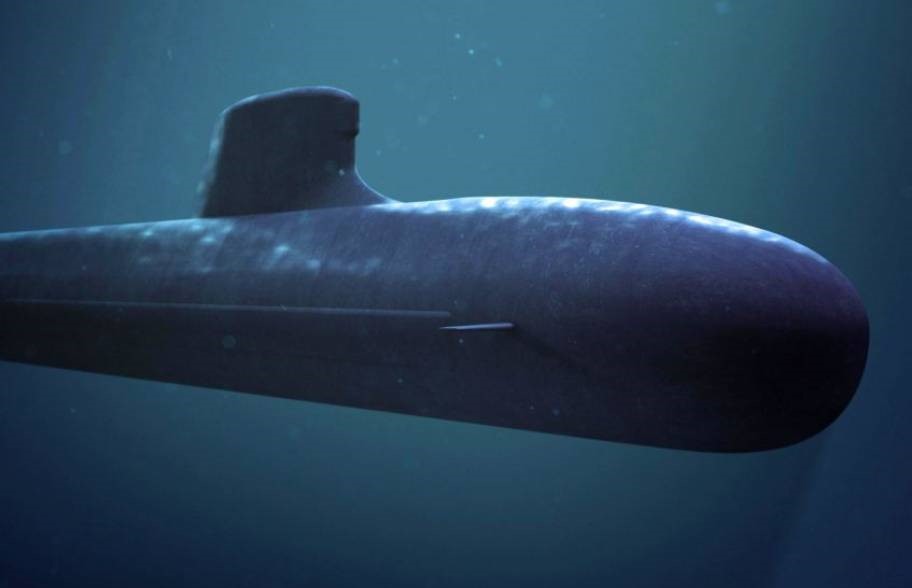

The Netherlands and Naval Group have expanded their industrial cooperation agreement for the Orka-class submarine program, enabling more Dutch companies to participate in submarine production and the manufacture of F21 heavyweight torpedoes.
Table of Contents
ToggleAmendment Expands Dutch Industry Role in Orka Program
The Netherlands Ministry of Economic Affairs and Climate and Naval Group signed an amendment to their Industrial Cooperation Agreement on July 17, 2026, broadening Dutch industrial participation in the Replacement Netherlands Submarine Capability program.
The amendment will allow Naval Group to contract additional Dutch companies for work linked to the production of the Royal Netherlands Navy’s future Orka-class submarines and the associated F21 heavyweight torpedoes.
The agreement reflects the Netherlands’ emphasis on maintaining strategic autonomy across the future submarine fleet’s operational life. It is intended to strengthen domestic expertise in maintenance, modernization, systems support, and future upgrades while creating longer-term cooperation between Dutch and French naval industries.
The expanded arrangement follows the Netherlands’ June 16, 2026 contract with Naval Group for new-generation F21 heavyweight torpedoes.
Industrial Agreement Supports Strategic Autonomy
The original Industrial Cooperation Agreement was signed on September 10, 2024, between Naval Group and the Dutch Ministry of Economic Affairs.
Under the arrangement, Naval Group committed to working with Dutch companies and research institutions over a 20-year period.
The long-term structure is significant because submarine acquisition extends well beyond ship construction. The Netherlands will require national capacity to maintain, repair, modernize, and upgrade the submarines throughout decades of service.
Industrial participation can also reduce dependence on overseas support for critical systems, particularly during periods of operational tension or supply-chain disruption.
The agreement is therefore intended to support not only economic activity but also sovereign access to technical knowledge, qualified personnel, maintenance infrastructure, and engineering capabilities.
Dutch Companies to Support Submarines and F21 Torpedoes
The amendment expands the scope of eligible work to include areas connected to both the Orka-class submarines and the F21 torpedo program.
Naval Group identified Dutch expertise in metalworking, surface treatment, and advanced electronic systems as particularly relevant.
These capabilities are essential to submarine construction and sustainment.
Metalworking supports the manufacture of structural components, machinery, pressure-resistant assemblies, and internal systems. Surface treatment is important for corrosion protection, durability, acoustic performance, and the long-term reliability of components exposed to demanding maritime conditions.
Advanced electronics are central to submarine combat systems, sensors, communications, navigation, power management, weapons integration, and onboard control architecture.
By involving Dutch companies in these areas, the program could develop a broader national supplier base capable of supporting both initial production and later fleet sustainment.
F21 Torpedo Contract Drives New Industrial Phase
The amendment follows the Netherlands’ procurement of Naval Group’s F21 heavyweight torpedo.
The F21 is designed for deployment from submarines against surface ships and other submarines. It combines long-range engagement capability, onboard processing, advanced guidance, and wire-guided control during part of its mission profile.
The Netherlands’ decision to acquire the torpedo creates additional industrial and technical requirements beyond submarine construction itself.
These may include integration engineering, handling systems, maintenance support, test equipment, storage infrastructure, training, and lifecycle services.
The amended agreement allows Dutch companies to participate in this new phase of the Orka program rather than limiting industrial cooperation to the submarines alone.
Orka-Class Program to Replace Walrus Submarines
The Orka-class submarines are being developed under the Replacement Netherlands Submarine Capability program to replace the Royal Netherlands Navy’s aging Walrus-class boats.
The future fleet is intended to preserve the Netherlands’ ability to conduct long-range, intelligence-led, and high-end undersea operations.
Dutch submarines have traditionally been designed for operations beyond the North Sea, including missions in the North Atlantic, Mediterranean, Caribbean, and other distant regions.
The replacement program therefore requires vessels with long endurance, ocean-going performance, advanced sensors, modern weapons, and the ability to operate discreetly alongside NATO forces.
Industrial cooperation will be important to sustaining these capabilities after the submarines enter service.
Naval Group Deepens Cooperation With Dutch Industry
Naval Group said the agreement represented the next stage in its partnership with the Dutch industrial base.
“With this amendment, we are taking the next step in our cooperation with Dutch industry,” said Mark Donderwinkel, Naval Group’s country director for the Netherlands.
He added that Dutch expertise in metalworking, surface treatment, and advanced electronic systems would be valuable to the program.
Naval Group is expected to serve as the principal submarine designer and industrial integrator while working with local suppliers, technical institutions, and knowledge centers.
This model allows the prime contractor to retain overall responsibility for platform integration while distributing selected work to domestic partners.
For Dutch companies, the program could provide access to advanced naval engineering work and long-term opportunities in maintenance, modernization, and future technology development.
Knowledge Transfer and Lifecycle Support
A central feature of the cooperation agreement is its 20-year duration.
This suggests that the industrial plan is intended to extend into the submarines’ operational phase rather than ending when construction is completed.
Knowledge transfer will be particularly important.
Without access to design data, technical documentation, tools, training, and certified maintenance procedures, local companies may remain dependent on the original manufacturer for even routine upgrades.
A properly implemented industrial cooperation program can help ensure that Dutch organizations gradually develop the competence required to support the fleet domestically.
This may include engineering support, software updates, component repair, systems integration, weapons support, and future capability enhancements.
Strategic Importance for Dutch Naval Industry
The amended agreement could strengthen the Netherlands’ wider naval industrial base.
Submarine programs generate demand across precision manufacturing, electronics, software, materials engineering, cybersecurity, acoustics, propulsion support, and weapons integration.
These capabilities can have value beyond the Orka class and may support other Dutch or European defense programs.
The arrangement also reinforces bilateral defense-industrial cooperation between France and the Netherlands at a time when European governments are seeking to improve supply-chain resilience and reduce dependence on external suppliers.
For the Netherlands, the challenge will be ensuring that industrial participation produces lasting national capability rather than short-term subcontracting.
That will depend on the depth of technical access, the quality of work assigned to Dutch companies, and the extent to which local firms are involved in future upgrades.
What to Watch Next
The next developments will include the selection of additional Dutch suppliers, the allocation of work packages, and the integration of F21-related industrial activity into the wider Orka program.
Further clarity will also be needed on which Dutch companies will participate, what systems they will supply, and how knowledge transfer will be managed.
The effectiveness of the amended agreement will ultimately be judged by whether the Netherlands develops sufficient domestic capacity to maintain, modernize, and support the submarines and torpedoes throughout their service lives.