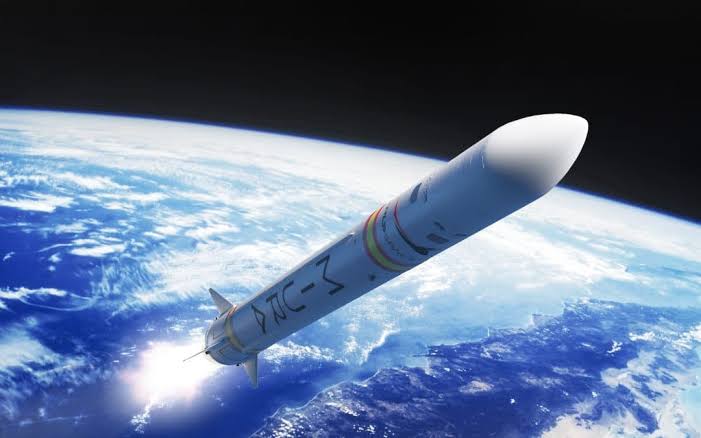

Spanish aerospace company PLD Space has begun system-level testing of its MIURA 5 orbital launch vehicle, marking a significant milestone in the rocket’s development as the company prepares for its first demonstration flight in the first half of 2027.
The company announced that it has manufactured three MIURA 5 vehicles, comprising two qualification units and the first flight vehicle, while expanding its manufacturing, testing and launch infrastructure across Spain and French Guiana.
The latest developments include the integration of MIURA 5’s second stage, the completion of key separation and fairing qualification tests, and continued production of propulsion systems and flight avionics.
These activities form part of PLD Space’s vertically integrated development strategy, designed to bring manufacturing, qualification testing and launch operations under direct company control.
Table of Contents
ToggleMIURA 5 Second Stage Enters System-Level Testing
A central milestone in the MIURA 5 development program is the full integration of the launcher’s second stage, incorporating its structures, avionics, propellant feed systems, flight controls and propulsion equipment.
The integrated stage has been installed vertically at PLD Space’s testing facilities in Teruel, Spain, where it is entering a comprehensive qualification campaign.
The upcoming tests include a Wet Dress Rehearsal (WDR) and a static hot-fire test, which will evaluate the interactions between major subsystems under representative operating conditions.
The WDR will support the validation of fueling procedures and operational sequences, while the static-fire campaign will assess the integrated propulsion system ahead of flight.
According to the company, these activities are intended to reduce technical uncertainties and establish confidence in the launcher’s readiness for its initial demonstration mission.
PLD Space has also completed stage-separation testing, verifying the mechanical and electrical interfaces, command sequences and timing required for the controlled separation of MIURA 5’s first and second stages during flight.
Meanwhile, qualification campaigns involving two payload fairing test models have concluded, with the resulting data incorporated into the configuration of the flight hardware.
Propulsion Manufacturing and Avionics Development Advance
PLD Space has made further progress in manufacturing and qualifying the propulsion systems that will power MIURA 5.
The company confirmed that the first flight-configuration units of its TEPREL-C and TEPREL-C Vac engines have been manufactured and are entering their respective test campaigns.
To date, the manufacturer has produced and integrated seven complete engines, supported by extensive testing and production of individual propulsion components.
These include 35 combustion chambers, 40 gas generators and 15 turbopumps, reflecting the scale of the company’s propulsion qualification and industrial development activities.
The campaigns will evaluate engine performance while verifying the repeatability of manufacturing, integration, testing and acceptance procedures.
In parallel, PLD Space has manufactured 13 complete propellant tanks for qualification and flight applications, including liquid oxygen tanks for both stages of the first flight vehicle.
The company has also completed production of the flight avionics required across the launch vehicle, with avionics sets available for four complete rockets.
Testing of the avionics continues through progressively integrated configurations to verify compatibility, communication and interaction between the vehicle’s hardware and software systems.
Three Launch Vehicles Support Parallel Qualification and Integration
PLD Space’s decision to manufacture three MIURA 5 vehicles represents an important element of its development and industrialization strategy.
Two vehicles are designated for system-level qualification campaigns, while the third is intended for the launcher’s first demonstration flight and continues through integration.
The parallel approach enables engineers to incorporate qualification results into the flight vehicle without waiting for the completion of every individual test campaign before advancing production.
It also allows the company to establish repeatable assembly and integration procedures while reducing dependencies between manufacturing and launch preparations.
“Flight readiness requires every element of the system to be continuously integrated, tested and refined. Having manufactured three vehicles in parallel allows us to accelerate this learning process and transfer the results of qualification campaigns to the first flight vehicle,” said Raúl Torres, CEO and co-founder of PLD Space.
“At the same time, we are building the industrial and operational capabilities needed for MIURA 5 to evolve into a reliable, scalable launch system,” he added.
PLD Space Expands Manufacturing and Testing Infrastructure
Alongside the technical development of MIURA 5, PLD Space continues to expand the industrial infrastructure supporting its planned orbital launch operations.
In Elche, Spain, the company operates 17,000 square meters of manufacturing facilities, providing production capacity for the launch vehicle program and its medium-term industrial requirements.
At its testing complex in Teruel, PLD Space operates ten in-house test benches, including a newly developed facility measuring 10.2 meters in height and featuring an eight-meter-deep flame duct.
The infrastructure is designed to support qualification and acceptance testing of complete second stages, enabling the company to conduct increasingly integrated launch vehicle tests.
Meanwhile, preparations are progressing at the Guiana Space Centre (CSG) in Kourou, French Guiana, where MIURA 5’s launch infrastructure and ground support equipment are being integrated.
PLD Space has received approximately 60 containers of infrastructure and ground equipment for the spaceport.
The company is also working with the French space agency, CNES, to align ground and flight safety procedures ahead of launch operations.
In addition, validation activities are underway for critical launch pad equipment, including the strongback used to raise the rocket vertically, hold-down mechanisms that secure the vehicle before liftoff, and umbilical systems providing electrical and fluid connections.
Together, these systems will support vehicle preparation, fueling and launch operations.
Industrial Investment Strengthens Europe’s Space Sector
The MIURA 5 program is also supporting the development of a broader European aerospace manufacturing and supply chain network.
According to PLD Space, it has invested €42.7 million in its domestic supply chain, working with 493 suppliers and involving more than 7,500 subcontracted components.
The company estimates that its activities are linked to more than 1,000 jobs.
PLD Space’s selection for the European Launcher Challenge further strengthens its position within efforts to develop European launch capabilities.
Additionally, the company’s €288 million Series C funding round is supporting the industrialization of MIURA 5 and the expansion of manufacturing, testing and launch infrastructure.
The investments are intended to establish the industrial capacity required for repeatable launch operations rather than relying exclusively on individual development and demonstration campaigns.
MIURA 5 Targets First Demonstration Flight in 2027
PLD Space is targeting the first half of 2027 for MIURA 5’s initial demonstration flight, subject to the successful completion of the remaining qualification, integration and launch preparation activities.
The company has consolidated the reference trajectory for the mission, refining flight parameters and the vehicle’s expected behavior throughout its different flight phases.
The upcoming second-stage qualification campaign, propulsion testing and final integration of the first flight vehicle will be particularly important in determining progress toward launch readiness.
For PLD Space, the transition from subsystem qualification to integrated vehicle testing represents a critical stage in the development of its orbital launch capability.
Beyond the initial demonstration mission, the company’s vertically integrated production and testing infrastructure is intended to support reliable, recurring launch services for commercial and institutional satellite operators.
The successful completion of these milestones would represent an important step toward expanding Europe’s independent commercial access to space.