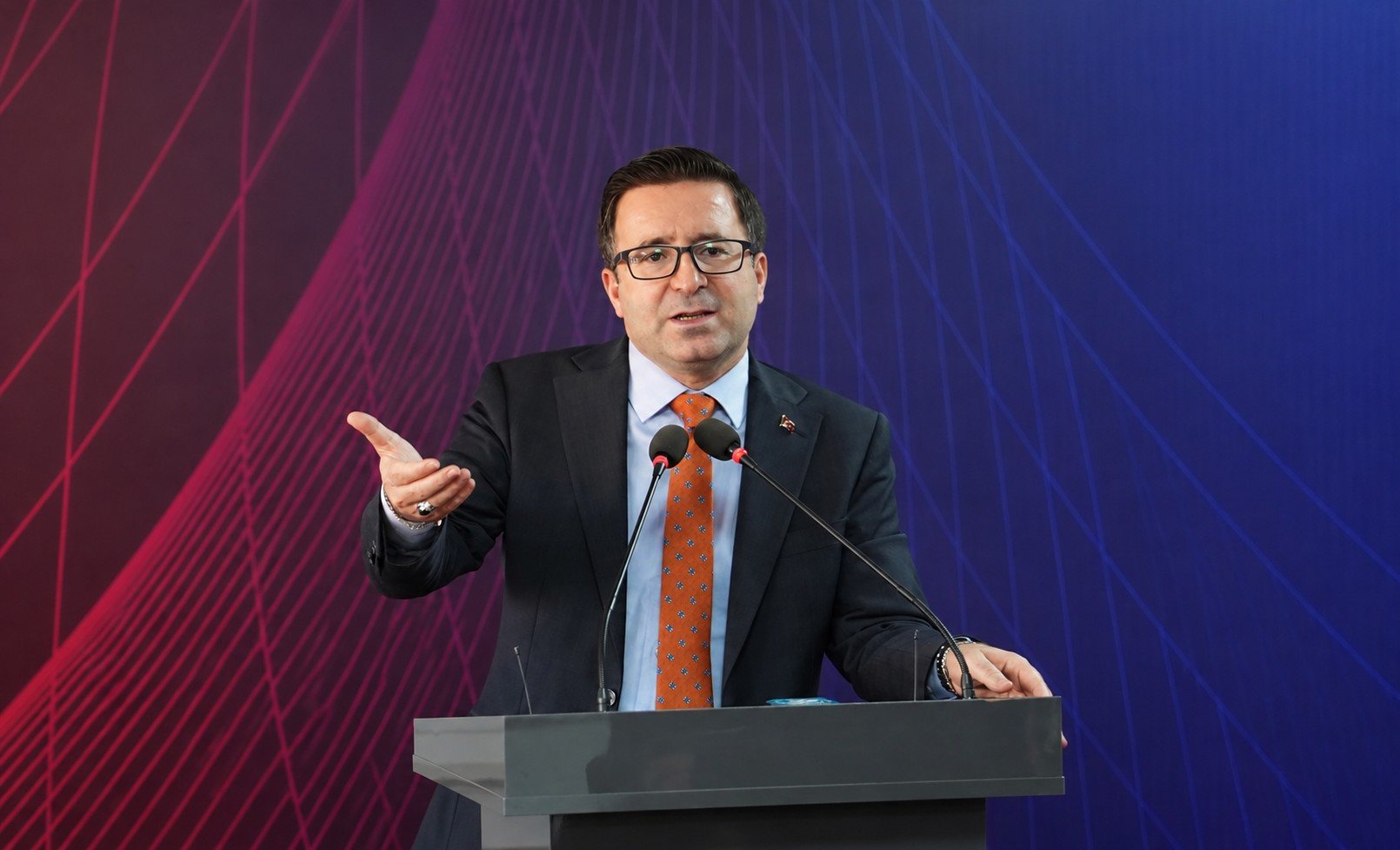

Global Defense Insight (GDI) spoke with Prof. Dr. Mehmet Özkan, Professor of International Relations at the Turkish National Defence University in Istanbul, to examine Türkiye’s evolving foreign policy, expanding defense partnerships and growing strategic engagement with Africa and the wider Global South. In an interview conducted by Laraib Hassan, Prof. Özkan discussed Ankara’s transformation from a regional actor into an increasingly influential international partner, highlighting the role of defense diplomacy, economic cooperation and strategic partnerships in shaping Türkiye’s global ambitions.
Throughout the interview, Prof. Özkan offered insights into Türkiye’s expanding presence in Africa, its military and security cooperation with Somalia, and its efforts to balance NATO commitments with emerging partnerships beyond the Western alliance system. He also examined regional security cooperation involving Türkiye, Pakistan and Saudi Arabia, the strategic implications of Turkish defense exports, and Ankara’s potential role in shaping a more multipolar international order. Emphasizing the importance of sustainable partnerships, he argued that Türkiye’s next challenge is no longer simply expanding its international presence, but translating its growing diplomatic reach into lasting strategic influence.
In your 2010 article “Turkey’s Opening to Africa” with Birol Akgün, you wrote that Türkiye’s opening to Africa was not a short-term trend and would deepen over time. Looking at Türkiye’s engagement with Africa and the wider Global South today, do you think that assessment has been borne out?
Absolutely. Türkiye’s engagement with Africa has developed even beyond many people’s expectations since 2010. What began primarily as diplomatic outreach, humanitarian assistance and economic cooperation has evolved into a multidimensional relationship involving defense, education, trade and political partnerships. Africa is no longer peripheral to Turkish foreign policy; it has become an integral part of Türkiye’s broader international strategy.
Yet, the real challenge in coming years for Ankara is no longer expanding Türkiye’s presence but consolidating it, not expanding but deepening. The opening phase has largely succeeded. The next stage requires deeper economic integration, stronger institutions and sustainable partnerships. Türkiye is now transforming its diplomatic reach into long-term strategic influence with multilayered connectivity. It is the essence of current Turkey-Africa relations from East to West.
Türkiye often presents itself as an equal, win-win partner with no colonial past in Africa. In practice, is this a real difference from Western and other non-Western powers, or is it mostly a diplomatic narrative?
Türkiye’s different historical relationship with Africa certainly provides an advantage. Unlike European colonial powers, Türkiye does not carry the same colonial legacy, and this matters in African political perceptions. It opens space for Türkiye and some sort of moral legitimacy in its foreign relations without any negative baggage. Ankara’s engagement also combines humanitarian assistance, economic cooperation, education and security without generally seeking to impose a particular political model.
But let me emphasize that having a different history does not automatically guarantee an equal partnership unless you make this relation at economic and strategic level sustainable and create a mutually win-win condition. African countries have been gaining greater institutional capacity, economic opportunities and more agency in their relations, this is making the win-win approach genuine and real.
Türkiye’s role in Somalia began with humanitarian aid and state-building and now includes military training and defense cooperation. What does this change tell us about Türkiye’s approach to defense diplomacy?
Somalia illustrates the evolution of Türkiye’s foreign policy from humanitarian engagement toward comprehensive strategic partnerships. When Türkiye became deeply involved in Somalia in 2011, the priority was humanitarian assistance and rebuilding state institutions. Over time, Ankara realized that development and state-building could not succeed without a functioning security environment.
Defense diplomacy therefore became a natural extension of state-building. Türkiye now increasingly connects military training, defense industry cooperation, economic engagement and diplomacy. Military cooperation is based on strengthening local institutions rather than create a dependency. The key issue in Somalia and the Horn of Africa is establishing a regional order in which Somalia’s growing strength and stability become meaningful. This is of course the responsibility of global and regional actors as a compliment to Ankara’s contribution to bring order.
Türkiye remains a key NATO member while also expanding its defense and political ties across the Global South. Where, if anywhere, does this balance reach its limit?
I do not see an inherent contradiction between NATO membership and expanding security partnerships across the Global South. NATO remains essential for Türkiye’s security, particularly in Europe and the Black Sea. However, NATO cannot address all of Türkiye’s strategic concerns in Africa, the Middle East and Asia. Ankara therefore seeks additional partnerships to increase its room for maneuver.
The limits may emerge when these partnerships conflict directly with NATO commitments or exceed Türkiye’s economic and military capabilities. Türkiye’s challenge is to maintain coherence between its Western commitments and expanding non-Western partnerships.
In August 2026, Türkiye, Saudi Arabia and Pakistan signed the Mecca Joint Defense Agreement. Does this pact reflect growing doubts about Western security guarantees, and what does it mean for Türkiye’s strategy beyond its traditional alliances?
Answer: The Mecca Agreement reflects a broader transformation in regional security thinking. Countries increasingly recognize that relying exclusively on Western security guarantees is insufficient, particularly as American strategic priorities evolve. Türkiye, Saudi Arabia and Pakistan bring complementary military, economic and political capabilities, making their cooperation potentially significant.
For Türkiye, this should not be understood as an alternative to NATO but as an additional layer of security cooperation. We are witnessing a gradual shift from security dependence toward regional security ownership. However, the agreement’s significance will depend on how much and whether political commitments develop into effective institutional and military coordination.
Critics argue that Türkiye’s arms sales and military presence in Africa serve its own strategic and commercial interests more than the needs of local partners. How would you respond to this view?
Of course, Türkiye has strategic and commercial interests in Africa as every international actor does, including Western powers, China and Russia. The important question is not whether Türkiye benefits from these relationships, but whether African partners benefit as well. Many African governments actively seek affordable defense technologies, military training and alternatives to traditional security providers.
However, selling weapons is not an end for Türkiye. The success of Turkish defense diplomacy should be measured not by the number of drones sold but by whether African countries become more capable of managing their own security. In that way, I believe many African countries see benefit to deepen defense cooperation with Türkiye, so they continue to expand this cooperation.
Looking ahead five to ten years, what role can Türkiye realistically play in shaping a more plural, non-Western international order, and what is the biggest obstacle in its way?
Türkiye cannot single-handedly reshape the international order, but it can become an important actor in making that order more plural. Its unique position between Europe, the Middle East, Africa and Asia allow it to engage different political and strategic communities. Türkiye’s strength lies not in leading a unified Global South, which does not really exist, but in connecting regions, building partnerships and creating alternatives within the existing international system. Türkiye is now the voice of the non-west in the west with its discourse and foreign policy toward various regions, including within the Western order.
The biggest obstacle is the growing gap between Türkiye’s strategic vision and its material capabilities. Ankara’s international ambitions have expanded considerably, but economic strength, institutional capacity and technological development must catch up. Over the next decade, as I discussed on my 2025 book Non-Western World, for Türkiye or other rising countries, the political will and strategic mentality to utilize the economic or military power into a sustainable system will be much more important.
Table of Contents
ToggleLaraib Hassan
Laraib Hassan is pursuing Bachelors in International Relations from International Islamic University, Islamabad.