
Maritime chokepoints are increasingly becoming instruments of geopolitical coercion as the proliferation of drones, anti-ship missiles, and other asymmetric capabilities enables state and non-state actors to threaten global shipping routes. From the Strait of Hormuz and Bab el-Mandeb to the Strait of Malacca, growing maritime insecurity is reshaping naval strategies, disrupting international trade, and raising questions about the resilience of global supply chains.
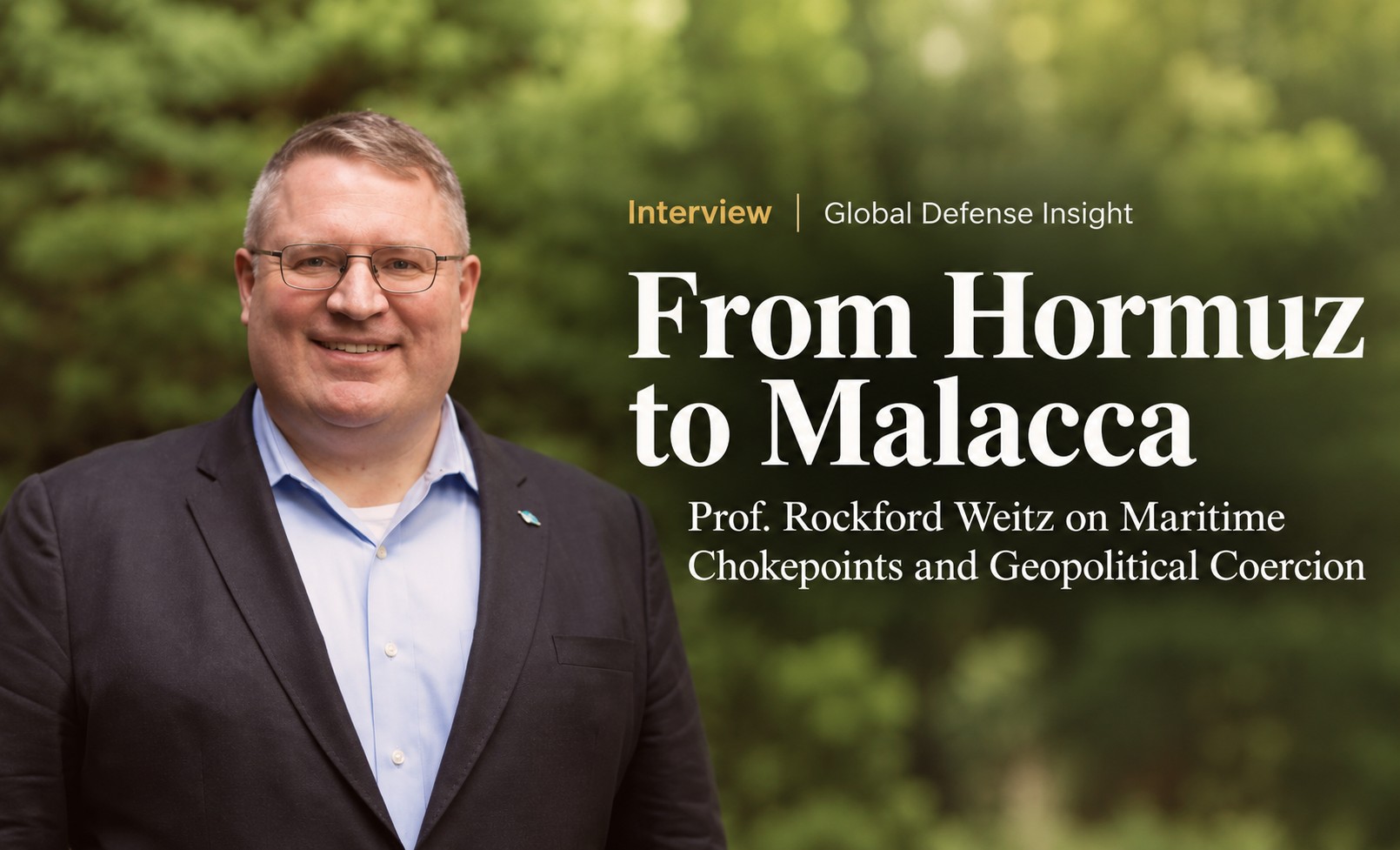
In an exclusive interview with Global Defense Insight (GDI), Professor Rockford Weitz, Professor of the Practice in Maritime Studies and Director of the Maritime and Arctic Studies Program at The Fletcher School, Tufts University, discussed the changing nature of maritime power, the vulnerability of strategic waterways, and the implications for global commerce and security. The interview was conducted by Khushi Pudakalkatti, a GDI intern and first-year Master of Arts in International Affairs student at The Fletcher School. Professor Weitz also examined the growing influence of asymmetric warfare, the role of commercial shipping companies and insurers, and the need for more affordable counter-drone and missile defense capabilities.
-
Maritime chokepoints such as the Strait of Hormuz and Bab el-Mandeb have become increasingly vulnerable to disruption. What makes these waterways strategically important today, and how has their significance evolved in recent years?
RW: Maritime chokepoints have always been strategically significant to maritime trading nations. The proliferation of drones and anti-ship missiles has made it easier for relatively weak coastal states and non-state armed groups to disrupt them. This has made them much more vulnerable to disruption and more strategically significant.
-
Are maritime chokepoints becoming instruments of geopolitical coercion beyond conventional naval warfare?
RW: Yes, maritime chokepoints are becoming instruments of geopolitical coercion. Iran and the Houthis are exercising maritime power when they attack commercial shipping. It is expensive for traditional navies to counter their attacks.
-
Does controlling maritime chokepoints still require powerful navies, or are asymmetric capabilities redefining maritime power?
RW: Conventional navies are still useful, but they are threatened by the proliferation of inexpensive missiles, mines, and drones. Naval warfare is changing, and larger navies need to invest in cheaper and smaller platforms at scale to counter these new threats.
-
Does weaponizing maritime chokepoints create lasting geopolitical leverage, or accelerate alternative routes and supply chains?
RW: Continued insecurity has encouraged states and companies to develop alternative routes and supply chains. This diversification has accelerated, and that will likely continue as the instability persists. Eventually, diversification will reduce the geopolitical leverage of disrupting shipping through maritime chokepoints.
-
Who determines whether contested waterways remain commercially viable: governments and navies, or shipowners and insurers?
RW: The commercial shipping sector determines whether a contested waterway is commercially viable. Navies and governments can help lower the risk, but commercial ship owners make the decision whether to transit. Insurers often influence those decisions.
-
Have disruptions in Hormuz and the Red Sea changed how shipping companies and ports view maritime chokepoints?
RW: Geopolitical risk has changed the way the commercial sector is approaching chokepoints. Investments in port infrastructure will now account for potential attacks from drones and missiles. This is a major change since I wrote that chapter.
- Finally, looking ahead over the next decade, which maritime chokepoints remain underestimated, and how can states strengthen resilience from Hormuz to Malacca?
RW: Recent events in the Strait of Hormuz and the Bab al-Mandeb have put strategic maritime chokepoints on the radar of policymakers. The Strait of Malacca, the Taiwan Strait, and the Luzon Strait remain critically important to Pacific Asian trading nations. Trading nations need to be more focused on developing cheaper counter-drone systems and missile defense systems. Geopolitical instability will continue to increase prices of fuel and other important goods like fertilizer until countermeasures are deployed. This will take time.