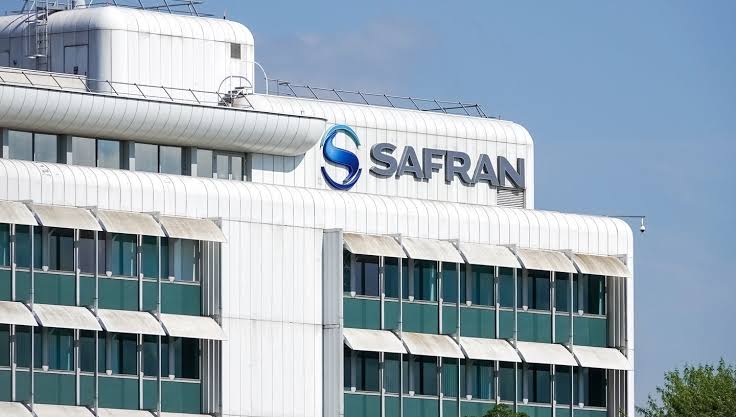

Safran Aircraft Engines has begun full-scale ground testing of its PHILEAS hybrid-electric propulsion demonstrator at the company’s Istres test site in southern France.
Supported by the French Civil Aviation Authority, the program is intended to mature hybrid-electric technologies for future commercial aircraft engines and assess how electric machines, power electronics, and onboard electrical distribution systems can be integrated into a conventional gas-turbine architecture.
The campaign will run for approximately six months and include nearly 300 hours of testing under operating conditions representative of different phases of flight.
PHILEAS is equipped with two electric machines installed on the engine’s high-pressure and low-pressure shafts. Each machine can operate either as an electric motor or as a generator, allowing the system to inject power into the engine, extract power from it, or transfer power between different parts of the propulsion system.
The demonstrator also includes onboard power electronics and an electrical power distribution system.
Table of Contents
ToggleTesting Focuses on Power Extraction and Injection
The test campaign is designed to evaluate how electrical power can be managed across the engine during different operating conditions.
Safran will assess several advanced power-management scenarios, including balancing power extraction between the high-pressure and low-pressure shafts, transferring power from one shaft to the other, and managing electrical exchanges between the engine and the aircraft.
These functions are commonly described as power balancing, power transfer, and power sharing.
Power balancing involves distributing electrical loads between the two engine shafts to improve efficiency and avoid placing excessive demand on a single section of the engine.
Power transfer allows electrical energy generated on one shaft to support the other, potentially improving engine response or efficiency under selected operating conditions.
Power sharing concerns the exchange of electricity between the engine and the wider aircraft electrical network, including onboard systems that require increasing amounts of electrical power.
Safran said the integration of these technologies is intended to maximize the electricity available for aircraft systems while optimizing engine performance throughout the flight envelope.
Electric Machines Installed on Both Engine Shafts
The use of electric machines on both the high-pressure and low-pressure shafts is a central feature of the PHILEAS demonstrator.
In a conventional turbofan engine, the high-pressure and low-pressure systems rotate at different speeds and serve different aerodynamic and mechanical functions.
Integrating electric machines onto both shafts could give future propulsion systems greater flexibility in managing energy.
During some phases of flight, an electric motor could provide additional torque to a shaft. In other conditions, the same machine could operate as a generator and recover power for aircraft systems or energy storage.
This architecture could also support more-electric aircraft designs, where functions traditionally powered by hydraulic or pneumatic systems are increasingly electrified.
Potential applications include environmental control, actuation, de-icing, onboard systems, and other high-demand electrical equipment.
PHILEAS Supports Safran’s Decarbonization Strategy
Hybrid-electric propulsion is one of the three principal elements of Safran’s strategy to reduce aviation emissions.
The other two are disruptive engine architectures, including the Open Fan concept, and the wider use of sustainable aviation fuels.
Hybrid-electric systems are not expected to replace turbine propulsion on large commercial aircraft in the near term. Instead, they could improve how energy is generated, distributed, and used across the aircraft and engine.
The technology could reduce fuel consumption by optimizing engine operation, supporting power-demand peaks electrically, and improving efficiency during selected phases of flight.
It could also enable new aircraft-system architectures requiring substantially more onboard electrical power.
Pierre Cottenceau, vice president for engineering, research and technology at Safran Aircraft Engines, described the campaign as an important step toward integrating hybrid-electric systems into future engines.
Tests Align With CFM RISE Technology Goals
The PHILEAS campaign is aligned with the technology objectives of the CFM International Revolutionary Innovation for Sustainable Engines program, commonly known as CFM RISE.
CFM International is a 50-50 joint venture between Safran Aircraft Engines and GE Aerospace.
The RISE program is exploring a range of technologies intended to reduce fuel consumption and carbon dioxide emissions by approximately 20 percent compared with current-generation engines.
Its most visible element is the Open Fan architecture, but the program also includes advanced materials, compact engine cores, hybrid-electric systems, and compatibility with sustainable aviation fuels.
PHILEAS will help Safran evaluate whether electrical machines and power-management technologies can be incorporated into future propulsion systems while meeting requirements related to weight, thermal management, reliability, certification, and operational performance.
Safran Electrical & Power Leads Electrical Equipment Development
Safran Electrical & Power has been assigned responsibility for the demonstrator’s electrical equipment.
The company serves as Safran’s center of expertise for aircraft electrical systems and is involved in the development of electric motors, generators, wiring, power-management equipment, and electrical distribution technologies.
Hybrid-electric propulsion requires close integration between several engineering disciplines.
Electric machines must be compatible with the engine’s rotating shafts, structural limits, thermal conditions, and vibration environment. Power electronics must manage high voltages and currents safely, while engine-control software must coordinate mechanical and electrical power flows.
The aircraft’s electrical network must also be capable of receiving, distributing, and regulating the power generated by the system.
The PHILEAS campaign is therefore intended to validate both the physical installation of the equipment and the functional coordination of the complete architecture.
Program Builds on Earlier DOPEE Demonstrator
The new testing follows Safran’s earlier work under the DOPEE project.
In 2023, the company validated a 300-kilowatt electric machine developed by Safran Electrical & Power and integrated into a Silvercrest engine.
That project included initial power extraction and injection tests on the engine’s high-pressure turbine shaft.
PHILEAS expands on this work by introducing electric machines on both the high-pressure and low-pressure shafts and testing a more complete electrical architecture at full scale.
Safran has also been conducting system-level testing since late 2025 at Niort using a test bench that simulates an 800-volt aircraft electrical network.
The Niort testing is intended to evaluate the behavior of high-voltage electrical systems under conditions representative of future aircraft.
Together, the Silvercrest-based DOPEE work, the Niort electrical-network tests, and the PHILEAS campaign form part of a broader technology roadmap intended to raise the maturity of hybrid-electric propulsion.
Key Engineering Challenges
Although hybrid-electric propulsion offers potential benefits, integrating it into large commercial aircraft engines presents major technical challenges.
Electric machines, inverters, cooling systems, cables, protection equipment, and structural components add weight to the propulsion system.
Any efficiency benefit must therefore exceed the penalties created by the additional hardware.
Thermal management is another significant challenge. Electric machines and power electronics generate heat that must be removed without adding excessive mass or complexity.
Reliability and certification requirements are also demanding. Electrical equipment integrated into the engine must function safely under extreme temperatures, vibration, rotational speeds, and mechanical loads.
Future systems will also need to manage high-voltage electrical networks without compromising aircraft safety.
The PHILEAS campaign will provide Safran with data on these issues under realistic engine operating conditions.
Strategic Importance for Future Aircraft Engines
The demonstrator reflects the aerospace industry’s broader movement toward more-electric propulsion and aircraft systems.
Next-generation commercial aircraft are expected to require more electrical power for onboard systems, advanced thermal management, flight controls, cabin systems, and potentially electrically assisted propulsion functions.
A hybrid-electric engine could provide greater flexibility in how that power is generated and distributed.
The technology may also help optimize engine performance during takeoff, climb, cruise, descent, and ground operations by allowing mechanical and electrical power flows to be adjusted according to operational demand.
However, PHILEAS remains a technology demonstrator rather than a production engine.
The results of the campaign will help determine which hybrid-electric functions are technically mature enough for inclusion in future commercial propulsion programs.
What to Watch Next
The main indicators will be the demonstrator’s ability to manage power between both shafts, the amount of electrical power that can be extracted without degrading engine performance, and the reliability of the power electronics and distribution system.
Safran will also need to evaluate weight, cooling, system complexity, and certification implications.
The test data could influence future design decisions within the CFM RISE program and other next-generation Safran engine developments.
With nearly 300 hours of testing planned, PHILEAS will provide one of Safran’s most comprehensive assessments to date of full-scale hybrid-electric integration within an aircraft engine.