As the clock strikes 1800 hours at BA107 Villacoublay, the calm of the evening is shattered by a piercing alarm. Within moments, activity surges through the hangars of Escadron d’Hélicoptères 3/67 “Parisis.” A small Cessna has strayed into the restricted skies above Paris, an area tightly controlled due to its proximity to sensitive government buildings and high-profile events. The Cessna isn’t responding to air traffic control. There’s no time to lose.
Two pilots, two mechanics, and two sharpshooters spring into action, each knowing their role by heart. Engines spool, rotors spin, and the AS555AN Fennec helicopter lifts into the dusky sky, blades biting the air as it races toward the unknown intruder with remarkable speed. For the men and women of EH 3/67, this is not just a job, but a calling they train for daily: precision, speed, and calm professionalism in the face of uncertainty. Their unwavering commitment to their mission is a source of security for the skies above Paris, a testament to their dedication and to the city’s safety.
Minutes later, the Fennec intercepts the wayward aircraft. The crew, using a sophisticated communication board, guides the startled pilot safely out of the capital’s airspace. This board, equipped with advanced communication systems, allows clear, concise instructions to be relayed to the Cessna pilot, ensuring a swift and safe resolution. The mission ends as swiftly as it began—an hour from alarm to shut down—but it’s another reminder that in France’s capital region, the guardians of the sky are always ready.
Roelof-Jan Gort and Björn van der Flier recently visited the unit EH03.067 ‘Parisis’ at BA107 Vélizy-Villacoublay, near Paris. The purpose of their visit was to gain a deeper understanding of this unique squadron. During their time there, they held discussions with Commandant Grégoire, who has been the unit’s commander since July 2025. They also interviewed several key personnel: Major Jérémy, responsible for flying the AS555 Fennec; Staff Sergeant Damien (sharpshooter), who provides aerial security during missions; and Captain Laurie, who oversees the squadron’s fleet maintenance. Each individual demonstrated unwavering dedication to their work and the operations of the squadron.
The “Parisis” Squadron: A Historical Legacy
Established on 1 October 1964, Parisis holds a significant place in history as a fighter squadron that transitioned to helicopters, with the mission not to engage in combat overseas, but to serve the city of Paris itself. In the initial stages, the robust Sikorsky H-34 helicopters operated in the humid skies, effectively transporting officers, essential documents, and sensitive materials throughout the bustling capital. Subsequently, the sleek French Alouette II and III models entered the fleet, landing seamlessly on expansive mansion lawns or hovering above the scenic Seine River. Initially, these helicopters functioned as reliable air couriers; however, by the late 1980s, significant political changes in France prompted a shift in focus. The question of paramount importance became: “How can we ensure effective protection?” This transition signified the commencement of a new chapter in the evolution of aviation requirements.
The early 1990s witnessed the introduction of the AS555 Fennec, an impressive, lightweight, and agile helicopter equipped with advanced sensors and detection systems. This platform represents a substantial advancement, serving not merely as an aircraft but as a vigilant protector capable of responding rapidly to potential threats within Paris. The objective of the squadron is unequivocal: to execute MASA missions—Mesures Actives de Sûreté Aérienne—dedicated to securing the nation’s capital. These operations are both critical and continuous, occurring at any hour, whether at dawn, midnight, or during significant events such as Bastille Day. With the agility of the AS555 Fennec, there is a fortified sense of confidence in the defense of the French nation, a testament to the squadron’s commitment and the nation’s security.
The Squadron Commanders’ Insights on the EH03.067 “Parisis”
From his office overlooking the flight line at Villacoublay Air Base, Commandant Gregoire has a commanding view of his squadron’s beating heart — a team of ground technicians meticulously preparing AS555 Fennec helicopters for the day’s operations. Beyond the hum of activity lies evidence of transition: moving boxes, temporary workspaces, and a tangible sense of anticipation. For EH 03.067 “Parisis”, change is on the horizon.
Over the next four years, the squadron will temporarily relocate to alternate facilities equipped with operational hangars. This move is not just a logistical necessity but a strategic decision to modernize the squadron’s infrastructure. The construction of new accommodations, maintenance hangars, and technical areas is designed to welcome the Fennec’s successor, the Airbus H160M Guépard (‘Cheetah’), due to enter service in 2030. This marks the squadron’s commitment to staying at the forefront of aviation technology and its readiness to adapt to future challenges. It also signifies the dawn of a new chapter for one of the French Air and Space Force’s most versatile helicopter units.
A Leader with His Hands on the Controls
Commandant Gregoire’s leadership philosophy is simple: lead from the cockpit. “I began my career in the Air and Space Force in 2008 and completed my academic studies in 2011,” he recalls. “After flight training on the TB30 Epsilon, I learned about a recruitment initiative for helicopter pilots — and seized the opportunity.”
Earning his wings in 2015, Gregoire was posted to EH 3/67 Parisis, flying the twin-engine AS555 Fennec, before later joining EH 1/67 Pyrénées, operating the H225M Caracal. Today, with approximately 2,750 flying hours — more than 2,000 of which are on the Fennec alone — he continues to fly operationally. “I believe it’s essential to stay close to the crews,” he explains. “Flying regularly helps maintain that bond of trust and camaraderie which is vital to our effectiveness. Leadership in a squadron like this means being part of the mission, not just overseeing it.”
The Men, the Machines, the Mission
As commander of EH 03.067 Parisis, Gregoire leads a contingent of approximately 120 personnel, supported by a fleet of around 12 AS555 Fennec helicopters. The unit comprises some 30 pilots, 10 flight engineers, and 10 gunners, alongside dedicated ground crew, intelligence officers, and administrative and communications specialists.
“Our operational commitments are wide-ranging,” he explains. “We contribute to national air defense and sovereignty missions, conduct search and rescue (SAR) operations, and provide support flights, including liaison and training missions.”
This broad remit requires flexibility — a hallmark of the Parisi ethos. From air policing to VIP transport and training, the squadron’s workload demands both technical proficiency and rapid adaptability. Their ability to seamlessly transition between tasks instills confidence in their readiness to handle any situation, showcasing their adaptability and preparedness.
Defending the Skies Above Paris
Stationed at Base Aérienne 107 Villacoublay, just southwest of Paris, EH 03.067 Parisis serves as a critical component of France’s homeland air security network. Its helicopters stand watch over one of the most sensitive airspaces in Europe, providing a rapid-response capability that complements the Air and Space Force’s fighter squadrons.
The Fennec fleet maintains a 24/7 Quick Reaction Alert (QRA) posture, enabling an armed crew to be airborne within minutes to intercept, identify, or assist any aircraft posing a potential threat to the capital’s airspace.
Each standby team consists of two pilots, two gunners, and two ground technicians. Working from dedicated facilities designed for instant readiness, they are on alert day and night — an integral part of the nation’s layered air defense network, which also includes the Système de Commandement et de Conduite des Opérations Aérospatiales (CDAOA) command structure.
“Paris is a unique operational environment,” says Gregoire. “We must be ready for everything — from air policing during major public events to assisting in emergencies or security operations. Our crews operate with precision and discretion, ensuring that the public remains safe without ever seeing the complexity of what happens behind the scenes.”
The Fennec: Agile Guardian of the Homeland
The AS555 Fennec has been the backbone of Parisis’ operations for decades. Agile, reliable, and combat-proven, the twin-engine light utility helicopter is equipped for a broad spectrum of missions. Its versatility allows it to perform air intercepts against slow-moving aircraft, coordinate ground operations, conduct reconnaissance, or support special forces training.
Its armament can include machine guns mounted in side doors, and its sensor suite enables night and all-weather operations. While modest in size compared to the H225M Caracal or the future H160M Guépard, the Fennec remains a key asset for low-altitude missions where agility and rapid reaction are most crucial.
“The Fennec’s strength lies in its simplicity and reliability,” notes Gregoire. “It’s a platform we know intimately, and that confidence translates directly into mission effectiveness. But we’re also preparing for the future — and that means embracing the capabilities the H160M will bring.”
Preparing for the Guépard Era
The upcoming introduction of the Airbus H160M Guépard marks a significant modernization milestone for Parisis and the Air and Space Force as a whole. Designed as a common platform for the French Army, Navy, and Air Force, the Guépard will offer enhanced range, speed, payload, and situational awareness — a leap forward in capability.
For EH 03.067, this transition will involve not only new airframes but also a transformation in maintenance infrastructure, training, and mission systems.
“Preparing for the Guépard means more than just replacing helicopters,” says Gregoire. “It’s about modernizing our entire ecosystem — our hangars, our tools, our simulators, and even our operational mindset. The next few years will be a period of adaptation and learning, but also of opportunity.”
During the interim, Parisis’s personnel are heavily involved in planning and coordination to ensure a smooth handover. Flight and ground crews alike are contributing to design feedback, logistics planning, and integration discussions with Airbus and the Air and Space Force’s acquisition authorities.
A Constant State of Readiness
Even as these changes unfold, operational demands remain relentless. The squadron’s readiness posture ensures that its crews can respond immediately to national taskings — from airspace violations to security support during major international events such as the 2024 Paris Olympic Games.
Inside the squadron’s operations center, mission planning screens display the capital’s complex air corridors, civil aviation routes, and restricted areas. Every sortie is meticulously coordinated with the national Air Defense and Air Operations Command to ensure seamless integration into France’s broader aerospace defense network.
“Our role is sometimes invisible to the public, but it’s essential,” Gregoire reflects. “We’re here to guarantee that the skies above Paris remain safe — whether from accidental incursions, potential threats, or crises requiring rapid airborne intervention.”
Tradition, Transition, and the Future
As its facilities are renovated and the squadron prepares to move, Parisis continues to embody a balance between tradition and transformation. Its history stretches back decades, its operational tempo remains intense, and its future promises to be technologically advanced.
Commandant Gregoire sums it up with quiet pride: “Our mission is about protection — of our airspace, our citizens, and our values. As we move into the next era with the H160M, we’ll carry forward the same dedication and professionalism that have defined Parisis since its creation.”
With one eye on the present and the other on the horizon, EH 03.067 “Parisis” stands ready — the vigilant guardian of the skies above France’s capital.
On the Front Line of French Air Policing
Major Jérémy, a 36-year-old pilot with over 2,000 flight hours, has served in the French Air and Space Force since 2010. Currently assigned to Escadron d’Hélicoptères 03.067 “Parisis” at Villacoublay, he shares insights into his demanding role as a Fennec helicopter pilot responsible for missions ranging from air policing to search and rescue.
Career Path and Training
“My career began with officer selection and basic aviation training,” he explains. “After earning my wings, I completed helicopter conversion on the AS555 Fennec, learning emergency drills, avionics, and mission systems. Integration into the squadron followed, progressing from co-pilot to pilot-in-command.”
At Parisis, operational qualification involves dedicated training for the unit’s core missions: air defense and search and rescue (SAR). “The Fennec is small, very maneuverable, and quick to get airborne—ideal for rapid response and urban patrols,” he notes. “It’s versatile for liaison, surveillance, or light armament fits, and its small footprint is an advantage around Paris. Compared to heavier types like the Puma or Caracal, it’s all about agility, speed, and the ability to operate in confined areas.”
Flight Crew Roles and Pre-Mission Routine
As pilot-in-command (PIC), Jérémy bears ultimate responsibility for the flight’s safety, navigation, and mission decisions. The co-pilot assists with flying, radios, sensors, and systems monitoring. “Responsibilities are defined before take-off but can shift dynamically,” he says. “It’s all about coordination, cross-checking, and mutual vigilance.”
Pre-mission preparation follows a strict protocol, which includes receiving tasking orders, planning routes and fuel, reviewing weather and NOTAMs, and briefing the crew. “We configure the aircraft, conduct walk-arounds, preflight and start-up checks, then obtain departure clearance,” Jérémy outlines.
For MASA (Military Air Support Activities) and DPSA (Defensive Posture Support Activities) missions, additional coordination with air traffic control and security authorities is required. “Scheduled missions allow for detailed planning,” he explains, “but on alert, we can be airborne within minutes.”
Rapid Response and Emergency Tasking
When an alarm sounds, the crew reacts instantly. “Emergency tasking comes via the air operations network—from air traffic control, the CDAOA, or our local command. We execute immediate start-and-launch procedures: quick preflight checks, a rapid crew brief, and departure,” he says. “Reaction time is critical, especially for air policing missions.”
EH 03.067 maintains a Quick Reaction Alert (QRA) team 24/7, typically composed of two pilots, two sharpshooters, and two mechanics. Crews rotate weekly but must be ready to scramble at any moment, day or night.
Mission Types
The Fennec’s missions span air security, event protection, liaison, and training roles:
MASA / Air Security: Crews patrol designated airspace around sensitive areas, maintaining constant contact with air controllers. “We identify and intercept suspicious aircraft, sometimes guiding or escorting them to landing,” Jérémy explains. “The mission demands short response times, discipline, and precision.”
DPSA / Event Protection: Temporary no-fly zones are established around major events, requiring close civil-military coordination and rapid interception capability.
Liaison & Utility Lift: These tasks involve transporting personnel or light cargo, performing administrative flights, and repositioning aircraft—every day but essential support work.
SAR / Support: When tasked, Fennecs conduct search patterns and coordinate with rescue authorities, often equipped with hoists, stretchers, and specialized gear.
Training and Readiness
Maintaining readiness for such a diverse mission set demands continuous training. “We fly regular training sorties, simulator sessions, NVG and instrument practice,” says Jérémy. “Scenario-based exercises cover intercepts, SAR, and DPSA missions. These ensure crews stay sharp, and procedures remain instinctive.”
Exercises are frequent and often interagency, involving coordination with civil authorities and national security forces. “The number of flight hours varies with operational tempo,” he notes, “but training intensity ensures we remain ready for any contingency.”
Evolving Capabilities
Over recent years, the Fennec fleet’s operational capability has benefited from modernized procedures, new sensors, and upgraded communications. “Civil-military cooperation has improved dramatically,” says Jérémy. “We now integrate air traffic management and anti-drone systems into mission planning, and SOPs for MASA/DPSA are more refined and efficient.”
The squadron’s experience was crucial in preparing for major national events, such as the Paris Olympics, where joint exercises strengthened coordination and readiness. “The emphasis on interoperability with police, gendarmerie, and air defense assets has made operations smoother and safer,” he adds.
A Demanding but Rewarding Role
For Jérémy, flying the Fennec remains a uniquely rewarding experience. “Each mission is a balance of precision flying, teamwork, and situational awareness,” he reflects. “You need to react fast, communicate clearly, and stay composed—especially in complex environments like the Paris region.”
Despite the pressures, he remains passionate about his work. “What drives me is the variety and sense of purpose. Whether protecting national airspace, assisting during emergencies, or supporting public safety, every flight matters.”
Eyes on the Target: Inside the Role of a Door Gunner on the AS555AN Fennec
In the high-stakes world of military aviation, few roles combine precision, vigilance, and physical resilience quite like that of the door gunner. Staff Sergeant Damien, a veteran of the French Air and Space Force (Armée de l’Air et de l’Espace), has served since 2007 and has been flying as a door gunner on the AS555AN Fennec since 2019. From rigorous training to real-world operations, his experience offers a rare glimpse into one of the most demanding and specialized roles in rotary-wing aviation.
The Path to Becoming a Door Gunner
Selection for the door gunner course is a test of both skill and endurance. Candidates undergo a week-long, intense assessment that includes physical and psychological evaluations, marksmanship tests, and comprehensive interviews. Only those who demonstrate the right combination of steadiness, focus, and teamwork progress to the training phase.
Once selected, trainees embark on a three-phase program that builds progressively from ground-based to aerial marksmanship. The first phase focuses on engaging targets at ranges up to 600 meters. The second introduces aerial dynamics, combining ground-to-air and air-to-air engagements, both during the day and at night, at distances ranging from 50 to 300 meters. The final phase takes place entirely in the air, testing the gunner’s ability to maintain accuracy from a helicopter flying at speeds ranging from a stationary hover to 110 knots.
The comprehensive “precise shooter” course lasts three weeks, followed by two weeks of door gunner–specific instruction and a one-week live-fire training campaign. By the end of this process, graduates are fully qualified to operate Fennec’s weapon systems under operational conditions.
A Multifaceted Mission Profile
Once in service, the door gunner’s duties extend far beyond simply firing a weapon. The role encompasses aerial surveillance, real-time image capture, live video transmission via tablet, and even laser designation for other aircraft or ground units. These tasks demand constant situational awareness and seamless coordination with the helicopter crew.
At the core of the mission lies what the French Air and Space Force designates as the Mesure Active de Sûreté Aérienne (MASA) — the Aerial Security Measurement Mission. This mission type focuses on protecting sensitive airspace, intercepting and, if necessary, neutralizing airborne threats. Positioning is crucial: the gunner must operate within a specific 7/8 firing arc to ensure both accuracy and safety. Clear, concise communication with the pilot is essential, as helicopter stability directly affects firing precision.
Weapons and Equipment
Every piece of equipment on board the Fennec has been carefully selected for its versatility and effectiveness. Staff Sergeant Damien’s standard loadout includes the 7.62mm HK417 rifle, used for precision engagements against hostile targets, and a Tactical Police Shotgun, which serves a dual role—deploying signal flares and delivering deterrent fire with nine-pellet rounds.
For personal defense, he carries a Glock 17 sidearm. Increasingly, counter-drone operations have also become part of the Fennec’s mission set, for which the crew employs a Nerod-type jammer rifle to turn off hostile or suspicious unmanned systems.
Precision and Consistency
As Damien explains, the true challenge of the job lies in maintaining absolute consistency under pressure. “Our goal is precision and regularity,” he says. “We train daily, balancing flight hours, alert duties, and live-fire campaigns to ensure we’re always operationally ready.”
This relentless routine keeps both aircrew and aircraft at peak readiness for the diverse range of missions the Fennec undertakes — from airspace protection and VIP escort to close support for special operations forces.
Passing on the Expertise
In addition to his operational duties, Staff Sergeant Damien also contributes to training the next generation of aerial sharpshooters. His experience as an instructor ensures that lessons learned from real-world operations continue to shape the role’s evolution.
“The techniques, safety measures, and tactical awareness required for door gunnery are constantly evolving,” he notes. “It’s important that we adapt and pass that knowledge on.”
A Vital Role in Modern Air Operations
As technology advances and threats become more diverse, the door gunner’s role remains indispensable. Operating in the confined, turbulent environment of a helicopter door demands not only technical skill but also calm judgment and unflinching precision. Whether flying low over urban terrain or escorting high-value assets, the door gunner is a vital link in ensuring mission success.
Staff Sergeant Damien’s story exemplifies the professionalism and dedication of France’s Fennec crews — men and women whose expertise ensures that their aircraft remain both sharp-eyed observers and potent defenders in the skies.
Inside Fennec Maintenance: An Interview with Captain Laurie
At Base Aérienne 107 Villacoublay, maintenance on the French Air and Space Force’s AS555AN Fennec helicopters is an intricate and demanding task. Captain Laurie, a 35-year-old Chief Maintenance Officer serving with Escadron d’Hélicoptères (EH) 03.067 Parisis, shared an in-depth look at the challenges of keeping the ageing light helicopter fleet airworthy and mission-ready.
Managing the Fleet
Captain Laurie oversees both line and base maintenance operations at Villacoublay. “Our activity is very intense,” he explains, “but we participate in a gratifying mission.” His team consists of 65 mechanics and nine support staff dedicated to maintenance and continuing airworthiness management.
The workforce is diverse and highly specialized. “We have several categories of technicians,” he continues. “There are vector mechanics, avionics specialists, weapon system experts, and structural mechanics — each bringing their own focus and expertise. Together, they ensure that the Fennec remains a reliable and versatile platform for our operational needs.”
The Maintenance Cycle
The Fennec maintenance schedule is meticulously structured. According to Captain Laurie, “We perform calendar maintenance operations that can last only a few hours.” The first major inspection occurs after 100 flight hours and is handled ‘on line’. Then, at 150 hours, maintenance shifts to ‘on base’. Finally, after 600 hours or 24 months, the helicopter goes to the industry for heavy maintenance.”
External contractors carry out this final phase under agreements with Airbus Helicopters and Safran Helicopter Engines, the respective type certificate holders for the airframe and engine. “For any technical issue,” Laurie notes, “we may send a request to Airbus or Safran. Typically, we contact them by email, and they provide a corrective solution through a formal work card, either directly or via a subcontractor.”
Challenges of an Ageing Fleet
Keeping the Fennec operational is increasingly challenging. Introduced in the early 1990s, the fleet is showing its age, and spare parts are becoming increasingly scarce. “Our biggest challenge is to guarantee aircraft availability,” Laurie admits. “With an ageing fleet, sourcing certain components is not always easy.”
Despite these obstacles, the maintenance unit at Villacoublay continues to achieve high readiness levels thanks to the experience and adaptability of its personnel. “The mechanics are highly committed,” he adds. “They show great professionalism and dedication, which allows us to sustain operations even when logistical or technical difficulties arise.”
Looking to the Future
Captain Laurie remains optimistic about the future of Fennec maintenance at Villacoublay. “If I look ahead, I see new maintenance buildings with better-quality equipment to facilitate our work,” he says. “I also hope to have more mechanics in the squadron and a more effective support contract with the industry.”
He also highlights the importance of internal improvements within EH 03.067 Parisis. “Beyond infrastructure and staffing,” Laurie concludes, “My goal is to continue the initiatives launched by my predecessors — improving the organization and enhancing the fluidity of our squadron’s maintenance activities.”
Roelof-Jan Gort and Björn van der Flier would like to express their gratitude to Lieutenant Clara (SIRPA Air and Space), Commandant Gregoire & Commandant Camille of the EH03.067 Parisis, Major Jérémy (pilot), Staff Sergeant Damien (sharpshooter), Captain Laurie (Head of Maintenance), and all the other personnel of EH03.067 Parisis for making this article possible.
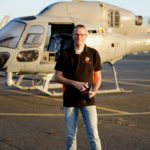
Roelof-Jan Gort, a Dutch photographer based in the heart of the Netherlands, has been capturing the world of military aviation across Europe since the 1990s. He is the co-founder of FlyHighAeromedia.com, where for over five years he has co-authored numerous articles on military exercises and both military and civilian helicopters, published internationally.