
The US Israel war on Iran that began on 28 Feb 26 has descended into a tense maritime battle after 40 days of open conflict and a fragile 15-day of ceasefire. The air, missile, and drone warfare that once dominated the headlines has given way to a quieter, more dangerous contest at sea, by restricting global trade through the Strait of Hormuz. At the heart of this new phase lies a paradox: a simultaneous blockade by both Iran and the United States, each choking the other while the world watches nervously.
To understand the current maritime chaos, one must revisit the diplomatic wreckage left behind. The United States pulled out of the Joint Comprehensive Plan of Action (JCPOA) in 2017 on the behest of Israel. From Tel Aviv’s perspective, a sanctions free Iran would rapidly grow rich and powerful, a strategic nightmare for Israeli security. Thus, the nuclear deal was dismantled. However, the final rupture occurred during the second term of the Trump administration. In a move that stunned international observers, the US and Israel attacked Iran on 28 Feb without any plausible reason, even as Tehran was agreeing to all outstanding terms and conditions in ongoing negotiations in Geneva. That betrayal extinguished any remaining trust. This has resulted in the most complex geopolitical crisis in the Middle East with SoH as the epicenter of the global economic crisis.
Last Friday on 17 April 26, in what appeared to be a conciliatory gesture, Iran opened the Strait with diplomatic efforts of Pakistan. For 24 hours, tankers and cargo ships began moving through the narrow waterway, offering a glimmer of hope that tensions might ease. Yet, by Saturday, the window slammed shut. Iranian Revolutionary Guard naval units declared that strait is closed once again on the pretext that US has not lifted the naval Blockade. During this tense period, Iran sought to reinforce its threat over the strait by firing on two Indian merchant vessels. The attacks were not meant to sink the ships but to send a clear message: anyone attempting to navigate Hormuz without Iranian acquiescence does so at their own peril. By targeting Indian, rather than American or Israeli vessels, Iran signaled that the blockade’s consequences would be felt far beyond the immediate belligerents.
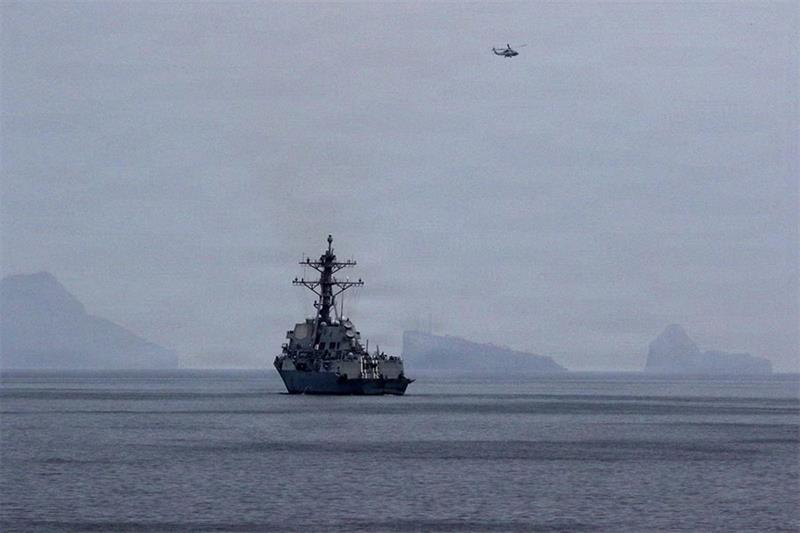
While Iran asserting on strait’s accessibility, the United States maintained its own naval blockade throughout the negotiations. In a direct countermove, US naval forces captured two Iranian ships and returned 28 ships coming from the SoH. By seizing Iranian ships on the high seas, far from the immediate confines of the Gulf, Washington demonstrated that its blockade extends globally. The message was unmistakable; any Iranian vessel, anywhere, is a target. This tit-for-tat escalation, Iran fires on Indian ships, US captures Iranian ships, has turned the maritime domain into an open arena for reprisals.
This has created what analysts now call the “Double Blockade Paradox.” On one hand, the US claims the right to stop and search any vessel heading to or from Iran. On the other hand, Iran claims the right to close the strait to any vessel it deems hostile, including those heading to US allies. The result is a deadlock where no ship is truly safe, and no diplomatic solution seems near. This situation has sent shockwaves through global energy markets, slowing global trade and stoking inflationary pressures worldwide.
Even as the maritime battle intensifies between the US and Iran, Pakistan has quietly pursued backchannel diplomacy, urging both sides to de-escalate and return to the negotiating table. Islamabad’s efforts, however, have yet to yield a breakthrough, as the naval blockade and counter-blockade continue to choke the diplomatic efforts.
As we analyze this unfolding crisis, Clausewitz famous dictum that war is the continuation of policy by other means comes into sharp focus. Every missile fired, every strait closed, every vessel seized is ultimately in service of a political objective, whether it be economic survival, regional dominance, or nuclear leverage. Both Washington and Tehran believe their naval strategies serve a higher political purpose.
Yet Clausewitz also warned of a deeper truth: tactical victories do not guarantee strategic success. You may win many battles, but at the end, you may still lose the war. The United States knows this lesson painfully well. In Vietnam, the US won every major engagement but lost the war. In Iraq, Saddam’s army was crushed in weeks, yet two decades later, American objectives remained unfulfilled. In Afghanistan, the most technologically advanced military in history was humbled by guerrilla fighters while winning all battles but still lost the war. In each case, the enemy adapted, outlasted, and turned military superiority into strategic quagmire.
The same fate now beckons in the Persian Gulf. The US can seize ships indefinitely. Iran can harass tankers forever. But a war of attrition in the Strait of Hormuz produces no winner, only a global recession and a perpetual state of low-grade conflict. The political policy the US seeks, a compliant, denuclearized Iran, is not advanced by turning the strait into a shooting gallery. And Iran’s goal of breaking the blockade without inviting full-scale American retaliation remains equally elusive. As the tankers turn back and the guerrilla boats slip through the night, both powers are trapped in a conflict and cannot decisively end. The double blockade is not a strategy for victory; it is a blueprint for endless war and needs to be understood by both for paving the way for negotiation.