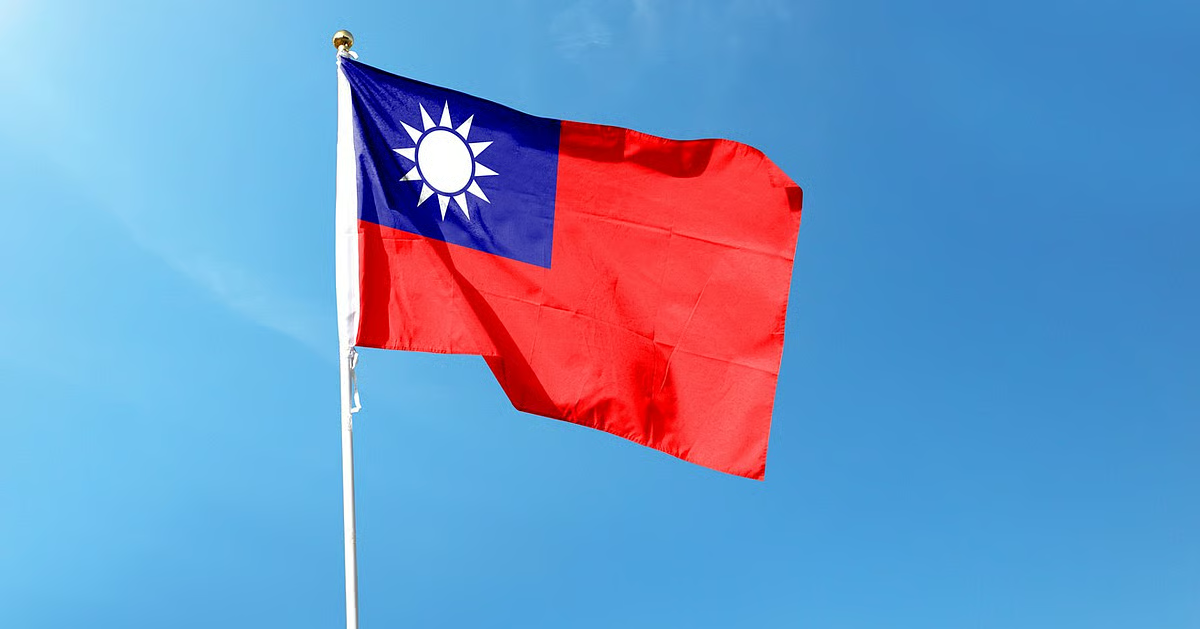

Taiwan stands at the epicenter of geopolitical rivalry, where international norms and power politics
clash. Recent talks, highlighted in (Dawn), between China and United States, accompanied with
Xi Jinping discuss the fragility of Taiwan issue which could lead to escalating international
tensions. Beneath the political tension, there is contradiction in international norms over
sovereignty, non-intervention and self-determination.
China’s stance on Taiwan is rooted in the legal norms of territorial integrity and sovereignty. This
is discussed in Article 2(4) of UN Charter which does not allow states to intervene in each other’s
territorial integrity (UN Charter). China’s position on Taiwan is that it is an integral part of its
territory and any external involvement is seen as violation of its political independence.
However, Taiwan brings a different viewpoint which contradicts with traditional sovereignty.
Though Taiwan is not recognized by United Nations as a state, it is a functioning self-governing
entity, with independent political and economic systems. Hence according to the legal norms of
the International Covenant on Civil and Political Rights (OHCHR) and human rights, Taiwan has
the right to self- determination, to determine its own political status.
The two legal applications of territorial integrity and self-determination have led to ambiguity in
international legal framework. Under the principal of sovereignty, foreign involvement is not
allowed while on the other hand, self-determination allows the people to decide their own future.
In most cases international law has balance for both situations, but in Taiwan’s case there is no
legal solution. As a result, Taiwan is seen as no less than a legal gray zone.
The United States has unofficial ties with Taiwan which makes the situation more ambiguous.
Washington does not recognize Taiwan as an independent state but provides strong military
assistance. The United States has been doing this on purpose as part of its ‘strategic ambiguity’.
This helps to deter China and also preventing state recognition of Taiwan. Yet this strategy has not
helped decrease the ongoing tensions on both sides.
China is threatened by the increased involvement of United States on its soil. Hence China has
been using military drills and rhetoric signals, all as part of its deterrence. As a result, both sides
view each other’s principals as a breach of international legal system.
What makes the issue problematic is the ineffectiveness of international law to enforce its norms.
International law is based on consent of states. Therefore, in the legal system major powers often
prioritize their self-interest over the international legal principles. As a result, each side in this
conflict uses legal principles of sovereignty and territorial integrity to fit its own political interests.
This dispute raises a greater concern which we must not ignore: is international law fair when
major powers are involved in a conflict. When major powers keep applying international law
according to their self-interest, the law is seen as unfair and ends up losing its credibility. Taiwan
issue is an important case as it helps assess the effectiveness of international norms.
To conclude, Taiwan is not just a territorial issue between China and United States. It exposes the
structural failure of international system where the principals of sovereignty, territorial integrity
and non-intervention clash without any proper resolution. As the conflict worsens, we need to
understand that this is not just a political issue, but a legal crisis, which could make the
international law irrelevant for future global conflicts.
Table of Contents
ToggleAaiza Aitazaz
Aaiza Aitazaz is an undergraduate student of Conflict Studies at National Defence University, Pakistan.