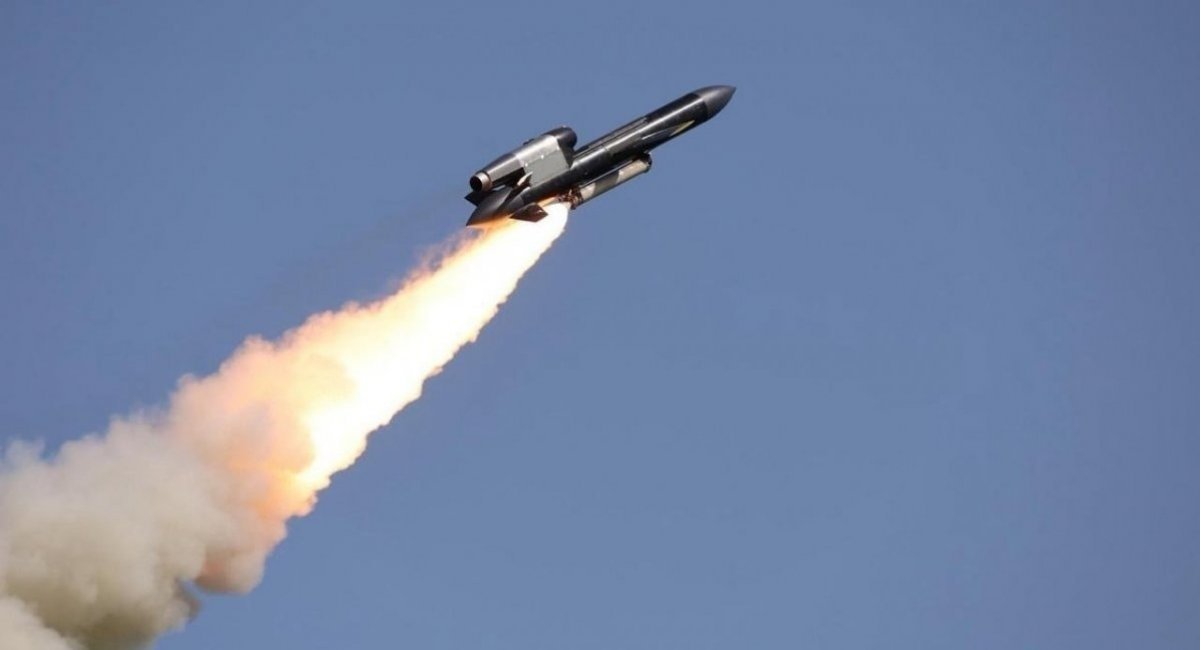

The effectiveness of air defence is measured not only by what it intercepts, but also by the cost of doing so. The emergence of Russia’s jet-powered Geran-4 and Geran-5 in Ukraine underscores this growing challenge in the economics of aerial warfare. With reported speeds of 400–600 kilometres per hour, operating altitudes of 6–8 kilometres and warheads of up to 90 kilograms, these systems blur the distinction between expendable attack drones and cruise missiles. The challenge for air defenders is not just to intercept, but to be able to overcome such threats at scale, in terms of cost, reaction time and capacity. As technology spreads, this imbalance may change air-defence needs on the battlefield and beyond.
The challenge is not just speed, as faster, higher-flying drones shorten reaction times and can fly out of range of weapons designed for slower targets. Detection does not mean interception: the defender must detect and track a target, allocate an appropriate weapon and engage before the target reaches its destination. Electronic warfare may disrupt navigation or communications, but its effectiveness depends on the drone’s design and resistance to interference. This leaves a gap between detecting an incoming threat and neutralising it. This gap is even more significant when drones are used in conjunction with missiles and other aerial threats. A mixed attack cannot overwhelm all sensors and weapons, but can still force defenders to split their attention, use precious interceptors and maintain constant readiness.
Even Successful interceptions impose financial and operational costs. By contrast, the attacker must penetrate with only a portion of its weapons. The cost of the jet-powered Geran-4, for instance, is estimated to be US$85,000–120,000 per unit, compared with an estimated US$1 million for an AIM-120 AMRAAM and US$4 million for a Patriot PAC-3 interceptor. This equates to cost ratios of approximately 8:1 to 12:1 for AMRAAM and 33:1 to 47:1 for PAC-3, depending on the engagement.
Ukraine’s response reflects the industrial aspect of this competition. The development of faster interceptors is just the beginning, and the ability to produce them in large quantities, acquire the necessary parts and integrate them into existing networks is equally crucial. Each defensive improvement can prompt changes in an adversary’s speed, altitude, guidance or flight profile. Technological advantage is therefore short-lived, and industrial capacity and the rate of adaptation will decide whether it is maintained.
The proliferation of this technology could extend the challenge beyond Europe. Russia and Iran have already shown a relationship in drone development, with Russia taking over the production of the Shahed and Iran providing the original design. If jet-powered drone technology continues to be transferred, it would increase the number of states that could deploy faster unmanned attack drones. The concern for the Middle East and South Asia is not that identical threats will emerge everywhere simultaneously, but that progress in one theatre will change the defensive needs in another. As drones assume a greater role in South Asian military competition after the May 2025 war, mass, speed and cost-exchange ratios will increasingly shape operational effectiveness and escalation dynamics.
Pakistan’s response reflects a dual priority: strengthening air defence while developing indigenous unmanned capabilities. In September 2026, the Pakistan Air Force publicly showcased China’s HQ-17AE air-defence system alongside Türkiye’s Korkut 35 mm guns and ŞAHİN 40 mm counter-UAV systems, adding complementary capabilities to its point-defence architecture. The reported development of Pakistan’s HiMark-25(TJ), a jet-powered one-way attack drone, further signals the diversification of its indigenous unmanned arsenal. Its reported autonomous guidance, electro-optical terminal seeker and potential for coordinated swarm operations reflect the growing emphasis on speed, precision and mass in unmanned warfare.
The challenge now is to ensure that these capabilities form part of a coherent defensive architecture rather than operate as isolated platforms. Detection, command and control, electronic warfare and interception must work together to match responses to threats based on their speed, altitude and trajectory. Guns, interceptor drones, electronic countermeasures, surface-to-air systems and fighter aircraft each have distinct roles, making effective coordination essential to preserving high-end capabilities for more demanding engagements. Operational integration and realistic testing against evolving threats are therefore as important as acquiring individual systems.
In conclusion, the jet-powered drone challenges the assumption that inexpensive offensive systems can always be defeated through inexpensive means. The advantage will belong neither automatically to the attacker nor to the defender, but to the side that adapts faster and sustains its capabilities more effectively. For Pakistan, anticipating this shift offers an opportunity to strengthen its air-defence architecture before new threat profiles become routine. The central question is no longer simply whether a drone can be intercepted, but at what cost, for how long and with how much capacity remaining to meet the next threat.
Faiza Abid
Faiza Abid is a research assistant at the Centre for Aerospace and Security Studies (CASS), Lahore. She can be reached at info@casslhr.com.