
The United States and Israel launched an attack against Iran on 28 February, under the assumption that the sustained military pressure would compel Iran to capitulate. That has not been proven to be true over the last eight months. This June ceasefire has fallen apart and fighting has been ongoing since August, while shipping through the Strait of Hormuz continues to be heavily curtailed. There is a sense that the campaign may have garnered much tactical success, but failed to produce the political results it was designed to deliver. The core issue in the war is between operational consequences and strategic intent. Its lessons are not exclusive to Iran and extend to the Gulf; Pakistan, as Iran’s neighbour and party to the efforts to broker a settlement, has a direct interest in the outcome.
Declared victory
Speech was ahead of events. Within a few weeks senior US officials labelled Iran’s air defences, air force and navy as “destroyed” and its ballistic missile programme “functionally destroyed” and presented the campaign as a resounding victory. To date Iranian missile and drone strikes have persisted and the results of a campaign such as this are difficult to gauge. The split comes with a price tag. When early claims of success are made, it resets the stage for compromise, as anything that happens subsequently can be interpreted as contradicting the initial claims of success. Coercive campaigns almost always result in a situation that both sides can claim as a success, and when leader announce a triumph, that makes it more difficult to devise a situation that is acceptable to both.
Hormuz and horizontal escalation
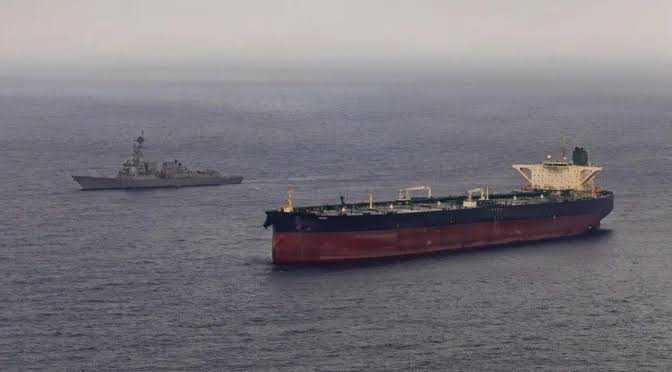
Iran’s plan is not to compete with the Americans’ arsenal. By constraining traffic on Hormuz, the war is being transferred from the military arena, in which Iran is less able to compete, to the economic and political arena, where the costs are spread out, postponed and mostly civilian. The number of transits has dropped from more than 100 per day prior to the war to a few, and the price has risen to consumers outside the Gulf. It’s horizontal escalation, expanding the circle of the victims, but not the intensity of the conflict. Prices for U.S. diesel climbed 17 per cent in the span of a couple of weeks, from about $4.57 per gallon in early July to $5.34 by early August, with August prices averaging $5.46. The Gulf accounts for approximately 50 percent of the world’s sulphur, which is one of the most important inputs for fertilizers, and contract prices were reportedly up more than 300 percent, to over $1,300, with Gulf producers recording record contract prices. The strains are especially acute on agriculture and working families, and have political impact in Washington. This mechanism is asymmetric. Stressed as Iran’s economy is, current situation suggest that Tehran would like its patience to exceed the expectations of Washington, especially as the midterm elections are nearing. This reading is probable but not definitive. Washington might decide that the long-term risks, such as the still-to-be-solved nuclear issue, outweigh the short-term compromise. There are many justifications on both sides. This makes it hard to get out of the current situation.
The nuclear objective
The most obvious indicator of the difference is the goal that was achieved and why the campaign was created. The purpose of the strikes was the nuclear programme in Iran, which continues to be unresolved. The programme was not addressed during the ceasefire of June, and disagreement on who is going to set the terms of a final agreement was one of the factors that led to the failure of the ceasefire to last. The impact that occurred but did not result in the desired results that would have been considered a victory. The assessments of how close Iran was to a weapon prior to the strikes are disputed, as some American commentators say they believed it was not near to a weapon. If that assessment was correct, the campaign was targeting an ability that was beyond a realistic reach and also left a knowledge base intact for it to be rebuilt. While facilities may be destroyed and timelines extended, technical expertise cannot be taken away, and a threshold state may be more convinced of the need for a latent deterrent as the only effective means of protection against renewed attack. The eventual nuclear deal may thus be more difficult to achieve. For Tehran, any restrictions on enrichment are “negotiated” under duress, whereas for Washington, it has been exercising leverage without finding verification arrangements.
Lessons for South Asia
South Asia is at the forefront. Frequent hikes in fuel prices have constrained fiscal space for regional governments to deal with the escalating costs of energy and remittance. Over 80 per cent of Pakistan’s oil is imported and over 50 per cent of the remittance is received from the GCC. India receives remittances from the Gulf of roughly $50bn per year and the majority of its crude is transited through the Strait of Hormuz. The ADB and WFP have pointed to the vulnerabilities and Pakistan has repeatedly called for restraint and talks. The war also provides three strategic lessons for the subcontinent’s current crisis dynamics.
The first is with narrative. The situation of the May 2025 crisis concluded with a victory for both side. The two accounts were based on different understanding, however. One objective was set, followed and measured. The other stressed that a response must be given in kind to the initial attacks, and then a ceasefire agreed by both capitals facilitated by US. Each side considered that it won the round and will plan for the next round accordingly, and in a relationship between two nuclear powers, the difference could result in miscalculation. The Gulf war demonstrates how fast initial claims turn to reality.
The second is about chokepoints. Even a losing state can impose costs on markets and bystanders, and thereby alter the bargaining balance. Regional planners should assume that maritime routes and shipping insurance can become instruments of pressure.
The third is related to audience costs. If leaders make the strong statement having a maximalist goal, they have few escape routes. India has made it public that an attack by the terrorists would be considered an act of war and will react accordingly and Pakistan has said that any resumption of the hostilities would be responded. Deterrents have an effect on those who commit to them, and they limit the choices of the leaders to exercise restraint once a crisis starts, when they know that their audience is expecting them to retaliate. That’s more important in a nuclear environment where there are competing media narratives.
Ending a war
Sequencing may be necessary to establish a durable exit; reopening Hormuz and postponing strikes first; and allowing the nuclear negotiation process to be its own and longer one. Gulf states have urged a diplomatic attempt, and Qatar, Pakistan and Oman are coordinating their mediation. There is evidence that regional actors are interested in and have the capacity to support that structure. Pakistan, having helped bring about the June memorandum, has a clear interest in seeing the process resume. The immediate challenges for South Asian governments are to enhance energy resilience and to assist de-escalation.
Military superiority is a leverage only when it is linked to some political goal that can be persuaded to capitulate the adversary. If either side isn’t, force creates escalation more rapidly than concession, and the party not as concerned with cost can turn time into advantage as seen in Iran-US war.
Table of Contents
ToggleAmna Saqib
Amna Saqib is research officer at Center for International Strategic Studies (CISS), Islamabad.