
Great powers are turning orbit into a battlefield. The debris they leave behind legal, political, and physical won’t stay up there.
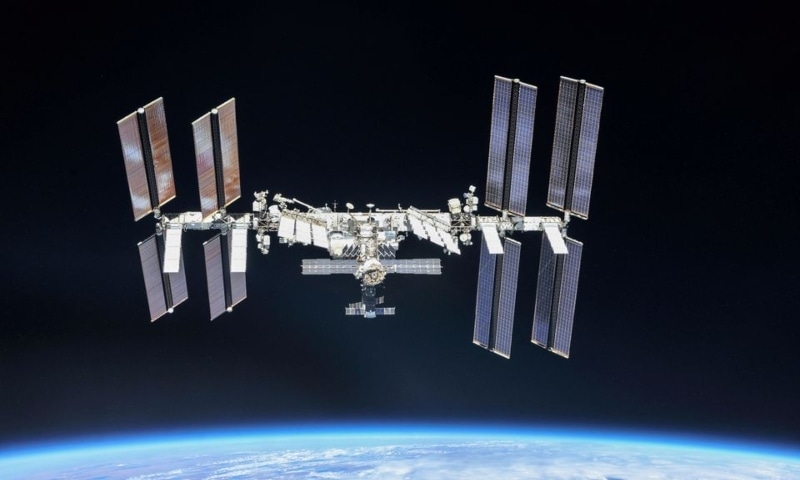
On the morning of November 15, 2021, seven astronauts aboard the International Space Station were jolted awake and ordered into emergency escape capsules. The culprit was not a rogue asteroid or a technical malfunction. It was Russia. Moscow had just fired a missile at one of its own satellites, shredding it into over 1,500 pieces of high-speed shrapnel and forcing the ISS crew to shelter in their emergency capsules for hours. This was not an accident. It was a demonstration. And the world has yet to take it seriously enough.
That warning has nothing to do with Russia alone. It is about what happens when the world’s most powerful nations turn outer space into a weapons depot — and who else eventually gets the keys.
The Arms Race No One Wants to Name
Let us be direct about what is happening. The United States established a dedicated Space Force in 2019. China’s People’s Liberation Army now controls the world’s second-largest satellite fleet, with systems capable of maneuvering alongside and disabling adversary satellites in orbit, a threat formally documented by the U.S. Defense Intelligence Agency. Russia maintains the Peresvet laser system, designed to blind enemy reconnaissance satellites. India joined the anti-satellite club in 2019. The great powers are not merely using space they are arming it.
And yet the legal architecture governing all of this dates to 1967. The Outer Space Treaty, drafted when only two nations could reach orbit, bans nuclear weapons in space but says almost nothing about conventional military systems, cyber weapons, or the commercial satellites that now form the backbone of every modern army’s command and control. The UN Committee on the Peaceful Uses of Outer Space has spent decades producing voluntary guidelines with no enforcement mechanism. In the six decades since the treaty was signed, the world has produced no binding successor. The vacuum has grown wider every year.
“The Outer Space Treaty was written for a world with two spacefaring nations. Today there are more than forty and none of them are bound by rules that matter.”
The Door Terrorists Did Not Have to Knock On
Here is the question that too few security analysts are asking: if states are racing to weaponize space, who is watching the back door? The answer, increasingly, is no one. And the back door is wide open.
Consider what happened in February 2022, one hour before Russian tanks crossed into Ukraine. A cyberattack formally attributed by the United States, European Union, and United Kingdom to Russian military intelligence crippled Viasat’s KA-SAT satellite network. Thousands of modems went dark across Europe. Wind turbines in Germany lost remote control. Ukrainian military communications were severed at the worst possible moment. The weapon was not a missile. It was code deployed from the ground against orbiting infrastructure and it worked precisely because satellite ground systems are chronically under-secured.
Now ask yourself: if a nation-state can do this, what stops a well-funded non-state actor from doing the same? Based on current international law, the answer is very little.
The ingredients for terrorist exploitation of space infrastructure are already available. Commercial off-the-shelf satellites can be purchased or rented. GPS spoofing hardware costs less than a used car. High-resolution Earth observation imagery the kind that once required billion-dollar spy satellites is now sold through commercial providers to any buyer with a credit card. The Islamic State used commercially available drone-mounted thermal cameras to conduct battlefield surveillance in Iraq and Syria. The step from that to satellite-relayed targeting data is shorter than governments are comfortable admitting.
“ISIS bought its surveillance technology at a commercial counter. The next group may buy it from orbit.”
Iran Has Already Shown the Way
We do not have to speculate entirely. Iran’s Islamic Revolutionary Guard Corps has spent years transferring precision-guided missile technology that depends on satellite navigation for terminal accuracy to Hezbollah and the Houthi movement. When Houthi drones and missiles struck Saudi Aramco’s Abqaiq facility in September 2019, disabling roughly five percent of the world’s daily oil supply, they used guidance systems informed by space-based navigation data. Non-state actors already have one foot in the space-enabled warfare ecosystem.
The Stinger missile offers history’s clearest lesson here. Supplied to Afghan mujahideen to fight Soviet helicopters in the 1980s, those same weapons turned up in Hezbollah’s arsenal, in the hands of Chechen separatists, and in al-Qaeda’s operational planning for decades afterward. The logic of blowback does not change when you scale the capability from a shoulder-fired missile to a satellite jamming system. It only makes the consequences larger.
This Is Fixable —But Not Without Urgency
The solutions are not mysterious. They require political will, and the recognition that space security is inseparable from counterterrorism.
The UN Security Council should establish a dedicated expert panel modeled on the IAEA’s safeguards regime to audit the terrorist exploitation risks posed by commercial space technology. COPUOS has spent decades producing voluntary guidelines; it is time for something with teeth. Export control regimes including the Missile Technology Control Regime and the Wassenaar Arrangement must be updated to cover GPS spoofing hardware, satellite ground control equipment, and commercial imagery services sold to entities that cannot demonstrate legitimate end-use.
NATO has recognized space as an operational domain. That recognition must extend to a serious counterterrorism dimension including joint attribution protocols for terrorist-linked cyberattacks on space infrastructure, and clear Article 5 equivalents for satellite disruption by proxy actors. The alliance cannot treat space as a military domain while ignoring the non-state threats that military escalation is actively incubating.
The Debris Comes Down Eventually
The seven astronauts who sheltered in their escape capsules on that November morning in 2021 were lucky. The debris from Russia’s missile test will continue to circle the Earth for years a physical monument to the recklessness of a security competition that has outrun the law governing it.
But the more dangerous debris is not in orbit. It is in the governance gap the yawning legal and institutional vacuum that great powers have spent decades refusing to close, and that violent non-state actors are beginning to notice. The militarization of space is not merely a rivalry between Washington, Moscow, and Beijing. It is an invitation, extended carelessly and without a guest list, to anyone with the money, motivation, and technical savvy to walk through the door. History suggests someone always accepts such invitations. The only question is whether the international community chooses to lock the door first or waits, as it so often does, to read about the consequences in a morning headline.

I am a Muhammad Mudassar pursuing a Bachelor's degree in Peace and Conflict Studies. Academic interests lie in geopolitics, international law, human rights, international security, space governance, and non-state threats. and gender studies. And particularly engaged in exploring global political dynamics and their implications for peacebuilding and justice